Windshield Keeps Fogging? Check the Conditions Before Replacing Parts
Check the affected surface, climate-control settings and airflow, then ask what inspection findings support a repair.
A windshield that keeps fogging is a visibility concern before it is a repair estimate. Start by getting the vehicle safely parked and restoring a clear view. If the glass will not stay clear, arrange an assessment instead of trying to drive while repeatedly wiping it.
For Bolton and Caledon drivers facing cool mornings and wet autumn weather, it helps to separate three questions: is the moisture inside or outside, are the climate controls set appropriately, and is there a persistent condition that needs inspection? Fogging alone does not identify a failed heater, compressor or control unit.
Clear the whole view before setting off
Transport Canada's winter-driving guidance says to clear all windows of frost and fog. A small clear opening in front of the steering wheel is not enough for checking intersections, mirrors and surrounding traffic. Allow time to prepare the vehicle before the trip begins.
Use the defogging or defrosting instructions in your owner's manual while safely parked outdoors. Do not run an engine in an enclosed garage to clear the windows. If visibility deteriorates after departure, find a safe place to stop rather than reaching across the glass or experimenting with unfamiliar controls while moving.
Remember that clearing the windshield does not establish that every window is ready. Check the side glass and mirrors too. If one area remains obstructed, address it before continuing. Do not let an appointment time or a short journey become a reason to accept an inadequate view.
Identify which surface is affected
When parked, determine whether the moisture is on the inner surface, outer surface or both. Report that distinction when booking. Interior condensation, exterior frost and a smeared glass surface may look similar from the driver's seat but are not the same complaint.
Describe what happens rather than immediately naming a part. Useful details include whether the glass fogs before you enter, after passengers get in, during rain or after the vehicle has been parked overnight. Note whether it clears completely and then returns or never clears properly at all.
Keep the description simple and accurate. A parked photograph can help show the pattern, especially if the concern disappears before the appointment. Do not take pictures while driving, and do not deliberately create unsafe visibility to document the problem. Observations from ordinary use are enough to start the conversation.
Let the defrost mode do its intended job
Check the manual for the front windshield setting and distinguish it from the rear-window heater. The controls and automatic responses vary between vehicles. Familiarize yourself with them before a cold morning makes the task urgent.
Ford's published climate-control guidance provides one example: maximum defrost can prevent the selection of recirculated air to reduce window fogging. It also explains that the air-conditioning compressor may operate in that mode even when the A/C control has been switched off. Those actions can be normal system behaviour rather than evidence of a failed switch.
Use your own vehicle's instructions instead of trying to force every indicator into the combination used in a different car. If a button behaves unexpectedly, record the selected mode and compare it with the manual. A control that is intentionally unavailable in one mode should not automatically become a replacement recommendation.
Notice airflow separately from temperature
Tell the shop whether air reaches the windshield outlets when that mode is selected. Also describe whether the blower responds to its settings and whether the concern affects other outlets. These are separate observations from whether the air feels warm.
Avoid assuming that hearing the fan proves that air is reaching the correct place. Equally, a change in sound when selecting another mode does not identify a broken component by itself. Give the technician the combination of settings and symptoms so the assessment can follow the actual complaint.
If airflow is weak throughout the cabin, mention that explicitly. Our earlier discussion of weak airflow from the vents explains why a cabin filter should be considered in context rather than treated as the answer to every ventilation concern. Persistent fogging still needs its own explanation.
Report dampness and recent changes
While the vehicle is parked, note any visibly wet belongings, damp carpet or water marks. Explain whether these appeared after rain, cleaning or another event. Do not remove trim, disturb wiring or probe hidden spaces to find a leak yourself.
If a wet item has been left in the car, remove it for drying and report whether the pattern changes afterward. If carpet repeatedly becomes wet, ask for the source to be investigated. Drying an area and finding out why it became wet are different tasks.
Mention recent windshield, body or interior work without assuming it caused the problem. A clear timeline gives the shop something useful to evaluate. Include unusual smells or warning messages as observations, but avoid relying on smell alone to identify a fluid or component.
Choose repairs from findings, then verify the result
Ask what the inspection established about the reported fogging. A useful explanation connects the recommended repair to the symptom and distinguishes a confirmed cause from another maintenance issue found during the visit.
If more than one item is recommended, ask what each addresses. Replacing several parts because each could theoretically contribute is not the same as explaining the evidence. If the concern cannot be reproduced, discuss what additional information would help before authorizing speculative work.
After the work, ask how the original complaint was checked. Keep the inspection notes and report any recurrence with the settings, weather and timing. The goal is a windshield that clears and stays clear under the relevant conditions, with an understood reason for any repair.
See our vehicle repair services or contact Albion Auto Service to describe persistent fogging or a defrost concern. If visibility cannot be maintained, discuss transport rather than driving the vehicle in that condition.
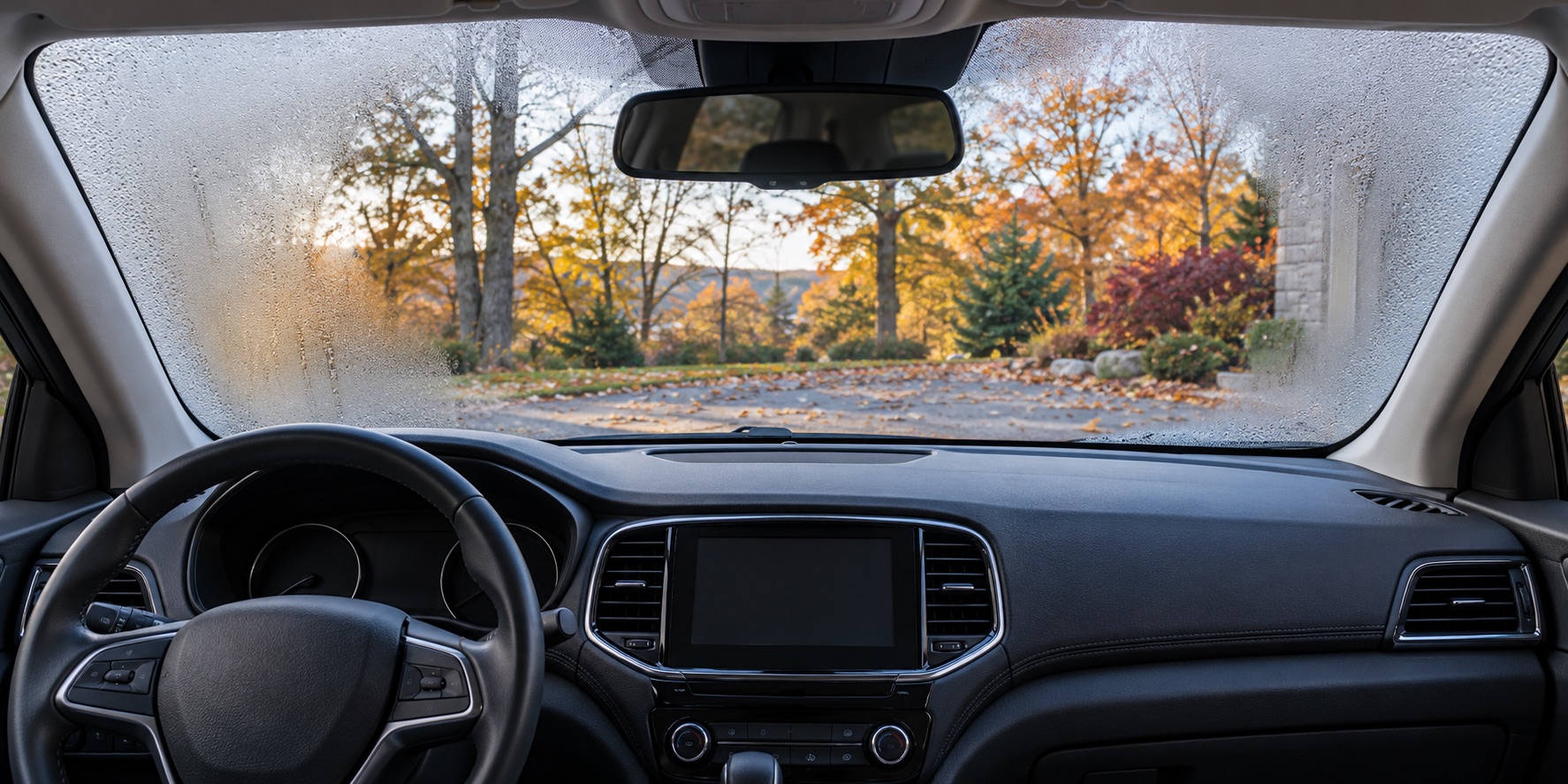
Featured image: AI-generated illustration of a parked car with condensation on its windshield. It is not an Albion Auto shop or customer photograph, and the partly cleared glass does not depict adequate visibility for driving.
Common questions
Does A/C operation in defrost mean a control is broken?
Not necessarily. Some systems operate the compressor automatically in defrost. Check your vehicle manual.
What should I report when booking?
Explain whether the moisture is inside or outside, when it appears, the selected settings and whether air reaches the windshield.
Can I drive with a small clear patch?
Do not set off until you have a clear view through the windows needed for safe driving. Arrange assistance if visibility cannot be maintained.