DEF Warning on Your Diesel? Read the Message Before Replacing Parts
Read the full warning, check the vehicle-specific refill instructions and confirm the cause before buying parts.
A diesel exhaust fluid warning is a message to read carefully, not an automatic instruction to replace a sensor. The display may be asking for fluid, reporting a system fault or warning about an upcoming operating restriction. Those situations need different responses.
For diesel owners in Bolton and Caledon, the most useful first step is to record the complete wording while safely parked. Include any distance countdown and other warning lights. Then consult the owner's manual for the exact vehicle and engine. A neighbour's truck may use similar terminology but have a different refill procedure or response to a fault.
Read the message before choosing the remedy
Ford's owner guidance distinguishes a low diesel exhaust fluid level from a malfunction of the selective catalytic reduction system. It explains that the accompanying display message helps identify which concern is being reported. That distinction matters: adding fluid is not a diagnosis of a system malfunction.
Write down whether the message says low fluid, service required or something else. Avoid reducing it to “the diesel light” when booking. A photograph taken while parked can preserve the wording more accurately than memory. Tell the shop whether the message first appeared before or after a refill and whether it has changed since.
If there is a countdown or restriction, arrange advice promptly. Do not treat the remaining distance as a target to use up. Ford's published examples describe operating limitations when fluid is depleted or the system is contaminated or inoperative. The exact thresholds and recovery steps are vehicle-specific; a generic article cannot establish how far your vehicle can safely continue.
Confirm the correct tank and product
Before opening a container, positively identify the DEF filler using the vehicle manual and labels. Diesel fuel and diesel exhaust fluid have separate destinations. Do not choose a filler by cap colour alone, and do not assume every truck has the same arrangement.
Ram's DEF filling instructions warn against starting the engine if DEF has accidentally entered the diesel fuel tank. They also require keeping fuel and other petroleum products out of the DEF tank. If you suspect a wrong-fluid mistake, stop the filling process and get professional advice before starting. Tell the shop exactly what went where and whether the engine has run.
Use the product and equipment specified for your vehicle. A funnel previously used for another automotive fluid is not a sensible shortcut. Keep the packaging and receipt so the product can be identified if a concern follows. Do not substitute an unidentified liquid from an unlabelled container, even if someone believes it is suitable.
Follow the refill instructions, not a universal quantity
Read the vehicle's directions for the required amount, filling method and precautions. Tank capacity is not necessarily the quantity needed now. Guessing from another model's capacity can lead to an unnecessary or excessive addition.
Ram specifically cautions against overfilling and against continuing to top off after filling. Its guidance also explains that the system is designed for cold conditions, while overfilling can cause problems if the fluid freezes. Preparing for an Ontario winter is therefore a reason to follow the instructions carefully, not to squeeze in as much fluid as possible.
Follow the container's handling and storage directions as well. If you are uncertain about a product's condition, application or storage history, ask before using it. Buying the right product is only one part of a correct refill; clean handling and the correct procedure matter too.
A warning after filling needs context
Record how much was added and approximately when. If the manual describes a recognition delay or a specific check after refilling, follow that instruction. Do not keep adding fluid simply because the display did not change immediately, and do not invent a driving routine to force the warning to disappear.
Separate observations from conclusions when calling for help. “I added this product yesterday and the message still says service required” gives the shop a clearer starting point than “the level sensor is bad.” Mention whether the warning was already present before the container was opened.
If the instructions do not explain the result, seek an assessment. Avoid disconnecting the battery or clearing warnings as a substitute for finding the cause. A temporarily absent message is not evidence that the underlying concern has been resolved, especially when there was a stated operating restriction.
Ask what testing supports a parts recommendation
When a repair is proposed, ask which finding connects the recommended work to the complaint. A fault description should lead to appropriate checks rather than automatically becoming a shopping list. Ask whether fluid history, the reported message and the vehicle's service procedure were considered.
You do not need to become an emissions-system technician to ask useful questions. Request a plain-language explanation of what was confirmed, what remains uncertain and what the next step is intended to establish. If several repairs are listed, ask why each is needed and which addresses the original warning.
Share previous invoices and any recent work that might be relevant. If a component has already been replaced elsewhere, say so and provide the date. Repeating the same replacement without understanding the earlier result can waste time and leave the original problem unresolved.
Plan the appointment around the vehicle's condition
When booking, include the year, model, engine, exact warning and current operating behaviour. Explain any countdown before arranging a long journey. If the vehicle cannot operate safely or normally for the route, discuss assistance or transport instead of assuming it can be driven to the appointment.
After service, ask how the original concern was checked and what to watch for. Keep the repair record with the refill information. If the warning returns, report its wording and timing again; a similar symbol does not prove the same cause has returned.
Explore our diagnostic and repair services or contact Albion Auto Service to discuss the next step. The aim is straightforward: identify what the warning actually means, confirm the cause and choose the appropriate action before replacing parts.
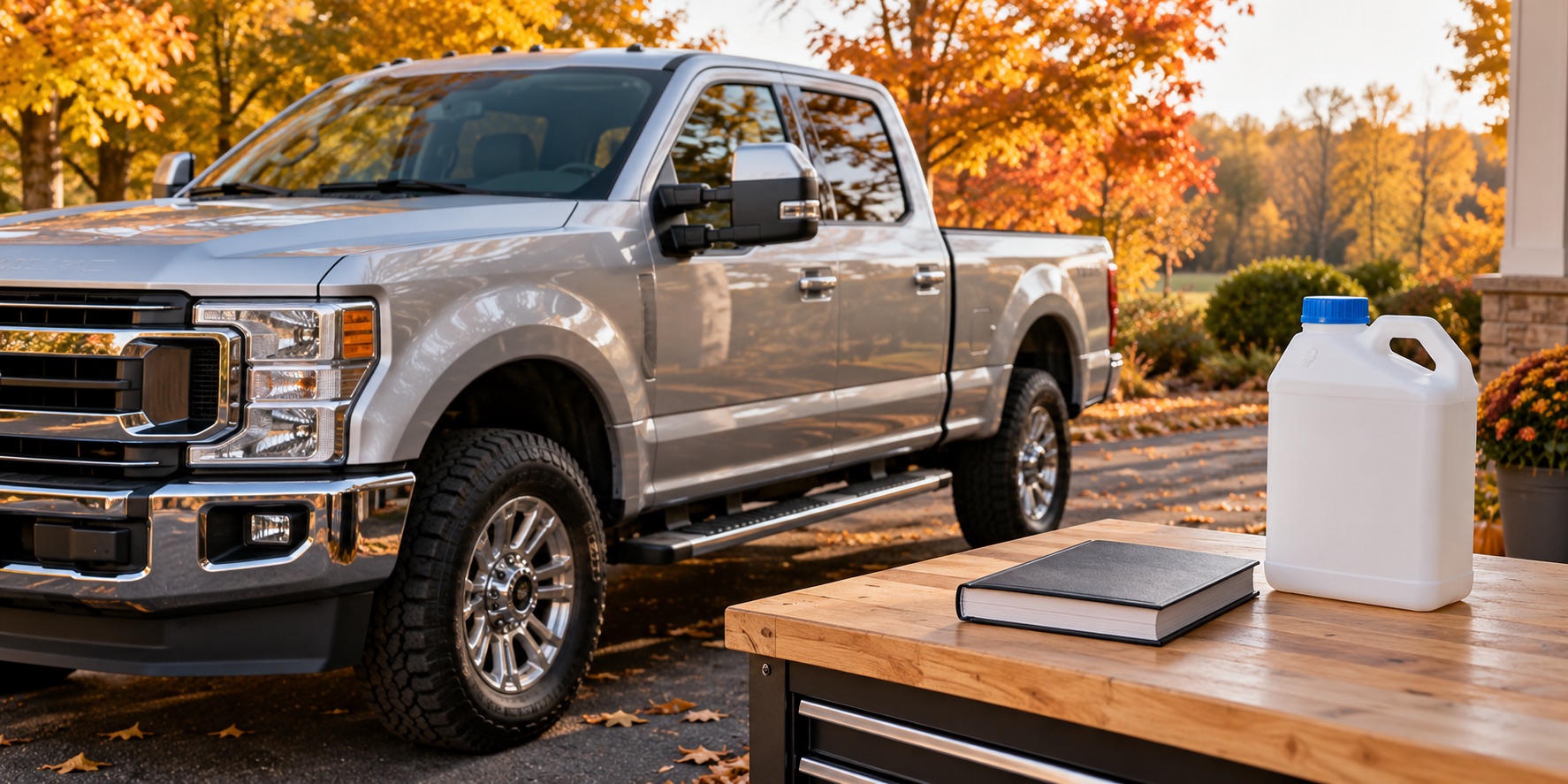
Featured image: AI-generated illustration of a generic pickup, container and handbook. It is not an Albion Auto shop or customer photograph and does not demonstrate a filling procedure or identify an approved fluid product.
Common questions
Will adding DEF clear every DEF warning?
No. Read the complete message and the vehicle manual. A low-fluid reminder and a system malfunction require different responses.
What if DEF went into the fuel tank?
Do not start the engine. Stop and seek professional assistance, explaining what was added and whether the engine has run.
What should I bring to an appointment?
Bring the warning wording, refill product and quantity details, and relevant service records.