Power Window Reverses Before Closing? Find the Cause Before Replacing Parts
A reversing window does not automatically need a new motor. Record the movement, recent work and operating conditions before choosing a repair.
You press the window switch, the glass rises, then it drops back down before closing. That is a different complaint from a window that does not move at all, and it deserves a different starting point. Replacing the motor immediately may miss the reason the window reversed.
For owners in Bolton and Caledon, a useful first step is to stop repeating the operation and record what happened. Keep fingers, clothing, children and pets clear of the opening. A reversing feature is a safety aid, not something to test with a hand or another body part.
Understand what reversal can mean
Some vehicles have a feature called bounce-back or pinch protection. Ford's window guidance describes a system that stops and reverses the glass when it detects an obstruction during closing. That explains the intended response; it does not establish what triggered the response in your vehicle.
Do not assume that reversal proves the motor is weak, or that a visibly empty opening proves the whole window mechanism is free of resistance. The technician needs to establish whether the observed movement matches the system's intended behaviour and why it is happening.
The exact equipment matters. Check the window section of the owner's manual for your model and year. Features may differ between windows on the same vehicle, so a comparison with another door is useful information rather than a complete diagnostic test.
Describe which operation failed
A clear report separates movement from automatic operation. Was the problem with one-touch closing, or did it also occur while you were operating the switch manually? Did the glass rise smoothly before reversing, stop without reversing, or move unevenly? Describe what you already observed instead of repeatedly cycling the window to collect more evidence.
Record where the reversal happened in plain terms, such as near the top or about halfway up. Include scraping, clicking or grinding sounds, a visibly tilted edge, or an unusual gap if you noticed one. Those details help explain why the concern may need inspection rather than a simple settings check.
If there is a difference between the driver's master control and the switch on the affected door, mention it. Do not conclude from that difference alone that one switch needs replacing. The observation is a starting point for testing the relevant controls and circuit.
Mention battery disconnection or recent work
The timing of the first incident can matter. Both Ford's guidance and Volvo's XC40 instructions describe a need to reset particular window functions after battery disconnection. That makes a recent battery replacement or disconnection useful information for the shop.
It does not mean every reversing window needs a reset, or that every vehicle uses the same sequence. Volvo's example also links initialization to proper pinch-protection operation and advises workshop attention if the problem persists. Use the procedure for the exact vehicle, including its warnings, rather than copying a generic button sequence from a video.
If you are unsure whether the battery was disconnected during recent work, say so and provide the work order. Also mention door, glass, tint or trim work if it preceded the change. A timeline helps guide inspection without assuming the previous job caused the fault.
Look only at what is safely visible
With the vehicle parked and the window controls untouched, note anything obviously out of place around the opening. Examples worth reporting include a folded seal, an accessory near the glass path, or visible contamination. Do not push tools into the channel or pull on the glass to see whether it straightens.
Late-autumn conditions are also worth recording. Tell the shop if the concern appeared after frost, freezing rain, a wash or a temperature change. This is context for diagnosis, not proof of an ice-related cause. Do not force a frozen or stuck window to move just to find out whether it can.
Avoid applying a random lubricant, solvent or spray to the seals or switch. Ask what care product, if any, is suitable for the specific materials and vehicle. Adding something before the cause is known can complicate the inspection and may not address the underlying problem.
Repeated closing attempts are not a repair
Stop if the glass binds, tilts, makes an abnormal noise or keeps reversing. Do not press harder, pull the glass upward by hand or ask someone to guide it while you operate the switch. Those actions can put a person in the moving glass path.
Some manufacturer instructions include special override functions, but an override is not evidence that a fault has been repaired. Ford explicitly warns that overriding bounce-back removes its reversal protection. This article does not recommend bypassing that protection to get around an unexplained closing problem.
If the window cannot be secured, arrange prompt help and consider where the vehicle can be kept out of weather. Explain that the glass remains open when booking, since that affects the immediate practical problem. Do not improvise a covering that obstructs visibility and then drive with it in place.
Ask what the diagnosis established
A useful assessment should connect the symptom to a finding: an initialization issue, resistance or alignment concern, control problem, or another confirmed cause. Ask what was checked and how it supports the proposed work. The label “window problem” is not enough to choose a motor, regulator or switch.
If initialization is appropriate, ask whether normal operation was restored and whether the required safety-function verification was completed using the manufacturer's procedure. Do not perform your own pinch test with fingers or household objects afterward.
If a part is recommended, ask why that part addresses the reported movement. If the concern was intermittent and could not be reproduced, agree on what information would help at the next visit. A clear record is more useful than replacing parts without a confirmed explanation.
For help arranging an inspection, review Albion Auto Service's electrical repair information or contact the shop with the vehicle details, affected window and sequence of events.
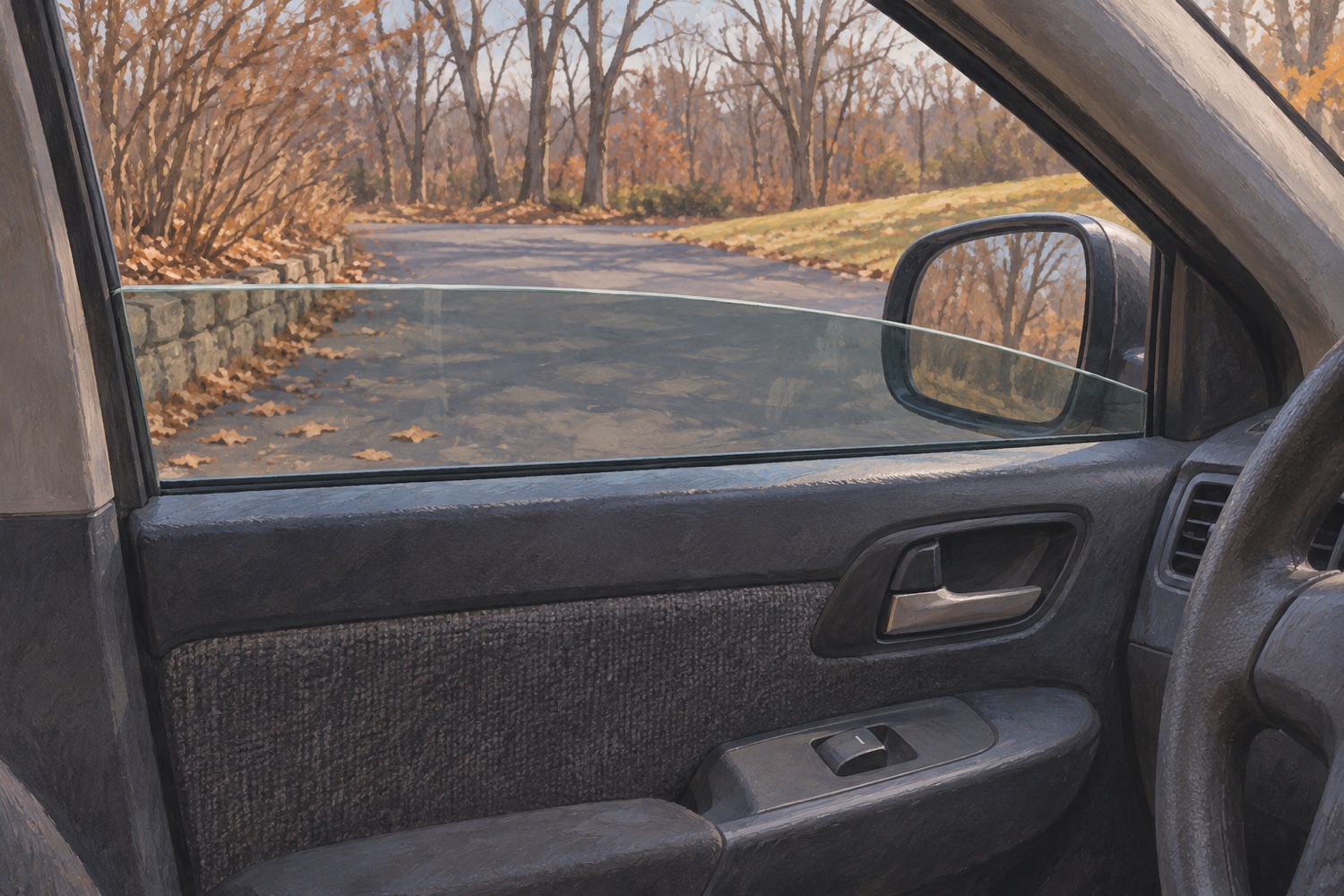
Featured artwork is an AI-generated illustration of a partly open car window, not a photograph of a customer's vehicle or a repair procedure.
Common questions
Does a reversing window prove the motor is faulty?
No. The cause needs to be established from the movement, operating conditions and appropriate inspection.
Can battery disconnection affect automatic window operation?
On some vehicles, yes. Check the model-specific initialization instructions and warnings or ask the shop to verify the required procedure.
Should I keep trying until the window stays closed?
Stop repeated attempts if the glass reverses, binds or moves abnormally. Do not force it or bypass protection to work around an unexplained fault.