Heated Seat Not Warming? Record the Symptoms Before Buying Parts
A lit button does not tell the whole story. Record the settings and symptoms so a heated-seat inspection starts with evidence.
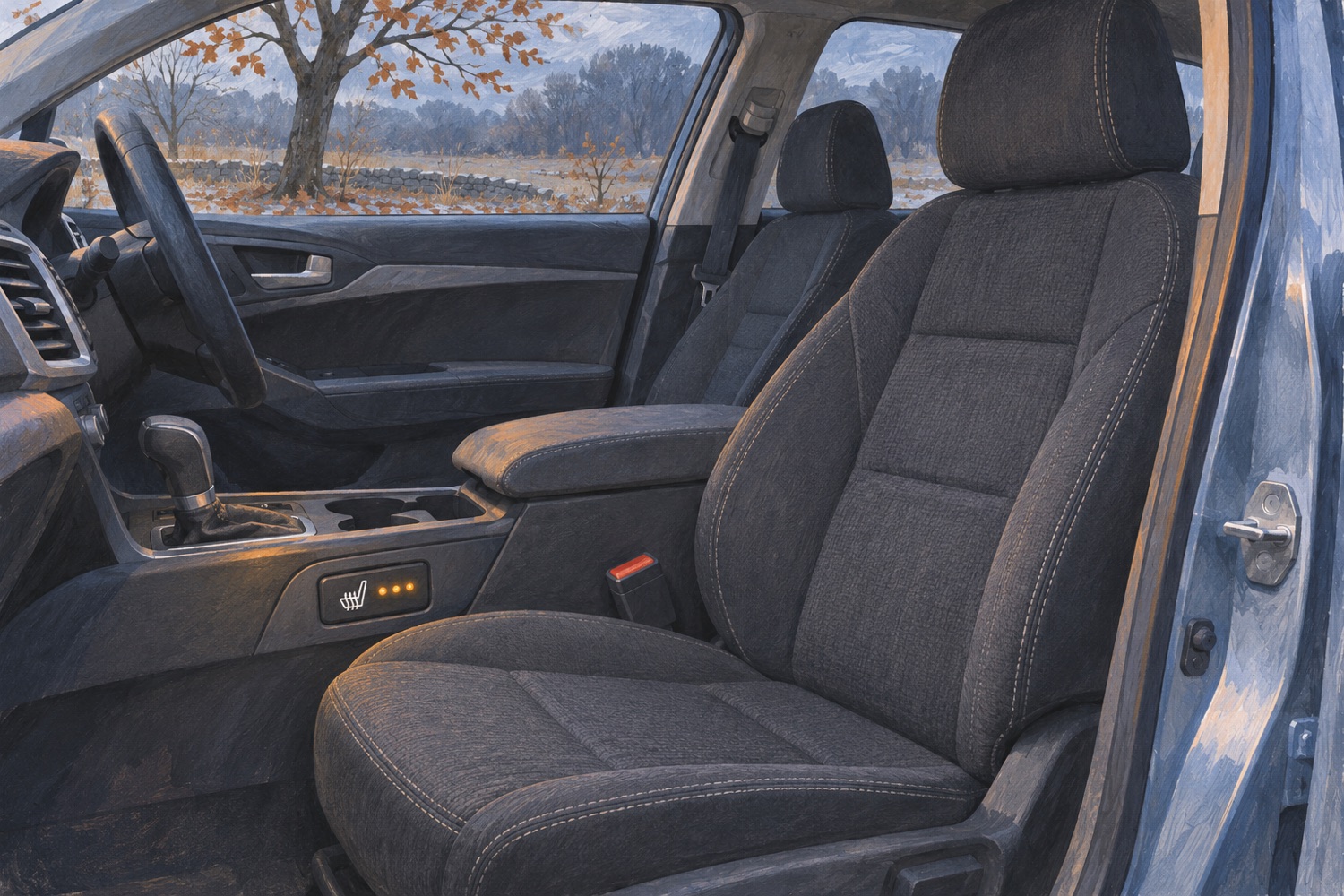
A cold seat is easy to notice on a November morning in Bolton or Caledon. Working out why it stays cold takes a little more care. A button that lights up, a seat that warms only sometimes, and a seat that switches itself off are different complaints. They should not automatically lead to the same replacement part.
Before authorizing a new heating pad or control switch, describe what happens and ask how the cause will be confirmed. A few observations can make the first inspection more useful without taking the seat apart.
Start with the controls for your exact vehicle
Check the heated-seat section of the owner's manual for your model, year and equipment. Confirm the vehicle is in the operating state the manual requires, then select the appropriate seat and heat level while safely parked. Do not run an engine in an enclosed garage to perform this check.
Look for separate controls for the seat cushion, backrest, ventilation or automatic heating. A symbol that resembles a seat does not necessarily select the function you intended. Record the setting you chose instead of assuming the last setting was retained.
Automatic operation can also be different from manual operation. For example, Volvo's S60 guidance describes an automatic-start setting tied to low ambient temperature, with separate driver and passenger preferences. That is a model-specific example, not a universal temperature rule. A seat that does not start heating automatically may still respond normally to its manual control.
Describe the pattern before naming the part
A useful booking note answers several practical questions:
- Is the problem on the driver's side, passenger's side or both?
- Does the indicator stay on, go out, flash or fail to respond?
- Does the cushion warm while the backrest stays cold, or the reverse?
- Does heating begin and then stop, or never become noticeable?
- Did the change follow a spill, interior cleaning, seat work or another electrical concern?
You do not need to repeat the fault over and over. Note what you have already observed during ordinary use. A photograph of a message or control setting can help, provided you take it while parked.
Avoid describing the problem only as “the seat fuse is bad.” That commits the conversation to a cause that has not been established. “The passenger indicator stays on, but the seat remains cold while the driver's seat warms” gives the technician a much clearer starting point.
Separate remote-start behaviour from normal operation
If the complaint occurs only after remote starting, say so. Do not combine that observation with a failure after you have entered the vehicle and selected heating yourself. The two operating conditions can use different settings.
Chevrolet's heated and ventilated seat guidance explains that equipped vehicles can transition from a remote-start setting to an ignition-on setting when automatic seat functions are enabled. Check the instructions for your own vehicle before treating a change during that transition as a fault.
Useful details include whether manual heating works afterward and whether the automatic preference was recently changed. These observations help distinguish a control-setting question from a persistent heating concern. They do not prove that a particular component is healthy or faulty.
Leave under-seat connectors and upholstery alone
There is no need to unplug connectors, probe wiring or remove trim to collect those observations. Seat assemblies can include safety-related equipment as well as comfort features. Let the technician use the correct service information before disturbing anything under the seat.
Do not bypass a fuse or install a higher-rated fuse to keep a heater operating. If a fuse is suspected, ask why it failed and what testing supports that conclusion. Restoring power without understanding a recurring electrical fault is not a complete repair.
Also mention any aftermarket seat cover, cushion or accessory. Compatibility should be checked against the vehicle's instructions rather than assumed because the accessory fits physically.
Stop using heat if it becomes abnormal
Uncomfortable concentrated heat, a burning smell or visible damage calls for stopping use and arranging assessment. Do not keep cycling the heater to see whether the symptom clears. If there is smoke or an immediate fire concern, stop safely, leave the vehicle and seek emergency help.
Ford's heated-seat precautions warn against insulating the seat with blankets or cushions, puncturing it with sharp objects and operating it while wet after a spill. The same guidance warns that burns can occur even at low settings, particularly during extended use. Follow your own manual, especially if an occupant has difficulty sensing temperature changes.
A seat that stays cold and a seat that overheats should be reported differently. Be explicit about heat, smell, moisture and visible damage when arranging the appointment.
Ask what evidence supports the repair
A useful diagnosis connects the reported symptom to a confirmed fault. Depending on the vehicle and findings, the technician may need to examine the control request, electrical supply, wiring, heating components or temperature feedback using the manufacturer's procedure. Not every vehicle uses the same arrangement, so a generic parts list is not a diagnosis.
Before approving work, ask what was tested, what failed that test and how the proposed repair addresses your complaint. If the concern could not be reproduced, ask what information would help on the next visit. Intermittent symptoms are worth documenting accurately rather than turning into a confident guess.
After repairs, confirmation should match the original complaint: the affected seat, the relevant heat setting and, when applicable, the automatic or remote-start condition. Simply clearing a message or showing that the button illuminates may not answer whether the original concern is resolved.
For help planning an inspection, review Albion Auto Service's electrical repair information or contact the shop with your vehicle details and observations.
Featured artwork is an AI-generated illustration.
Common questions
Does an illuminated button prove the heating element works?
No. The indicator is an observation, not a complete test of heating operation.
Should both front seats feel identical immediately?
Do not use a quick comparison as a universal pass-or-fail test. Confirm each seat’s selected settings and describe any persistent difference. Expected operation comes from the vehicle’s service information.
Should I replace the seat switch first?
Only if testing supports that repair; a cold seat alone does not identify the switch as faulty.