Torn CV Boot? Ask What the Joint Inspection Shows
The boot protects a lubricated joint. A tear needs attention, while the condition of the joint helps determine how much repair is necessary.
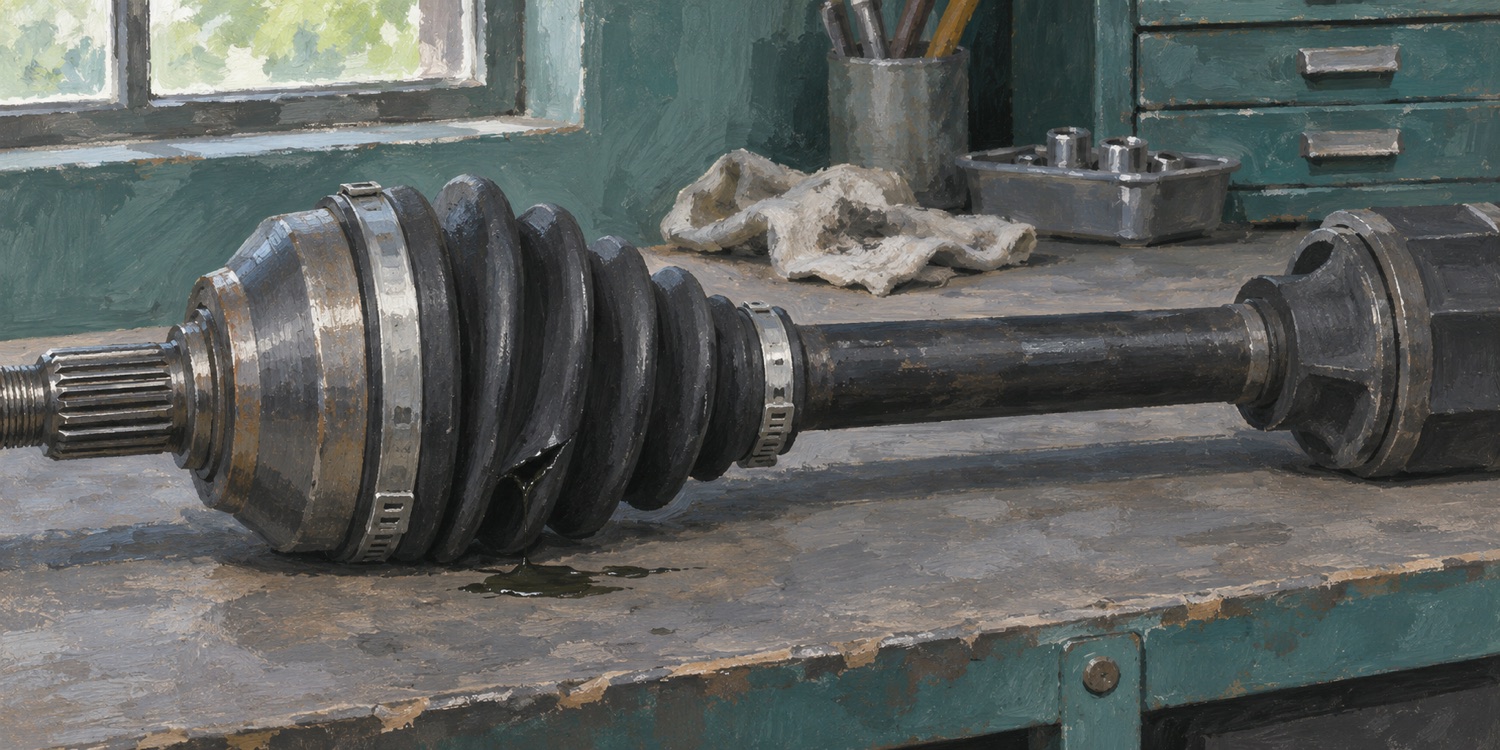
A photo of a split rubber boot can arrive with a recommendation for an entire axle. That may be the right repair, but the next useful question is what the inspection found inside and around the joint. The boot keeps lubricant in and contamination out. Once it is damaged, the condition of the protected joint becomes part of the decision.
If a technician finds a torn CV boot during a tire change, ask which side and which joint are affected. Request a clear picture of the damage and an explanation of the proposed repair. You do not need to identify the failed part yourself to ask for those details.
What the boot protects
CV stands for constant velocity. These joints allow a drive axle to transmit power while accommodating movement and, where applicable, steering angles. Flexible boots surround the joints and contain their lubricant. The inner and outer ends can have different joint designs and service requirements.
A split or poorly sealed boot can allow grease to escape and water or debris to enter. The joint may then deteriorate. How long the opening has existed, how much lubricant remains and what contamination or wear is present all matter. A visible tear is a reason to arrange assessment promptly, even if the vehicle still feels normal.
Treat the boot and the joint as related inspection items. A fresh-looking boot cannot repair existing internal wear. Equally, a photograph of damaged rubber alone does not describe every part of the axle’s condition.
Grease near a wheel is a clue
Grease thrown onto the inside of a wheel can come from a damaged CV boot. If you notice an unfamiliar greasy deposit while cleaning the wheels, photograph it before wiping it away and arrange an inspection. Explain which wheel you were cleaning and when you first saw it.
Avoid crawling beneath a vehicle supported only by a jack or reaching near moving driveline parts. The shop can inspect the boot, clamps and surrounding area with the vehicle properly supported. Ask whether the source of the deposit was confirmed, rather than assuming every dark mark comes from the axle.
If the grease appeared after recent repair work, include that in the history. Old residue, a newly developing leak and grease left during a repair need to be distinguished. Cleaning and checking the confirmed source may be part of that assessment.
Describe noises without choosing the part
A clicking or popping sound during a turn can indicate an outer CV joint concern. Clunks and vibration can also have driveline causes, but they overlap with other faults. Record when the symptom occurs during normal driving and tell the shop whether it changes with acceleration, turning or road speed.
Do not repeatedly drive tight circles or accelerate hard to provoke a noise. If there is severe vibration, a sudden handling change or any concern about safe operation, stop when safe and arrange assistance. A brief description of what already happened is enough to start the conversation.
A quiet joint still needs assessment when its boot is damaged. The absence of clicking cannot establish that its surfaces are clean and unworn. Noise is one part of the history, alongside the physical findings.
What can support a boot-only repair?
Ask whether the joint remains serviceable under the applicable inspection procedure. GKN’s workshop guidance specifically calls for thorough joint inspection when a boot is replaced. The technician should explain whether the joint’s condition supports retaining it.
A suitable repair involves the correct boot, lubricant and associated hardware for the application. The design and parts availability influence the procedure. Ask what the quote includes and how the joint will be assessed before the repair is completed.
If inspection reveals wear, damage or contamination that makes retaining the joint inappropriate, replacing only its cover would leave the underlying concern in place. That finding should be part of the explanation for a joint or axle recommendation.
What can support replacing the axle?
A complete axle may be proposed because of joint damage, the way the assembly is serviced or the practical repair options for the vehicle. Ask which reason applies. The answer should describe your vehicle’s findings and the parts being supplied.
If both sides are recommended, ask for the condition of each. Similar age can be relevant to planning, but it does not replace an explanation of what was found on the other side. You can discuss confirmed repairs and any preventive recommendation with the evidence clearly understood.
Also ask whether the cause of unusual boot damage needs investigation. MOOG’s technical guidance notes that a pulled-apart inner joint or a stretched or torn inner boot can warrant checks of mounts, suspension and alignment of the surrounding assemblies. That is especially useful context after an impact, modification or earlier repair.
Keep the repair connected to the complaint
Before authorizing work, confirm which axle or joint is being addressed and whether the repair is expected to resolve a reported noise, prevent further deterioration or both. If vibration was the original concern, ask how the inspection connected it to the axle.
Afterward, keep the invoice and inspection images. Ask what verification was completed and whether any other concern remains. A clear record helps if the same symptom returns and prevents another technician from having to reconstruct the history from memory.
Drivers in Bolton and Caledon can review Albion’s vehicle services or contact the shop with a boot inspection report, grease photograph or description of a new noise. The aim is to establish the condition and cause before choosing the extent of replacement.
*Featured artwork is an AI-generated illustration.*
Common questions
Does a torn boot always require a complete axle?
The joint condition, vehicle service procedure and available repair options determine the appropriate repair. Ask what the inspection found.
Can a damaged boot matter if there is no clicking?
Yes. Lubricant loss and contamination can occur before an obvious noise. Arrange assessment promptly.
What should I bring to an appointment?
Bring inspection photographs and describe the affected side, grease deposits, noises and any recent impact or repair work.