Packing for a Winter Trip? Count Passengers in the Load Limit
An empty space in the trunk does not tell you how much weight the car can carry. Start with the vehicle’s loading label and count everyone going on the trip.
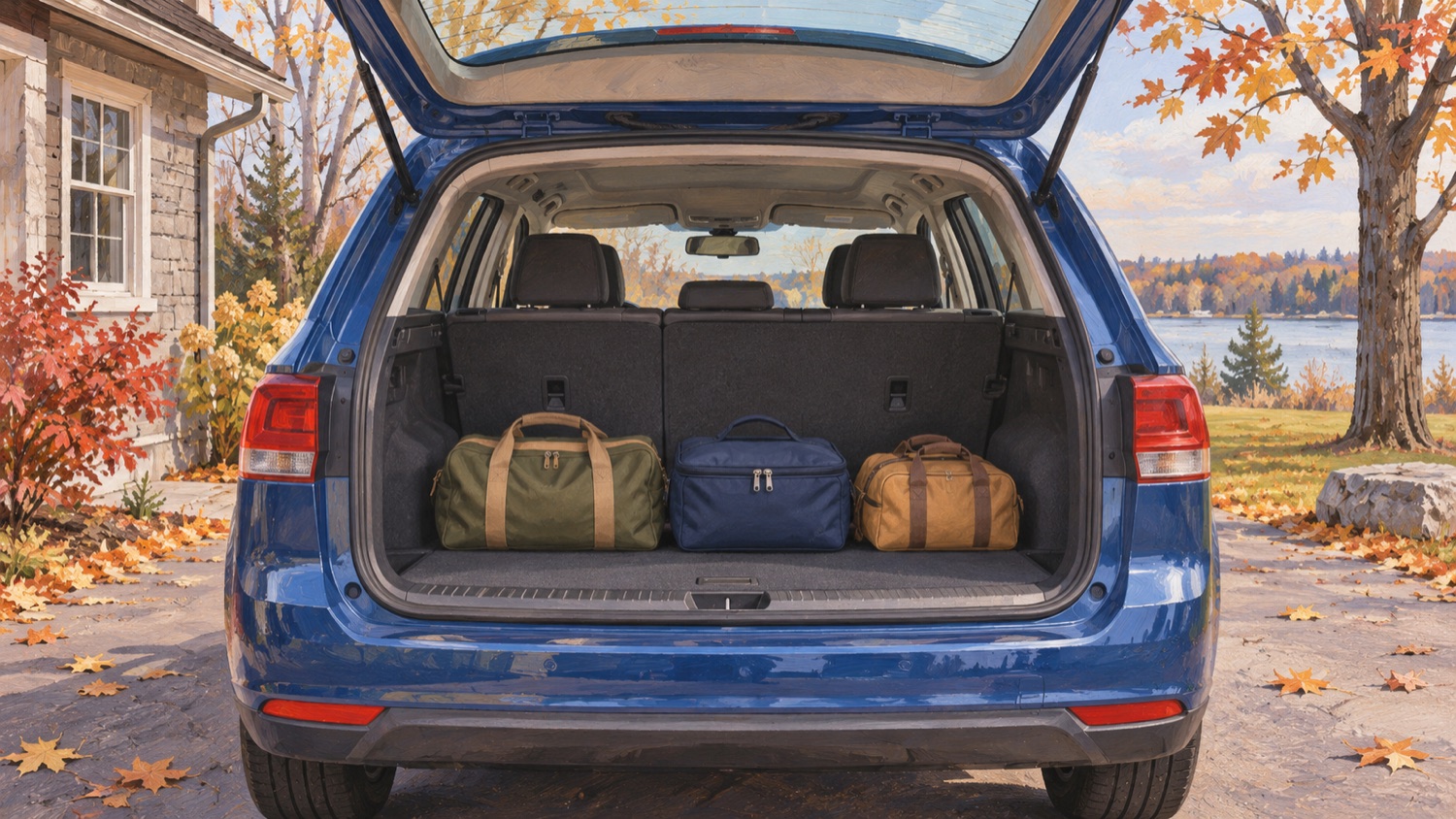
Before adding the last suitcase, check the vehicle’s combined occupant and cargo allowance. That limit includes the people riding in the car. A roomy trunk and an available seat can make a trip look easy to pack, while the weight calculation tells a different story. It is a useful check for a winter visit, a ski weekend or a full car leaving Bolton with gifts and supplies.
Start while the vehicle is parked and you still have time to change the packing plan. Find the tire and loading information label using the owner’s manual. It is commonly near the driver’s door opening. Read the value for the combined weight of occupants and cargo, and keep a photograph with your trip notes.
Use the label on your own vehicle
Vehicles that look similar can have different carrying allowances. Equipment and configuration matter, so an online advertisement for the model is a poor substitute for the label on the car you are loading. If a label is missing, damaged or unclear, ask the manufacturer or dealer for help identifying the correct information.
The manual also explains other limits, including overall vehicle weight and axle ratings. A combined occupant and cargo allowance is one part of the loading instructions. It does not remove the need to respect those other limits or any restrictions on a roof rack or carrier.
If the vehicle has been modified, mention that when asking for guidance. Added equipment takes up carrying capacity. Keep the paperwork for accessories or alterations with the vehicle information so a loading question can be answered using the actual setup.
Subtract the people before counting the bags
Write down the combined allowance, then subtract the weight of everyone travelling, including the driver. The remainder is the starting allowance for luggage and other carried items. Work in one unit throughout. Mixing kilograms on the label with pounds from a scale can produce a reassuring but incorrect result.
For an arithmetic example only, suppose a label permits 450 kilograms for occupants and cargo. If the people aboard total 300 kilograms, 150 kilograms remain before accounting for the other carried items. These are invented example values, not specifications for any particular car. Use your own label and actual load.
Count items already in the vehicle as well as what you are adding today. A tool bag, child seat, emergency supplies and equipment carried all winter still have weight. A pet and its carrier also belong in the calculation. Weigh packed bags when the remaining allowance is small. Guessing that every suitcase weighs about the same can hide a substantial difference.
A roof box does not add vehicle capacity
Moving luggage onto the roof creates room inside, but the weight is still carried by the vehicle. Check the vehicle’s roof-load instructions and the ratings of the rack and box. Include the carrier equipment itself as required by those instructions. Follow the lowest applicable limit.
A trailer introduces additional requirements. Its load on the vehicle, including tongue weight where applicable, must be considered along with passengers and cargo. A towing rating by itself does not answer how much luggage can go in a fully occupied tow vehicle. If you are towing, use the vehicle’s complete towing and loading guidance rather than extending a simple suitcase calculation.
When the calculation leaves too little allowance, reduce the load or change the travel arrangement. Fitting higher-capacity tires, adding air or changing suspension parts does not authorize exceeding the manufacturer’s vehicle ratings.
Check the tires for the intended use
Use the specified cold tire pressures and any manufacturer instructions for the loaded condition. The maximum pressure moulded into a tire sidewall is not automatically the pressure your vehicle needs. If the winter tire size differs from the original setup, confirm the approved fitment, load capability and pressure guidance with the installer.
Look for an existing pressure-loss concern or visible damage before the trip. A tire that repeatedly needs air deserves inspection. Loading the vehicle for a longer journey is a reason to resolve that concern, rather than treating another top-up as the repair.
If the vehicle already has a vibration, unusual tire wear or a handling change, describe it separately when arranging service. The shop needs to know whether the symptom appears empty, loaded or under both conditions. Carrying less weight does not establish the cause of an unrelated tire or suspension fault.
Pack securely and preserve access
Follow the manual’s instructions for securing cargo and using the available anchors. Keep heavier items low and avoid loose objects that could move into the passenger area. Maintain the driver’s view and keep access to essential supplies practical. A bag wedged into a space is not necessarily secured against movement.
Before departure, check that seats and seat belts remain usable and that the hatch closes normally. Keep emergency equipment accessible without unloading every suitcase. If you need to remove cargo later, reassess the way the remaining items are secured. A tightly packed group of bags can become loose after one is taken out.
Bring measurements to a concern about sagging
If the car sits unusually low or unevenly, first record what is aboard. A photograph on level ground and a list of the load help explain the situation. If the stance remains abnormal when ordinary cargo is removed, arrange inspection. Avoid assuming the vehicle needs springs or an alignment solely from a loaded photograph.
Drivers in Bolton and Caledon can review Albion’s tire services or contact the shop about tire condition, fitment or a handling concern before a trip. Bring the vehicle details and describe the conditions when the issue occurs so the inspection can address its cause.
*Featured artwork is an AI-generated illustration.*
Common questions
Does the driver count toward the load allowance?
Yes. Include the driver and all passengers when calculating the combined occupant and cargo load.
Does putting luggage on the roof increase capacity?
No. The vehicle still carries that weight, and the roof, rack and carrier have additional limits to follow.
Can extra tire pressure compensate for overloading?
No. Follow the specified pressure and stay within the vehicle and equipment loading limits.