Brake Pedal Feels Hard With the Engine Off? Describe When It Happens
The engine state and the timing of a pedal change help explain the complaint. A sudden increase in braking effort while driving needs immediate attention.
A firm brake pedal before starting the car can feel alarming, especially if you have pressed it several times while waiting in the driveway. The first detail to establish is when the change happened. Was the engine off the whole time, or did the pedal become harder while you were already driving? Those descriptions lead to different decisions.
**If braking suddenly requires much more effort while moving, concentrate on stopping safely and arrange assistance.** Follow your vehicle’s emergency guidance. Leave the vehicle parked if braking feels abnormal before departure. A trip around the block is an unsuitable way to decide whether a brake fault is safe.
Why the engine state matters
Power assistance reduces the force you need to apply at the pedal. On conventional systems that depend on engine vacuum, assistance available after shutdown is limited. Repeated pedal applications can use up that reserve, leaving a much firmer feel. Mazda’s owner guidance specifically warns that pumping the pedal with the engine stopped can deplete assistance and increase the effort needed to brake.
This helps explain a possible observation in a parked car. It cannot establish that every hard pedal is normal. A change from the vehicle’s usual behaviour, a warning message or abnormal braking during use still warrants assessment. Keep the circumstances attached to the symptom when describing it. “The pedal became firm after several presses with the engine off” is more informative than “the brakes locked up.”
Engine silence also means different things in different vehicles. A hybrid can be ready to drive with its petrol engine stopped. Automatic stop-start systems can shut an engine down temporarily during normal operation. Use the vehicle’s displays and manual to identify its operating state. Avoid applying a generic engine-off explanation to every quiet vehicle.
Record what happened before trying again
With the car securely parked, write down what you already observed. Include whether the engine had run recently, how long the vehicle had been standing and whether the pedal was firm on the first press or became firmer after repeated presses. If another driver used the vehicle, ask whether they noticed anything unusual when braking.
Note any warning lights or messages exactly. A photograph taken while parked can preserve the wording. Also record whether the car started normally, whether it failed to start, and whether the pedal felt unusual during the last drive. A starting complaint and a pedal complaint can occur together without proving that one particular component caused both.
Follow the normal starting procedure in your manual. If you cannot complete it normally, get advice using the vehicle year, model and exact message. Avoid repeatedly pumping the pedal or applying excessive force as a diagnostic experiment. The number of presses a person remembers is not a reliable way to judge whether a booster needs replacement.
Check for an obvious obstruction while parked
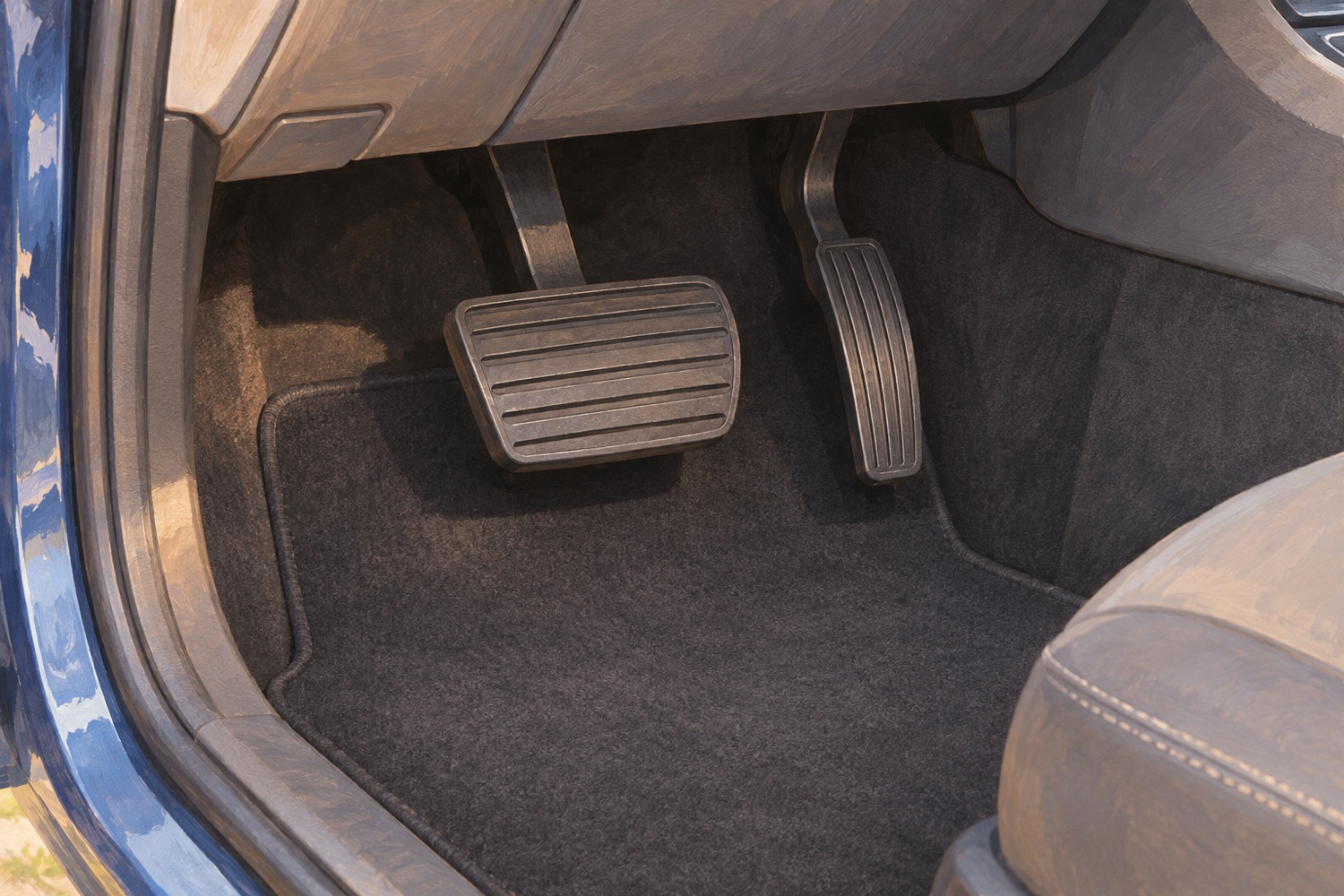
A displaced mat or an object in the footwell can interfere with pedal movement. With the vehicle safely secured and switched off, look for loose items and confirm that the correct mat is secured as instructed. Keep the pedal area clear. If something was obstructing it, explain what you found when seeking advice, particularly if you experienced abnormal braking.
Be specific about the sensation. A pedal that takes more force, a pedal that travels unusually far, and a pedal physically blocked by something are different observations. If you noticed more than one, report each. Avoid reaching into the footwell while driving or asking a passenger to investigate around your feet.
When to leave the vehicle parked
A new hard pedal with the vehicle operating normally, reduced stopping ability or a brake warning should be assessed promptly. Use roadside assistance when safe operation is uncertain. If the engine stalls while moving, do not intentionally coast or switch it off to compare pedal feel. Manufacturer guidance warns that losing engine operation can reduce assistance.
Heavy braking effort deserves attention even if the vehicle eventually stops. The purpose of assistance is to make the required effort manageable. A driver’s ability to force the pedal down does not demonstrate that the system is functioning correctly. Likewise, a restart that temporarily changes the symptom is useful information to report, rather than proof that the underlying issue has gone away.
Ask what the inspection establishes
A useful diagnosis begins with identifying the brake-assistance system fitted to your vehicle and reproducing the complaint under controlled conditions. Ask whether the observed behaviour matches the manufacturer’s description for the operating state you reported. If a fault is found, ask which test supports the proposed repair.
Where a vacuum-assisted system is fitted, the assessment may need to distinguish the supply of vacuum, its retention and booster operation. Other designs require their own procedures. A hard pedal alone is insufficient evidence to order a booster, pump or master cylinder. Equally, fitting brake pads without explaining an assistance complaint leaves the original question unanswered.
Tell the shop about recent brake work, starting problems, an engine stall or any new sound associated with the pedal. Keep the timeline simple. For example, give the date you first noticed the change and whether it appeared before or after other work. Report observations without needing to name the failed part.
Drivers in Bolton and Caledon can review Albion’s brake repair information or contact the shop to describe a concern and discuss how the vehicle should be brought in.
*Featured artwork is an AI-generated illustration.*
Common questions
Can pressing the pedal with the engine off make it firmer?
On conventional vacuum-assisted systems, repeated applications can consume the remaining assistance. Describe the circumstances and investigate any new or unusual behaviour.
Should I drive to see whether a hard pedal clears?
Leave the vehicle parked if braking feels abnormal or safe operation is uncertain. Arrange advice or assistance.
Does a hard pedal prove the booster has failed?
No. The system design, operating state and inspection findings are needed before selecting replacement parts.