Need a Tow? Give Roadside Assistance These Vehicle Details
The correct recovery equipment depends on the vehicle and its condition. Tell the dispatcher more than the model name before a truck is sent.
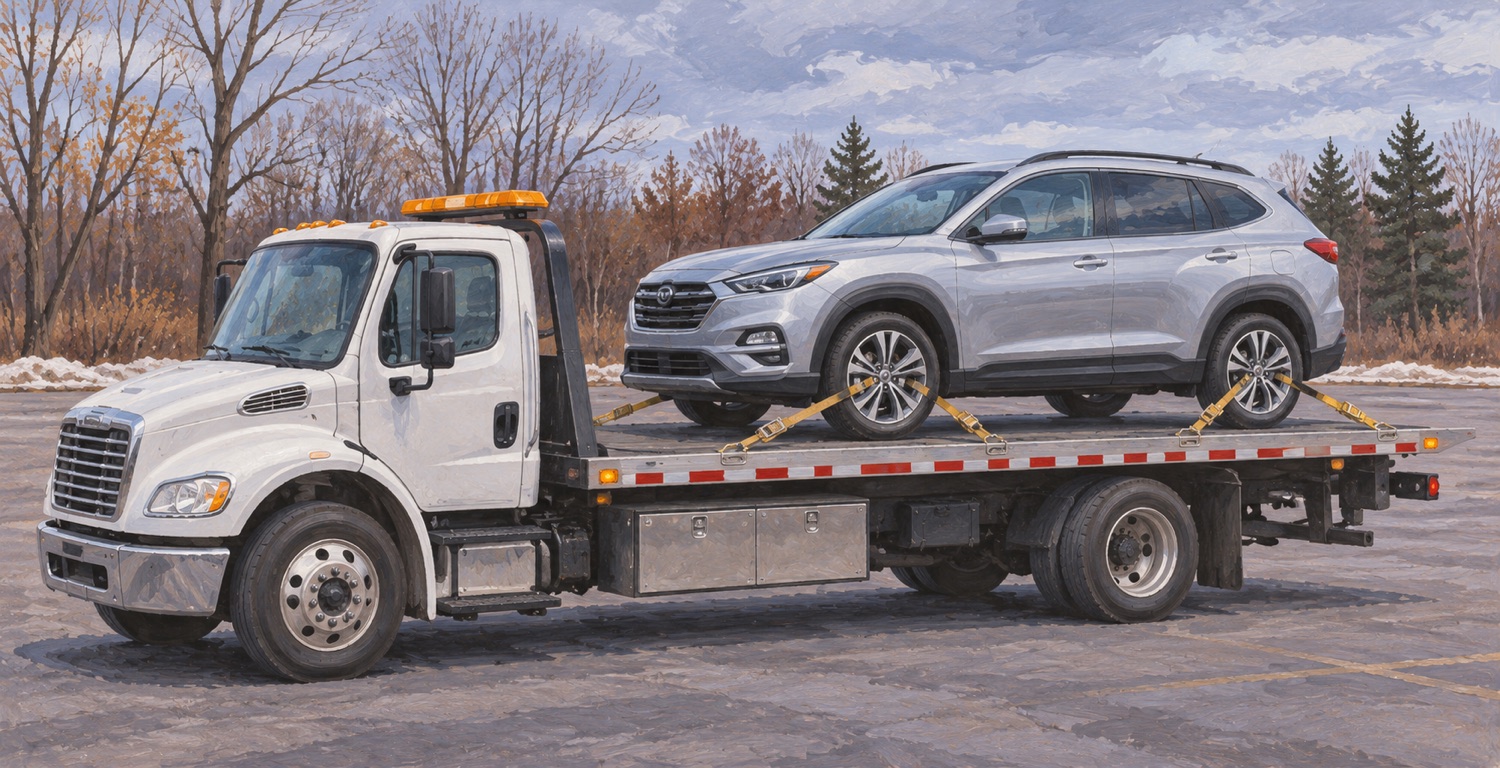
When a vehicle will not start or cannot safely continue, the first call often begins with its location. The next useful information is the exact vehicle and what it can still do. A car with no electrical power, a locked wheel or collision damage can require different recovery equipment from one that rolls freely. Giving those details before a truck leaves can prevent a second dispatch.
If you are in immediate danger or a collision has caused injuries, contact emergency services first. Follow the dispatcher’s safety instructions for your location. The observations below are for information you can provide safely, without standing in traffic or attempting repairs beside the road.
Identify the vehicle accurately
Give the year, make, model and drivetrain if known. Say whether it is all-wheel drive, four-wheel drive, a hybrid or an electric vehicle. If you are unsure, tell the dispatcher that instead of guessing from a badge or vehicle shape. Have registration or vehicle details available if they can be accessed safely.
Mention modifications that affect access or clearance, such as lowered suspension, oversized tires or added equipment. Tell the dispatcher about a trailer or a loaded roof carrier too. The operator needs to plan for the actual vehicle at the scene.
Avoid assuming that a truck used for a previous car will suit this one. A familiar model name may cover several powertrains and configurations. The manufacturer’s instructions for your particular vehicle should determine the transport method.
Find the transport section of the manual
Look for headings such as towing, emergency towing or instructions for transporters. If the manual is available on your phone, save the relevant page and offer it to the operator. Use the correct model year and market version where available.
Manufacturers can specify which wheels must remain off the road and which methods are approved. For example, Tesla’s Model S transport instructions require all four wheels to be off the ground and recommend a flatbed. They also describe a limited alternative using appropriate wheel lifts and dollies. That is an example for that vehicle, not a universal rule for every electric car.
Ask the dispatcher to confirm that the equipment sent can comply with your vehicle’s instructions. A flatbed may be the appropriate choice, but loading a disabled vehicle onto it still requires a suitable procedure.
Explain what still works
Tell the dispatcher whether the vehicle has electrical power, whether the key is available and whether the doors can be opened. Report whether the dashboard is responding and any message preventing gear selection or parking-brake release. Do not force a selector or try an unfamiliar release procedure.
If a wheel is visibly damaged, a tire has collapsed or the vehicle is resting unusually low, describe it. If you already know it will not roll, say how that was discovered. There is no need to push it or test the brakes on a slope to gather information.
For an EV or plug-in hybrid, say whether it is connected to a charger and whether the connector can be released normally. Leave damaged charging equipment and unfamiliar electrical components alone. A vehicle with collision damage, smoke or unusual heat requires appropriate emergency guidance before routine transport arrangements.
Neutral and tow mode have specific purposes
Putting a vehicle into neutral does not automatically make it suitable for being pulled along the road. Transport restrictions still apply. Similarly, a feature labelled tow mode can be intended only for a short loading or repositioning operation.
Tesla’s Model S guidance, for instance, limits tow mode to controlled loading or short repositioning and describes alternatives when the mode cannot be enabled. The operator should use the current procedure and observe its conditions. Avoid switching modes in advance simply because a video shows someone doing it.
A disabled vehicle may become free to roll when a parking brake or holding function is released. Leave those operations to the recovery professional working with the vehicle secured. Share the manual and the symptoms, then let the operator establish the safe loading sequence.
Describe the access to the vehicle
Give the precise pickup position, including whether the car is in an underground garage, a narrow driveway or a parking space with another vehicle close beside it. Mention overhead clearance signs, a steep approach or snow blocking access. A truck that can transport the car may still be unable to reach its current position.
Tell the dispatcher which direction the vehicle faces and whether there is room in front or behind it. Photographs can help when requested, provided you can take them from a safe place. Stay clear of the recovery work area and follow the operator’s instructions.
Confirm the destination before loading. If the vehicle is going to a repair shop, check its receiving arrangements and how the keys and symptom information should be handed over. Avoid assuming an unattended lot has an approved overnight drop-off procedure.
Preserve the original complaint for diagnosis
Write down why the tow was needed. Include the exact warning, whether the engine stopped while driving, whether the car would not start, or whether a tire or braking concern made further travel unsafe. Note any attempts already made, such as a boost, and whether they changed the symptom.
Keep the recovery paperwork with the service record. If the vehicle arrives with no power or a warning remains, the technician needs the original timeline as well as its condition after transport. A tow does not establish that the battery, starter, transmission or another component needs replacement.
Drivers in Bolton and Caledon can contact Albion Auto Service to discuss a repair concern and receiving arrangements, or review the shop’s vehicle services. Share the vehicle details and symptoms so diagnosis can begin with the cause of the breakdown.
*Featured artwork is an AI-generated illustration.*
Common questions
Does selecting neutral make every vehicle safe to tow on its wheels?
No. The manufacturer’s transport restrictions still apply to the vehicle and drivetrain.
What if the car has no electrical power?
Tell the dispatcher before the truck is sent. Loading and release procedures may require additional equipment.
Should I activate tow mode before the operator arrives?
Wait for the recovery professional’s instructions and follow the vehicle-specific procedure with the vehicle secured.