Bulge in a Tire Sidewall? Stop and Arrange an Inspection
An outward tire bubble is not a cosmetic mark. Stop driving when safe, arrange assistance and have the damage assessed before choosing the replacement.
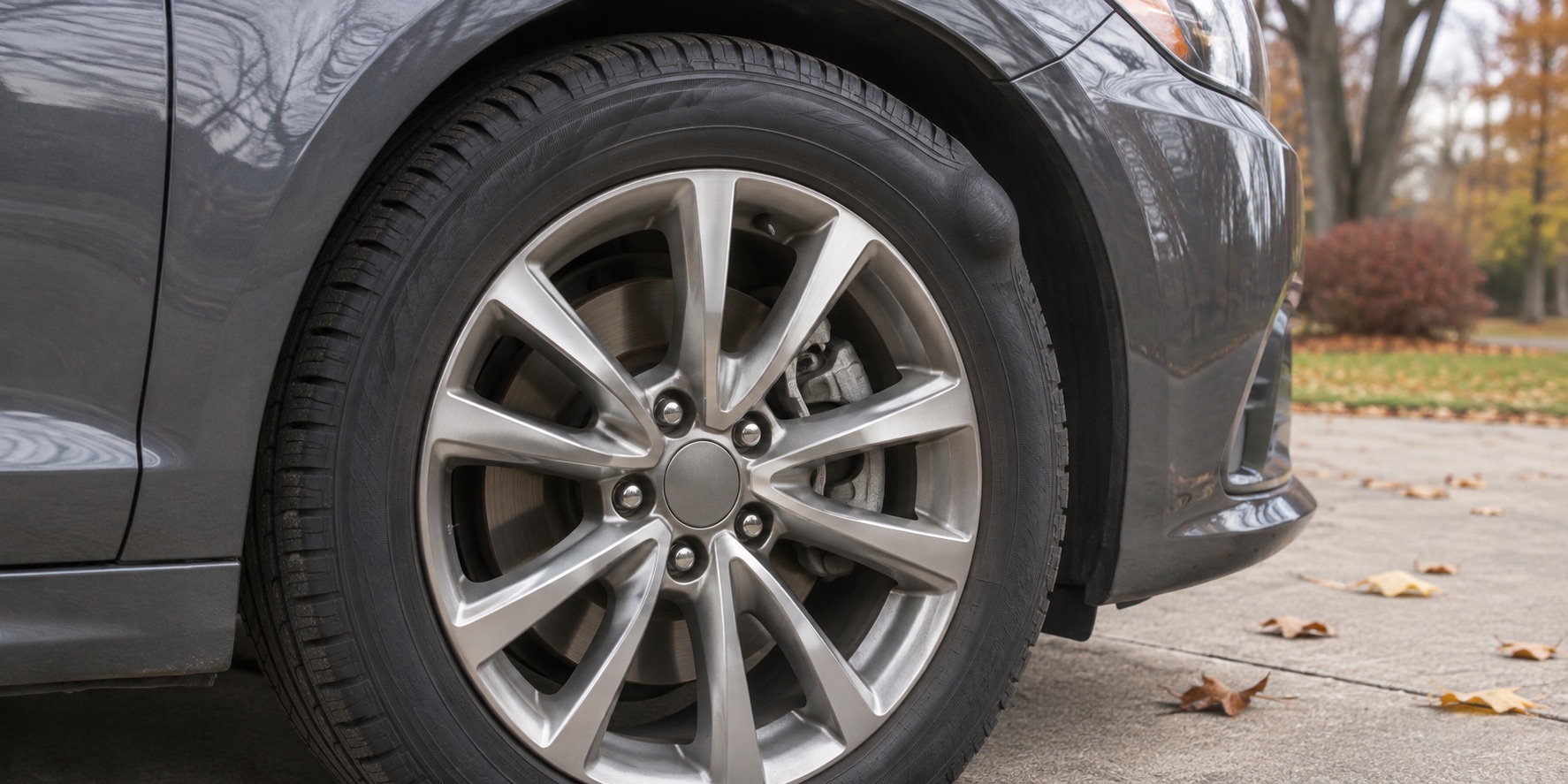
An outward bubble in a tire sidewall is a reason to change your plans, even if the tire still looks inflated and the vehicle seemed to drive normally. Do not plan another trip on it to see whether the shape changes. Stop driving as soon as it is safe and arrange an appropriate next step.
For owners in Bolton and Caledon, the important distinction is between recognizing a potentially unsafe tire and deciding what caused the damage. You can take the first concern seriously without guessing at the second. A tire professional should assess the condition and help determine a suitable replacement and any related checks.
A bubble is different from a shallow indentation
Michelin Canada's sidewall guidance distinguishes a normal inward indentation at an internal cord overlap from an outward protrusion associated with structural failure. The two can be confused in a photograph, especially when the tire is dirty or the lighting is uneven.
Continental also explains that a pronounced outward bulge can indicate damaged internal cords, while construction-related indentations are a different condition. If you are uncertain which you are seeing, have a tire professional examine it. Do not use a reassuring internet photograph to dismiss a feature that has not been assessed on your tire.
An illustration can help explain the distinction, but it cannot certify a tire as safe. The actual tire, its condition and its history matter more than whether it resembles an example on a screen.
Do not treat the trip to the shop as a test
Michelin's repair guidance says a sidewall bulge requires replacement and advises stopping driving when safe because of the risk of sudden tire failure. A short distance or low-speed plan does not turn a damaged tire into a dependable one.
If you discover the concern at home, contact the shop or roadside assistance before setting off. Describe it as an outward sidewall bubble rather than simply asking for a pressure check. If you notice it during a journey, prioritize a safe stopping location and assistance rather than a photograph beside moving traffic.
A suitable spare may be an option under the vehicle's instructions, but only when changing it can be done safely with the correct equipment. If the location, equipment or your ability makes that uncertain, arrange roadside help. Tell the provider the vehicle details and whether a spare is available so they can plan appropriately.
A repair kit does not restore the structure
Do not apply a plug, patch or sealant as a way to make a sidewall bubble usable. Michelin separates repairable tread injuries from sidewall structural damage; a bulge belongs in the replacement category. This is not the same decision as assessing a small puncture in the tread.
Do not press, cut or puncture the bubble, or experiment with inflation to make it disappear. Leave handling of the damaged assembly to the tire professional. Your useful task is to describe what you noticed and arrange safe inspection, not to carry out a roadside experiment.
Record what happened without assigning blame
Once safely parked, note which wheel is affected, when you first noticed the shape and whether you remember an impact. Include any recent curb contact, pothole strike or other event, but be clear when you do not know. “First noticed today” is not necessarily the same as “damage happened today.”
Continental describes impacts as a common route to internal cord damage. That general explanation does not establish the cause of every individual claim. Avoid presenting an assumption as a confirmed defect, installation mistake or driving event before the tire has been examined.
If safe, take a photograph showing the whole wheel and another showing the area of concern. You do not need to move the vehicle, crawl underneath or turn it around to obtain a better angle. Keep the original images and the date with your service notes.
Give the shop enough information to prepare
Have the vehicle year and model ready, along with the tire make, model and size if you can read them without risk. Explain whether the tires are a seasonal set and whether there have been recent changes. If you cannot read the markings, say so rather than guessing from an old receipt.
Tell the shop about other symptoms you already experienced, such as vibration, a new pull or a pressure warning. Do not drive again to reproduce them. Those observations can help the shop decide what else needs checking, while the damaged tire itself remains the immediate concern.
Bring the purchase invoice and any relevant coverage documents if you have them. Ask what inspection findings and documentation are needed before making a warranty or road-hazard decision. Coverage should be assessed against the actual terms; neither a photograph nor this article establishes that a claim will be accepted.
Choose the replacement using the vehicle requirements
Replacing the damaged tire is not permission to select any tire that fits the wheel. Ask the shop to confirm the required specification and assess compatibility with the remaining tires and the vehicle manufacturer's guidance. If more than one replacement is recommended, ask for the measurements or requirements behind that advice.
Keep the explanation specific: which tire is damaged, what the inspection found, what replacement is proposed and whether anything else requires attention. Diagnosing before replacing parts still matters here. The structural damage requires action, while unrelated wheel or suspension parts should not be added to the repair without evidence.
You can review Albion Auto Service's services or contact the shop to explain the concern before travelling. Make clear that you have noticed a sidewall bulge so safe transport and the inspection can be discussed first.
Featured image: AI-generated illustration of a tire sidewall bulge, not a photograph of Albion Auto Service or a customer's vehicle. It is not a substitute for inspection.
Common questions
Can I drive to the shop with a sidewall bubble?
Do not continue driving on a tire with a sidewall bulge. Stop when safe and arrange assistance or a suitable spare under the vehicle instructions.
Can a sidewall bulge be patched?
No. A structural sidewall bulge requires tire replacement, not a puncture repair.
Is every inward sidewall mark damage?
No. Some construction-related indentations are normal. If you are uncertain about the shape or condition, have a tire professional inspect it.