Turn Signal Flashing Fast? Check the Lamps Before Buying Parts
Check the affected side, identify the correct lamp type and share recent repair history before choosing a replacement.
A turn signal that suddenly flashes faster deserves attention even if the car otherwise drives normally. The dashboard arrow tells you that a signal has been selected, but it is not a substitute for checking what other road users can actually see outside the vehicle.
For drivers in Bolton and Caledon, the useful first step is a safe, stationary lighting check and a clear description of the change. Do not start by ordering a switch, control module or lamp assembly. Identify the affected function, check the vehicle instructions and let the findings guide the repair.
Treat the change as a clue
Ford's direction-indicator guidance explains that a sudden increase in flashing rate warns of a failed bulb. That makes a lamp check a sensible starting point on vehicles with that behaviour. It does not establish which part should be purchased for every make, model and lighting system.
Consult your owner's manual for the meaning of the indicator and any accompanying message. Record whether the change affects left signalling, right signalling or both. Note whether it happens every time or only occasionally. These details are more useful than describing the entire lighting system as broken.
If you notice the change while driving, wait until you can stop safely to investigate. Do not film the instrument panel or walk around the vehicle beside moving traffic. Arrange prompt attention to a signal that is not working correctly; other drivers need to understand your intentions.
Check the external lamps while safely parked
Choose a suitable location away from traffic, secure the vehicle and follow its operating instructions. If another person helps, have them observe from a safe position while the driver operates the controls. Nobody needs to stand in the vehicle's path or reach into moving parts.
Observe the front and rear signal on the affected side and any additional indicator identified in the manual. Report which lamp appears dark, intermittent or different from the matching side. Do not assume that the first working lamp you see proves the whole side is functioning.
Describe the dashboard behaviour separately from the exterior behaviour. For example, the arrow may flash rapidly while a particular exterior lamp does not illuminate. Avoid guessing the internal reason from that observation alone. A precise description lets the shop begin with the actual symptom.
Identify the lamp before buying a bulb
Check the exact year, model and lighting equipment. Vehicles that look similar can have different lamp arrangements. Use the specified replacement information instead of choosing a bulb because its base or appearance seems close enough.
Some lamps contain replaceable bulbs; other units require a different service approach. Ford's published bulb guidance, for example, identifies certain LED lamps as non-serviceable and directs owners to obtain service. Apply your own vehicle's instructions rather than assuming every dark lamp contains a bulb you can change at home.
If a replacement procedure is provided and you are comfortable following it, observe all stated precautions and allow hot components to cool. If access requires work beyond your experience, stop and arrange service. Do not force a housing open, cut wiring or modify a connector to make a part fit.
Include recent changes in the history
Tell the shop if the rapid flashing began after a bulb change, accessory installation, body repair or other work near the affected lamp. Keep the replacement packaging or part number if available. Timing does not prove that the recent work caused the problem, but it gives the inspection a useful starting point.
If aftermarket lamps or conversion bulbs are fitted, describe them accurately. Do not assume that an advertised compatibility claim settles whether a particular part is appropriate for the vehicle. Ask for the application and installation to be checked before adding further components to change the flashing behaviour.
Also mention trailer use if the symptom occurs with towing equipment connected. Record whether the vehicle behaves differently without it during normal use. Do not disconnect equipment while moving or improvise electrical tests. The shop can decide which checks are needed for the reported conditions.
A repeat failure needs an explanation
If a new bulb stops working soon afterward, provide the date and the exact replacement used. Repeating the same purchase may restore the light temporarily without establishing why the concern returned. Ask for the lamp installation and relevant circuit to be assessed as appropriate.
Visible damage, moisture or an unusual smell should be reported, not treated as a complete diagnosis. Avoid touching damaged electrical parts or continuing to operate a lamp that appears overheated. If there is smoke or another immediate hazard, stop using the vehicle and arrange assistance from a safe location.
Intermittent problems can be harder to demonstrate at the appointment. A short video recorded while safely parked may help, along with notes about weather and when the symptom occurred. Do not create a fault deliberately by pulling on wires or disturbing connectors to make the evidence more convincing.
Ask what confirms the repair
Before authorizing a larger repair, ask what testing connects the recommendation to the failed lighting function. A dark lamp is an observation; identifying the reason it does not operate is the next step. Ask which findings were confirmed and whether any uncertainty remains.
After work is completed, confirm that the original signal function was checked, including the exterior lamps rather than only the dashboard arrow. If the concern depended on a particular condition, ask how that was addressed during verification. Keep the invoice so future work has an accurate history.
Review our electrical repair information or contact Albion Auto Service with the vehicle details and affected side. The aim is reliable signalling and a repair supported by inspection, whether the answer is a correct replacement bulb or further electrical diagnosis.
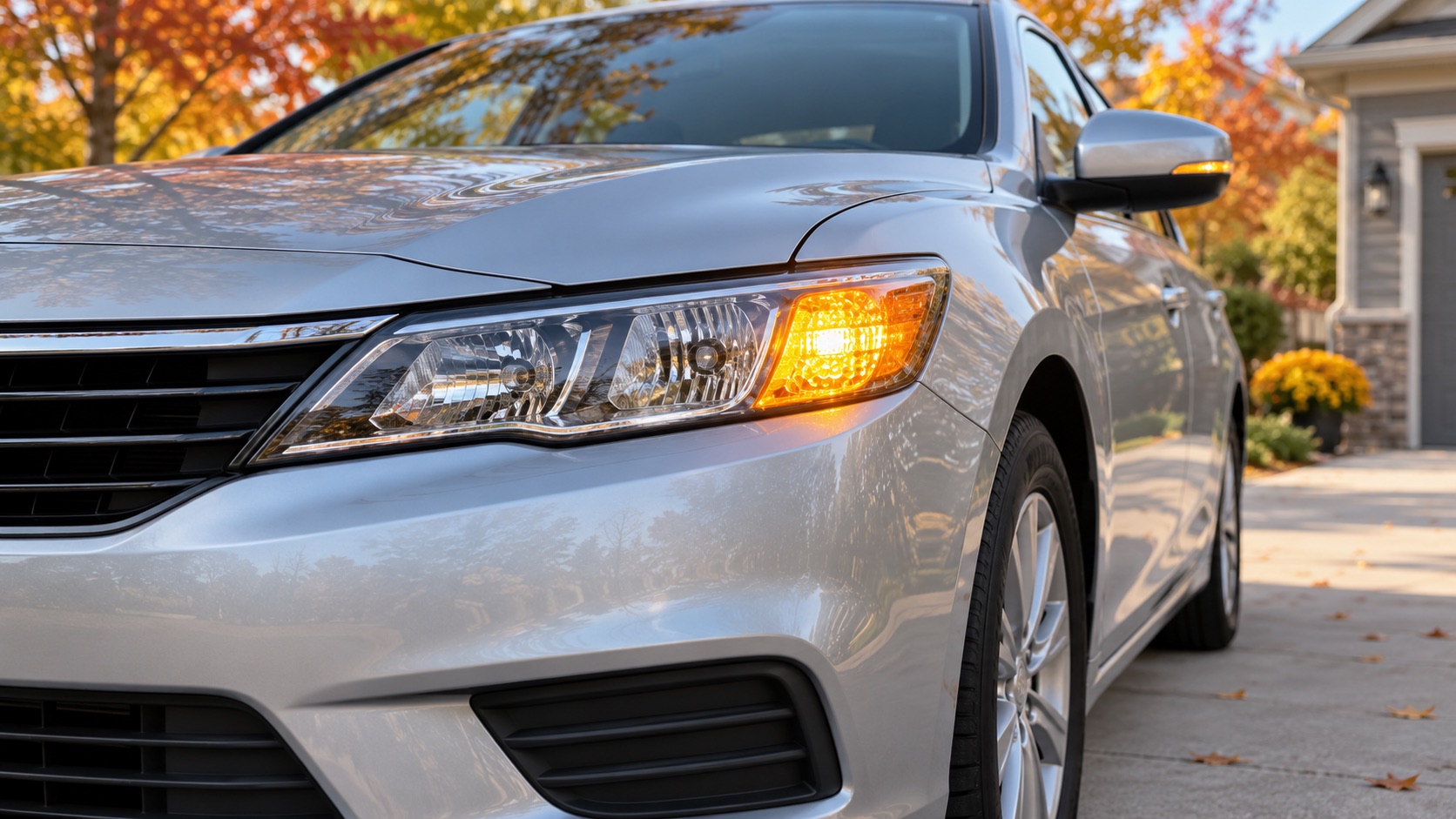
Featured image: AI-generated illustration of an illuminated signal on a generic parked vehicle. It is not an Albion Auto shop or customer photograph and does not identify a fault, bulb specification or repair procedure.
Common questions
Does rapid flashing always identify the failed part?
No. It can warn of a failed bulb on vehicles designed that way, but the affected lamp and cause still need to be confirmed.
Can every signal lamp be fixed with a replacement bulb?
No. Check the lighting equipment and vehicle instructions. Some LED units do not have owner-serviceable bulbs.
What should I tell the shop?
Report the affected side, exterior lamp behaviour, any dashboard message and recent bulb, accessory or body work.