Brake Light Not Working or Staying On? Record the Pattern Before Repairs
An exterior brake-light fault needs a clear description. Record the affected lamps and pedal response before assuming a bulb or switch has failed.
A brake light that does not illuminate can be easy to miss from the driver's seat. A lamp that stays on can be just as easy to overlook. Both deserve attention because the driver behind needs a clear indication of braking, not simply a red glow at the back of the car.
For owners in Bolton and Caledon, a brief stationary check can provide useful information before arranging service. The aim is to establish what the lamps do and describe the pattern accurately. It is not to guess that a bulb, switch or complete lamp assembly must be replaced.
Start with the right kind of brake light
“Brake light” can mean an exterior stop lamp or a warning on the instrument panel. Be specific when contacting the shop. An exterior lamp concern and a dashboard brake-system warning are different complaints, even when someone uses the same words for both.
If there is also a change in braking feel, reduced stopping ability or a dashboard instruction to stop, treat that as a braking-system concern. Follow the vehicle's warning instructions and arrange assistance when needed. Do not assume that fixing an exterior lamp will resolve a warning about the brakes themselves.
Describe each concern separately. For example, record which rear lamp someone noticed and write down the complete dashboard message, if any. Keeping those observations distinct helps the technician understand what needs checking without combining unrelated symptoms prematurely.
Check while safely stationary
Highways England's vehicle-check guidance recommends using a helper or a reflective surface to observe exterior lights, including checking brake lamps with the pedal pressed. Keep any check away from traffic, on level ground, with the vehicle secured according to its owner's manual.
Have a responsible driver remain in the driving position throughout. Keep the transmission in the appropriate parked position and the parking brake applied. Follow the manual for any ignition-state requirement. The helper should stand clear of the vehicle's path with room to move away, rather than between the car and a wall or garage door.
Observe the lamps with the service-brake pedal released and then pressed. Do not select reverse or move the vehicle for this brake-light check. Do not wedge an object against the pedal and leave the driving position. If you cannot carry out the observation safely, ask the shop to check the lights instead.
Record which lamps change
Look at the left and right stop lamps and the high-mounted centre brake lamp where fitted. Identify positions from the driver's perspective so that “left” and “right” mean the same thing to everyone involved. A wider photograph can help show which part of a lamp assembly you mean.
Report whether one lamp fails to illuminate, several do, or a lamp remains illuminated after the pedal is released. Note whether the concern is consistent or was only seen once. If the exterior lights were already switched on, mention that too; the observation should describe the change associated with pressing the brake pedal.
Do not assume every red section of a rear lamp is a brake light. Lamp arrangements vary. Use the owner's manual or ask the shop to identify the intended functions. A photograph of a similar car online is not a reliable substitute for the correct vehicle information.
Keep an intermittent fault factual
If another driver first reported the problem, pass along exactly what they said. “The left brake light did not come on at that stop” is more useful than turning the report into a definite failed-bulb diagnosis. If your later stationary check looks normal, record both observations.
Include any relevant recent work, such as a bulb replacement, rear-body repair or accessory installation. Explain whether the concern began before or after that event, but do not assume the work caused it. Provide dates or invoices where available.
Avoid repeatedly slamming the boot, moving wiring or tapping a lamp to make the fault appear. Those actions can change the condition before it is assessed and do not establish the underlying cause. A safely obtained photograph or short video is useful only if it captures ordinary lamp behaviour without creating additional risk.
Identify the lamp type before buying anything
Not every vehicle uses an owner-replaceable brake-light bulb. Honda's 2026 Accord lighting guidance, for example, lists the brake lamps and high-mounted brake lamp as LEDs and directs owners to a dealer for inspection and replacement. That is a model-specific example, not a rule that every Honda or every car uses the same arrangement.
Consult the correct manual before deciding whether a bulb is serviceable. If the manual provides an owner replacement procedure, follow its specified part and precautions. If it does not, arrange an inspection rather than forcing apart trim or a sealed lamp unit.
The presence of LEDs does not prove the complete assembly is the source of the problem. Equally, a lamp that uses a replaceable bulb does not prove the bulb is the only thing needing attention. The repair recommendation should follow the findings for that vehicle.
Arrange repair and verify the result
If you find a brake-light fault, contact the shop promptly and explain the pattern before deciding how to bring the vehicle in. If the stop lamps do not work or remain on, arrange assistance rather than continuing ordinary driving with misleading signals. A daytime journey does not remove the need to communicate braking.
Ask what the inspection established and how the proposed repair addresses it. If more than one lamp or function was affected, ask whether each was checked afterward. Avoid bypassing a switch, modifying wiring or fitting a different fuse to make the lamps operate.
After service, confirm that the original complaint was verified with the pedal released and applied, and keep the repair notes. If the fault returns, report whether the same lamps are involved. Review our service information or contact Albion Auto Service with the vehicle details and observations. Clear evidence helps the repair begin with the cause rather than a parts guess.
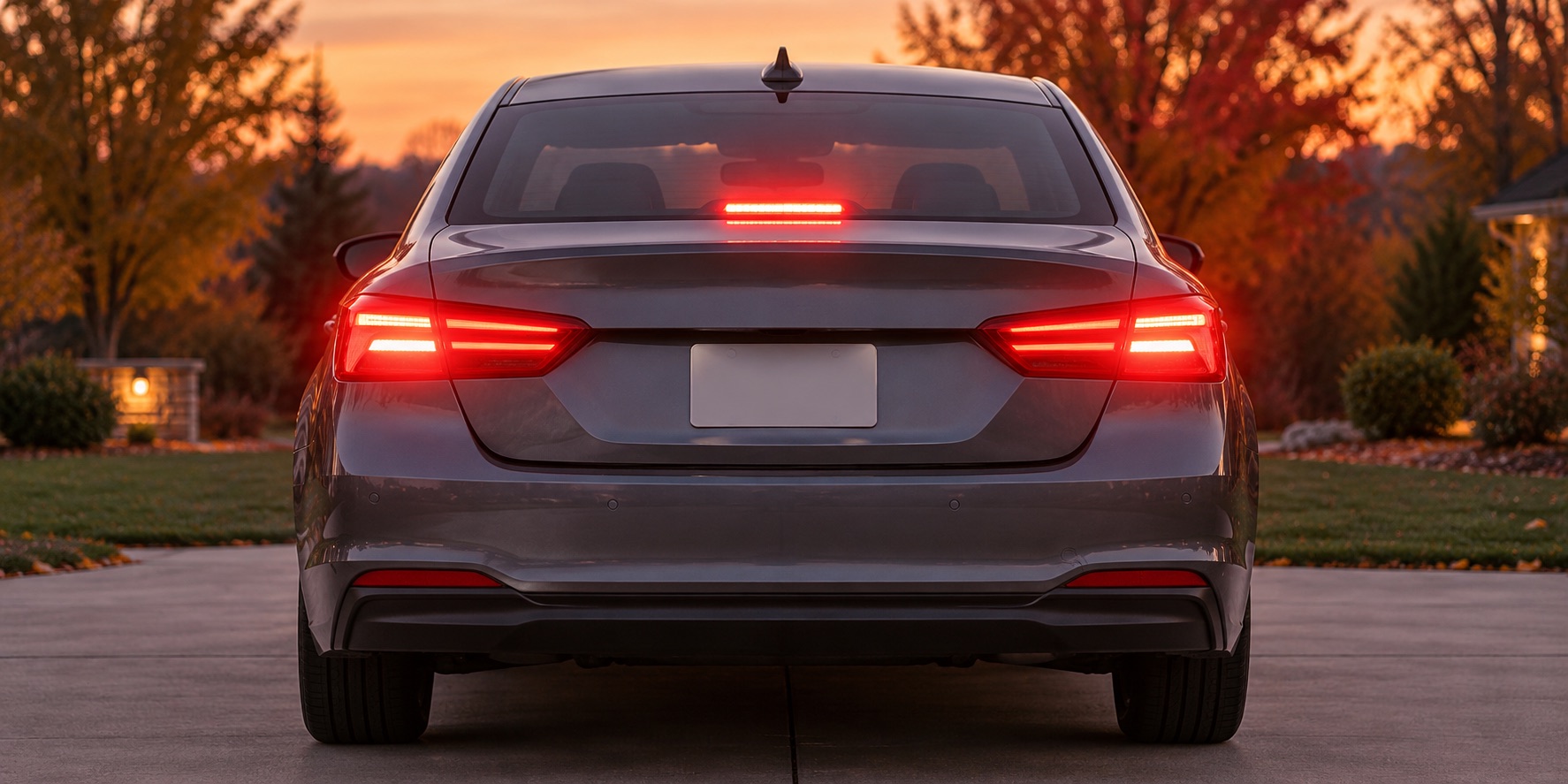
Featured image: AI-generated illustration of a generic parked sedan with illuminated rear lamps. It is not an Albion Auto shop or customer photograph and is not a lamp-layout reference for a specific vehicle.
Common questions
Is an exterior brake-light fault the same as a dashboard brake warning?
No. Describe them separately and follow the vehicle instructions for any braking-system warning.
Does a failed brake light always need a new bulb?
No. Lamp designs vary, including LED assemblies. Inspection should establish the cause before selecting parts.
What should I record?
Note which lamps respond with the pedal released and pressed, whether the problem is consistent and any relevant recent work.