Vehicle Sitting Low at One Corner? Record the Pattern Before Repairs
A low corner is an observation, not a parts diagnosis. Record the conditions and warning messages, then have the vehicle’s stance assessed safely.
You look back at your parked vehicle and one corner seems lower than the others. Perhaps the rear looks different after unloading, or the vehicle appears level when you arrive home but uneven the next morning. It is tempting to name a shock, spring or air-suspension component immediately. A photograph alone cannot establish which part, if any, has failed.
For drivers in Bolton and Caledon, the useful first step is to record the pattern without putting yourself under the vehicle or trying to force the suspension to move. The inspection needs to establish whether the stance is abnormal for the vehicle, under what conditions it occurs, and what evidence explains it.
Decide whether it needs assistance before moving
An obvious new lean deserves attention. If a tire is contacting the body, a wheel looks displaced, the vehicle has dropped substantially, or a warning instructs you to stop, arrange assistance instead of driving to see whether it improves. Follow the owner's manual for the exact warning and tell the assistance provider about the reduced clearance.
Also report any new steering difficulty, scraping or loss of control you have already experienced. Do not deliberately reproduce those symptoms on the road. A vehicle that can still move is not automatically suitable to drive, and a brief return to normal height does not establish that the concern is resolved.
Describe the parking conditions
From a safe position outside, note whether the vehicle is on a slope, an uneven driveway or a surface with one wheel higher than the others. Record what was in the vehicle, including passengers, cargo or a connected trailer. Those details belong alongside the photograph rather than being left for someone to infer later.
If the vehicle is already on a suitable level surface, photographs from the front, rear and each side can help document the appearance. Keep the whole vehicle in view where possible. A close-up of one wheel arch without context is harder to compare with another visit.
Do not move a vehicle with a serious lean merely to improve the photograph. Tell the shop where it is parked and let the safety concern determine the next step.
Find out which suspension is fitted
The same model name can cover different equipment. Check the vehicle documentation or ask the shop to identify the fitted system. Do not assume a vehicle has air suspension because another trim level does, or assume that a previous owner left the original equipment unchanged.
Mention any known suspension conversion, lowering modification or recent component replacement. Bring the relevant invoice if available. A parts description and installation date are more useful than an uncertain recollection that “the suspension was done.”
This is also a reason to avoid ordering a component solely from an online discussion. Even when another owner's photograph looks similar, the equipment and cause may be different. The repair decision should follow inspection of your vehicle.
Some height changes are designed into the system
On certain vehicles, changes in height are part of normal operation. The Lincoln air-suspension guidance linked below describes automatic height adjustment and features that lower the vehicle for loading or easier entry. It also notes that a compressor can run briefly after the vehicle is switched off. Those statements apply to the system described in that manual, not to every SUV.
Tesla's Model S guidance likewise describes air-suspension self-leveling that can occur with the power off. These examples show why the timing and selected settings matter. They do not mean that an unexplained one-sided drop is normal.
Record any selected height or drive-mode setting and the exact dashboard message. Avoid repeatedly changing modes as a substitute for an inspection. If the behaviour differs from the instructions for your vehicle, explain that difference when booking.
Keep your observations outside the danger area
Do not crawl underneath to search for a cause, put a hand between the tire and body, or rely on the current height to remain fixed. Automatically adjusting suspension makes clearance an especially poor safety assumption. Leave lifting, supporting and underbody inspection to someone with the correct equipment and vehicle-specific procedure.
The Tesla manual specifies a dedicated lifting mode to disable self-leveling before lifting its covered vehicle. Other systems have their own service requirements. That is not a universal sequence to copy; it is a reminder that a parked or switched-off vehicle may still need special precautions.
There is no need to dismantle anything to provide useful information. Your contribution is a clear description, photographs taken safely and the vehicle's history.
Record when the change happens
Make a short note of what you have already observed: immediately after parking, after several hours, after unloading, or after unlocking the vehicle. State which corner appears affected and whether the same pattern has occurred more than once. Include approximate weather conditions without assuming cold weather is the explanation.
If you noticed an unusual sound, describe when it occurred and how long it lasted. A sound recording made safely can be useful, but do not repeatedly trigger the system to obtain one. Report a recent impact or repair as part of the timeline, while keeping observation separate from a claim about the cause.
Ask what the inspection established
A useful explanation should connect the visible concern to findings. Ask how ride height was assessed for the fitted suspension, whether the condition was reproduced and what supports any replacement recommendation. If electronic suspension is fitted, ask how relevant warnings or stored information relate to the physical inspection.
Do not treat the name of a suspect part as the finished diagnosis. Before approving work, understand what was found, what remains uncertain and how the result will be checked afterward. If the vehicle only changes height after sitting, make sure that timing is part of the service discussion.
Review Albion Auto Service's services or contact the shop with the vehicle details and observations. Explain any substantial lean or clearance concern before planning to drive in, so the next step can be arranged appropriately.
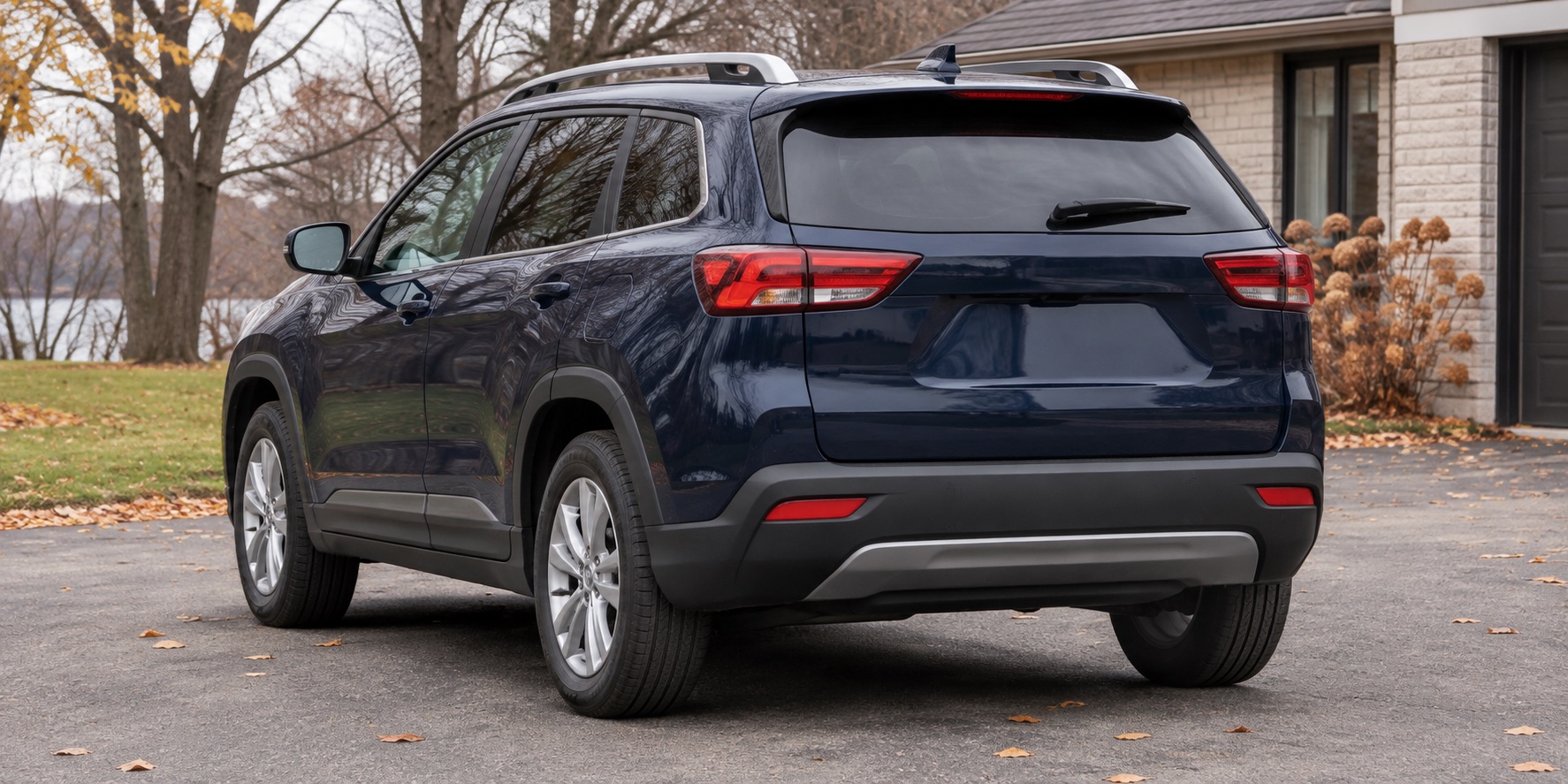
Featured image: AI-generated illustration, not a photograph of Albion Auto Service or a customer's vehicle. The image does not demonstrate a diagnosed suspension fault.
Common questions
Does one low corner prove that a shock needs replacing?
No. The appearance alone does not identify a failed component. The fitted suspension and actual condition need assessment.
Can suspension move after the vehicle is switched off?
Some self-leveling systems can adjust while parked or powered off. Follow the instructions for your vehicle and stay out from underneath it.
Should I drive a vehicle that has dropped substantially?
Arrange assistance if there is a substantial drop, tire contact, displaced wheel or a stop instruction. Describe the clearance concern before arranging transport.