ABS Warning Light On? Find the Cause Before Replacing Parts
Record the exact warning, report any braking change and ask what testing confirms before approving a sensor or module replacement.
An ABS warning light is a reason to find out what the vehicle is reporting. It is not, by itself, proof that an ABS module or wheel-speed sensor needs replacing. Start with the exact warning, any other lights or messages and whether braking feels different.
For owners in Bolton and Caledon, a clear description helps the shop decide how to approach the concern. The immediate question is how to handle the vehicle safely. The repair question comes next: what checks identify the cause, and what evidence supports the proposed work?
Read the warning in context
Follow the owner's manual for your exact vehicle. Note whether the light appears briefly during startup, remains on or comes on while driving. Do not assume that every symbol or warning combination has the same meaning across different vehicles.
Ford's ABS warning-lamp guidance describes an illuminated ABS warning while driving as a malfunction requiring attention. It explains that normal braking can remain available without the anti-lock function. That manufacturer example is not permission to keep driving a vehicle whose condition has not been assessed.
A red brake warning, a message directing you to stop, a changed pedal feel, reduced braking or difficulty controlling the vehicle changes the situation. Stop safely and arrange assistance when braking is impaired or the vehicle feels unsafe. Follow any stop-driving instruction in the manual or display. Do not make a hard stop just to test whether the brakes still work.
Capture the details while parked
Once safely parked, photograph the warning display if you can. Include the wording of any message and the other illuminated symbols. Tell the repairer what you saw even if the warning later disappears.
A short description is enough: “The ABS light came on during the drive and stayed on after parking.” Add whether you noticed anything different in braking, steering or vehicle behaviour. If you do not know when it first appeared, say so rather than creating a precise timeline from memory.
Helpful details include:
- Whether the warning was present immediately after starting or appeared later.
- Whether it has happened once or repeatedly.
- Any additional warning lights or display messages.
- Recent repairs, wheel work, battery trouble or an impact.
These details guide the assessment without proving a cause. A warning that follows recent work deserves investigation, but timing alone does not establish that the work caused it. Keep the explanation factual and let the findings determine the next step.
A sensor code is a starting point
HELLA's ABS and wheel-speed sensor guidance specifically cautions that a stored fault code does not necessarily mean the named component is defective. Its diagnostic approach includes inspecting wiring and mechanical parts, checking supply and signal information and evaluating measured values before selecting a repair.
That is why a report mentioning a particular wheel-speed sensor should lead to further questions rather than an automatic sensor purchase. Ask what the code said, what was tested and what the test showed. A parts description and a confirmed cause are different pieces of information.
If you already have a scan report, bring the complete report rather than just a remembered phrase. Include the date and any work performed afterward. Avoid treating a short online code description as a diagnosis of your vehicle.
Preserve the information before trying a reset
Do not clear codes simply to make the light disappear before an appointment. Ask the repairer how to preserve useful diagnostic information. If codes have already been cleared or the battery disconnected, disclose that; it helps explain the history the technician is seeing.
Likewise, a light going out is an observation, not confirmation that a repair has occurred. Record what happened and when it returned, if it did. An intermittent concern may require a different assessment from one that is present continuously.
You do not need to keep driving to recreate a warning. Describe the conditions you have already noticed and let the shop decide what checks are appropriate. Avoid unplugging sensors, altering wiring or experimenting with the braking system to see which warning appears next.
Ask what the assessment established
Before approving a repair, ask for an explanation that connects the warning to the findings. Which fault was recorded? Was it present during testing? What evidence identifies the affected circuit or component? What work is proposed to correct the confirmed problem?
If several warnings appeared together, ask whether the findings explain them all or whether another concern remains unresolved. Do not assume every light requires a separate replacement part, and do not assume one finding necessarily accounts for everything.
If the problem could not be reproduced, ask what was checked and what information would help next. A clear account of what remains uncertain is more useful than replacing an expensive part as an experiment. Agree on how to follow up and how to handle the vehicle while the concern remains unresolved.
Verify the repair and keep the record
Ask what checks will confirm the result. HELLA's guidance includes checking measured wheel-speed information and fault memory after repair and an appropriate test drive. The specific procedure should suit the vehicle and the work performed, rather than simply ending when a warning lamp is cleared.
Keep the diagnosis, invoice and any follow-up instructions together. If a warning returns, report it promptly with the new message and circumstances. Mention whether it appears to be the same concern, but leave that conclusion open until it is assessed.
Our brake service information provides a starting point for discussing an appointment. You can contact Albion Auto Service with the vehicle details, warning description and any change in braking. Establish the cause before selecting parts, and make safe handling of the vehicle the first priority.
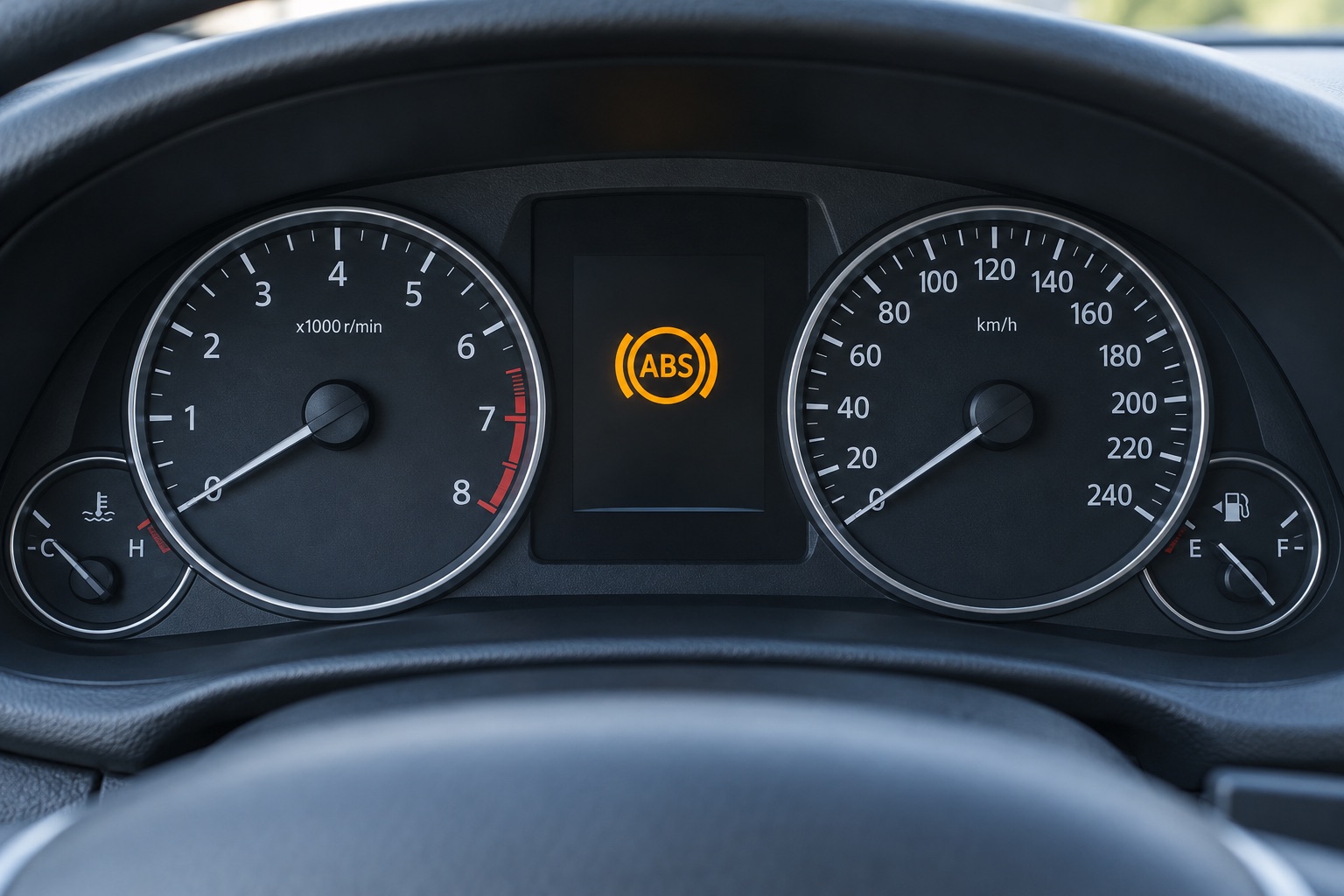
Featured image: AI-generated illustration of a generic ABS warning display, not an Albion Auto customer photograph or the instrument panel of a specific vehicle model.
Common questions
Does an ABS light mean the ABS module has failed?
No. The warning requires assessment; the light alone does not identify which part or circuit is responsible.
Should I clear the code before the appointment?
Ask the repairer first and preserve the existing report. Explain if codes have already been cleared or the battery disconnected.
What if braking feels different?
Stop safely and arrange assistance when braking is impaired or the vehicle feels unsafe. Follow the instructions in your vehicle manual and display.