Vibration While Braking? Ask What the Inspection Shows
Where and when a vibration occurs helps guide an inspection. Measurements and confirmed findings should guide the repair.
A shake when slowing down deserves a clear explanation. You might feel movement through the steering wheel, a repeated pulse beneath your foot or a vibration through the vehicle. Those descriptions are useful starting points, but none is a parts diagnosis on its own.
For drivers in Bolton and Caledon, the next step is to report the circumstances and arrange an assessment. Avoid deciding in advance that the vehicle simply needs new rotors. A repair recommendation should explain what was found, how it relates to the complaint and how the result will be checked.
Start with whether the vehicle feels safe
If braking effectiveness has changed, the pedal behaves unusually or the vehicle pulls strongly and feels difficult to control, stop in a safe place and arrange assistance. Do not keep driving to demonstrate the problem. Follow the instructions in your vehicle's manual for any brake warning or message.
A mild vibration still deserves attention, but an online description cannot establish that your vehicle is safe to drive. Tell the shop about any change in stopping ability when you call. That information matters more than finding the perfect word for the sensation.
Do not perform repeated hard stops, high-speed tests or deliberate swerves to investigate. Describe what you have already noticed during ordinary driving and let the repairer decide how to assess it safely.
Describe when the movement occurs
Explain where you feel it: steering wheel, brake pedal, seat or more than one place. Say whether it happens only while applying the brakes or whether you also notice it while travelling steadily without braking. You do not need to reproduce it to answer; an honest “I am not sure” is better than a guess.
Mention whether the concern appeared suddenly or developed gradually. If you remember it happening during the first stop of a journey, after some driving or in a particular road condition, include that detail. Keep the description tied to what happened rather than what you think must be wrong.
Also distinguish noise from vibration. A squeal and a pulse may occur together, but the inspection should account for both observations. If one concern existed long before the other, that sequence is useful information for the technician.
ABS operation is a separate question
Ford's anti-lock braking guidance explains that pedal pulsation and system noise can occur while ABS is operating. It instructs the driver to maintain pressure on the pedal during that operation. Consult the instructions supplied with your own vehicle.
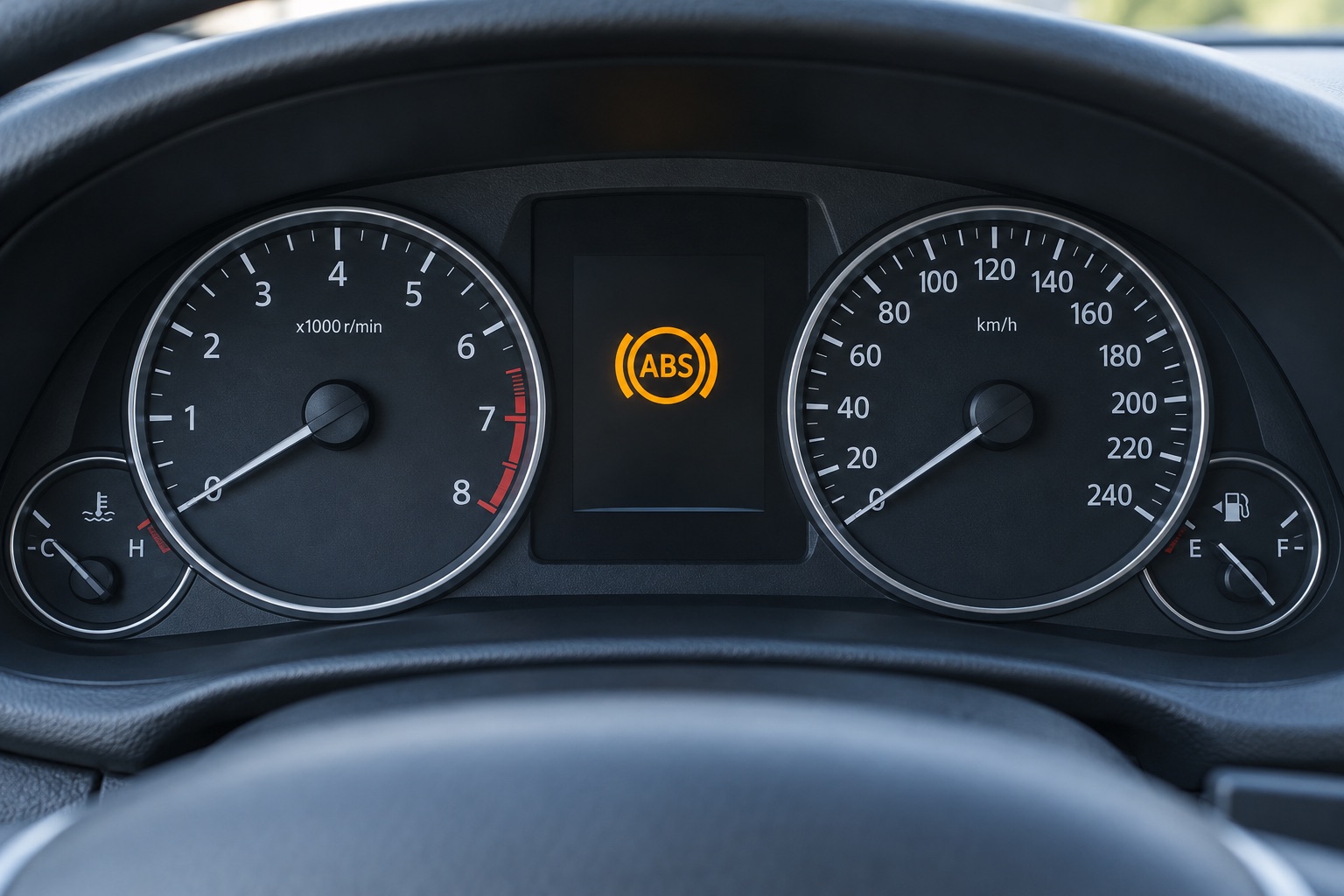
That explanation should not be used to dismiss every repeated pulse as normal. The important distinction is whether the sensation was associated with ABS operation or is a recurring complaint during ordinary braking. Tell the shop about the road surface, braking circumstances and any warning lights you noticed.
If you do not know whether ABS was active, say so. Do not deliberately trigger it as a comparison test. The repairer needs to evaluate the reported behaviour rather than accepting an assumed explanation from a brief description.
Ask for inspection findings and measurements
Brembo's guidance on brake noise and vibration recommends looking beyond replacement pads and discs. Its professional checks include disc movement when mounted on the hub, the condition of mating surfaces and the operation of caliper components. It also emphasizes correct wheel-fastener tightening and a check of operation after the work.
That broader approach explains why a quotation for parts alone may not describe the whole solution. Ask what the inspection confirmed and which finding accounts for the vibration. Where a measurement is relevant, ask for the result and the applicable vehicle specification to be included in the explanation.
You do not need to interpret specialist measurements yourself. A useful report translates them into a decision: what is within specification, what requires attention and what still needs investigation. A photograph can help document condition, but ask how it supports the recommendation rather than assuming every visible mark identifies the cause.
Include recent work and repair history
Bring records of recent brake, tire, wheel or suspension work. Describe whether the vibration existed beforehand, appeared immediately afterward or began later. These are different histories, and the timing alone does not prove that the previous work caused the problem.
If parts were replaced recently, provide the invoice instead of relying on memory about what was included. Tell the shop whether the original complaint improved, stayed the same or returned after a period without symptoms. That helps avoid repeating work without understanding the earlier result.
If you bought the vehicle used and do not have records, make that clear. An unknown service history is a reason to inspect and document the current condition. It is not evidence that a particular component has failed.
Review the proposed work and the result
Before approving an estimate, ask which items address the vibration and whether any separate maintenance is included. If additional work is recommended, each item should have an explanation. Agree on how the shop will contact you if the inspection reveals something beyond the initial scope.
At collection, ask how the original complaint was checked after the repair and whether anything remains unresolved. Follow the repairer's vehicle-appropriate instructions for newly serviced brakes. Do not attempt an internet braking routine as a substitute for those instructions.
Keep the inspection findings with the invoice. If the vibration returns, report the circumstances and any change in braking effectiveness promptly. Our brake repair information is a starting point, and you can contact Albion Auto Service with the vehicle details and symptoms. Start with the complaint, confirm the cause and review the evidence behind the repair.
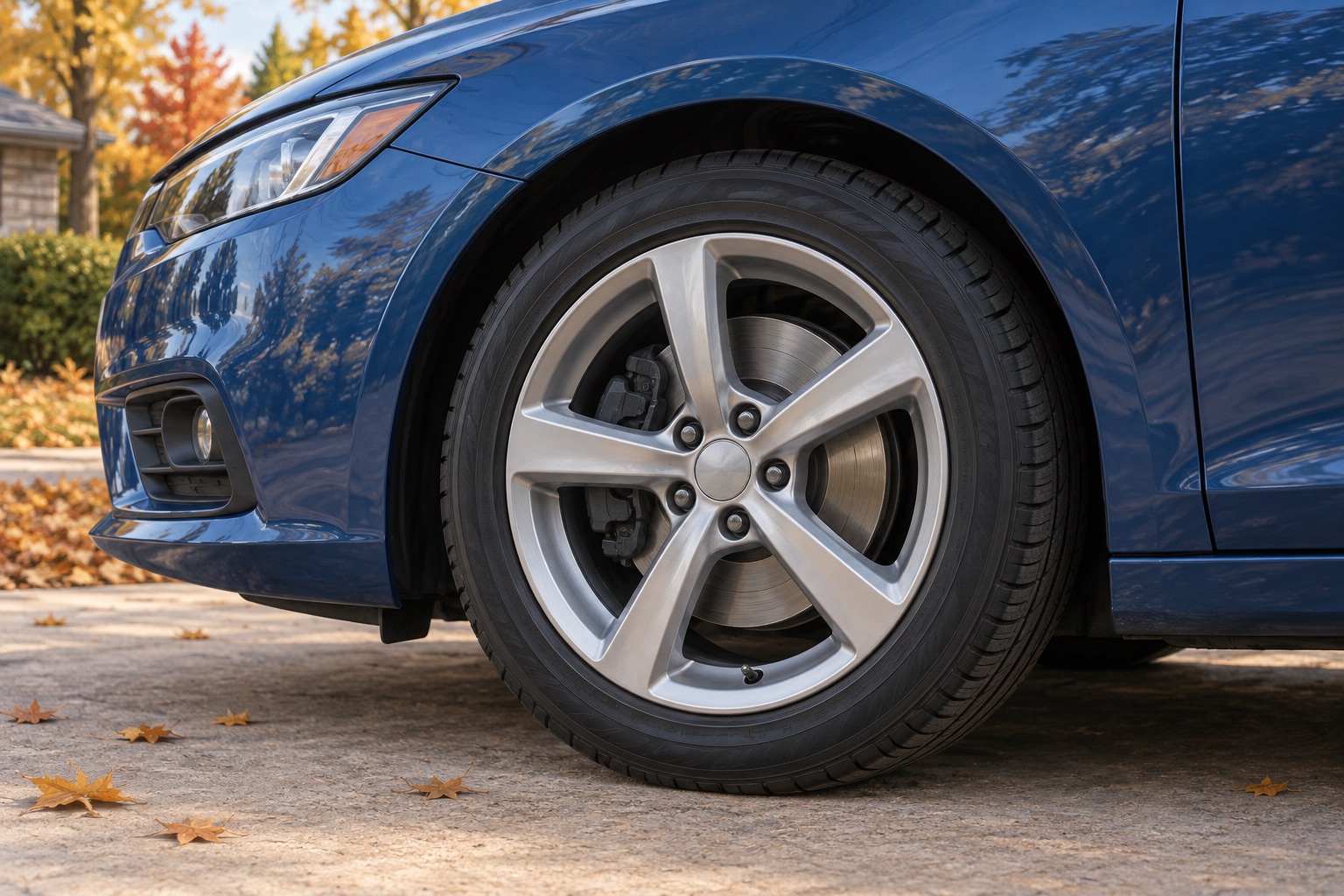
Featured image: AI-generated illustration of a generic car wheel and brake components, not an Albion Auto customer photograph or evidence of a brake defect.
Common questions
Does vibration mean the brake rotors must be replaced?
The symptom alone does not establish the repair. Ask what the inspection and relevant measurements confirm.
Can ABS make the brake pedal pulse?
Yes, pulsation can occur during ABS operation. Do not assume that explains a recurring braking complaint; follow your vehicle manual and have uncertain behaviour assessed.
Should I make hard stops to reproduce the vibration?
No. Describe what you noticed during ordinary driving and leave diagnostic testing to the repairer. Arrange assistance if braking feels unsafe.