Low Coolant Before Cold Weather? Find the Cause Before Topping Up
A low reservoir raises more than a refill question. Record the symptoms and service history so an inspection can guide the next step.
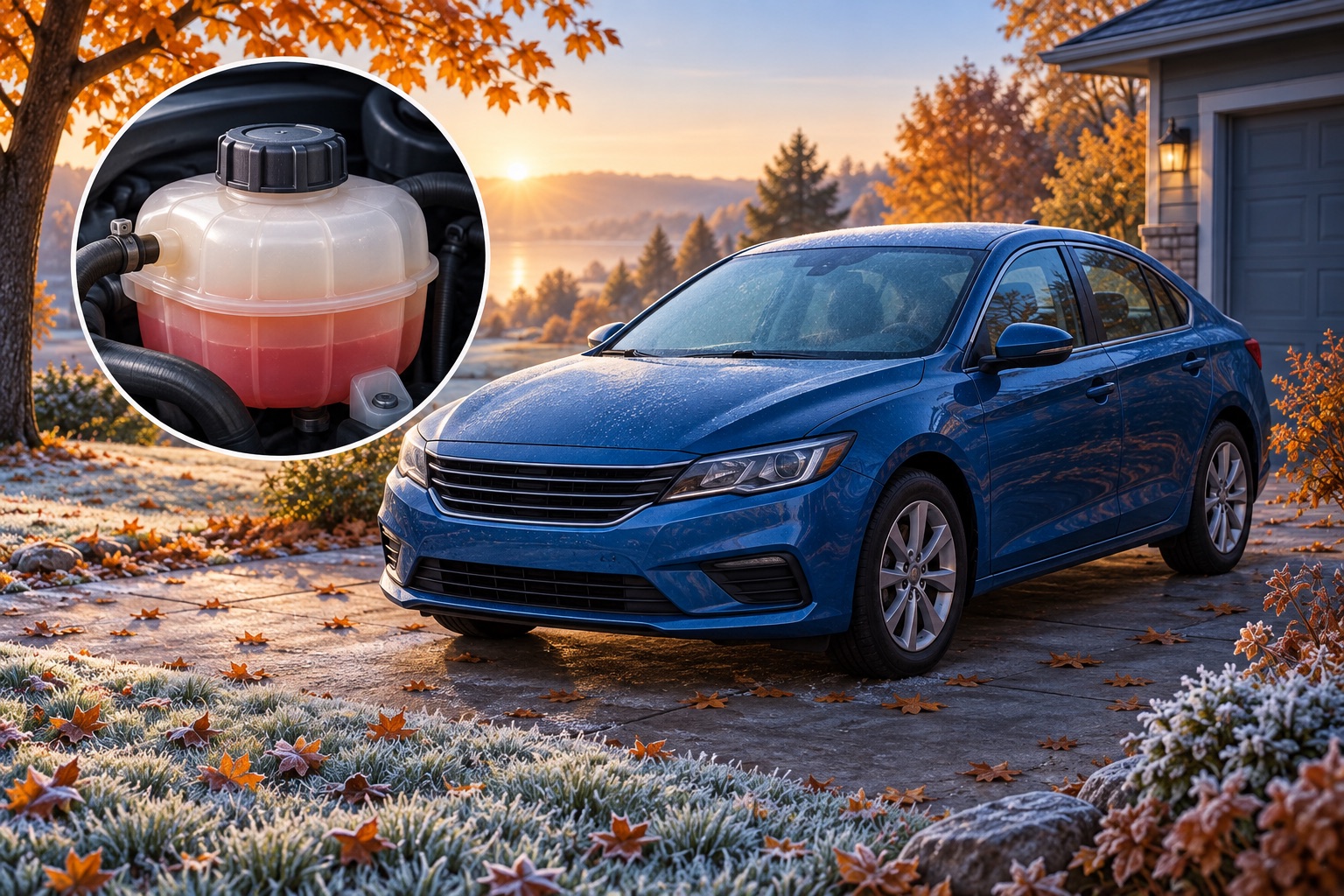
A coolant reservoir that looks low can raise two different questions: does the vehicle need fluid, and why did the level change? Those questions belong together. Adding something to the reservoir without identifying the correct fluid or understanding a recurring loss can leave the original concern unresolved.
As drivers in Bolton and Caledon prepare for colder weather, a cooling-system conversation should cover the vehicle's maintenance guidance, any symptoms and its recent service history. You do not need to diagnose a leak yourself. You do need to tell the shop what you observed before choosing a repair or requesting a routine coolant service.
Leave a hot cooling system closed
Do not open a radiator or pressurized coolant-reservoir cap while the engine is running or hot. Honda's owner guidance warns that opening a hot radiator can release coolant and cause serious scalding. Let the system cool and follow the instructions for the exact vehicle. See Honda Canada's coolant safety guidance.
If a temperature warning appears or the vehicle is overheating, stop in a safe place and follow the handbook's emergency instructions. Do not keep driving to see whether the warning clears. Arrange assistance when the vehicle cannot safely continue, and stay clear of escaping steam or fluid.
An appointment request is not a reason to drive an overheating vehicle to the shop. Tell the person arranging the visit about the warning so transport can be discussed. A routine maintenance booking and an active overheating concern need different expectations.
Use a consistent observation, not a guess
Before describing the level as low, identify the correct reservoir and the checking conditions in the owner's manual. Different vehicles have different arrangements. If you are unsure what you are looking at, leave the caps alone and ask for help.
Record when you noticed the concern and whether the vehicle had recently been driven. A photo taken safely can help communicate the observation. Avoid comparing two pictures as though they were measurements if the checking conditions were different.
Write down the exact dashboard message, if there was one. Also note any fluid seen beneath the vehicle and any recent change you have already noticed in the temperature display or cabin heating. These are observations to report, not proof that a particular component has failed. Do not touch or taste an unidentified fluid to identify it.
Match the specification rather than choosing a colour
The correct coolant should be identified from the requirements for the actual vehicle. Do not choose a bottle simply because its colour resembles the fluid already present or because it was suitable for a previous car.
Ford's engine-coolant guidance calls for coolant meeting the specified requirements and warns against mixing incompatible types. It also explains that some coolant can change colour during normal use without that change alone requiring replacement. The same guidance distinguishes checking the fluid level from checking its concentration. These are manufacturer examples, not a universal mixture or service interval. Read Ford's engine-coolant guidance.
If fluid has already been added, bring the container details or a photo of the label. Explain what was added, approximately how much and when. If you do not know, say so. Missing history is useful information when honestly identified; it should not be replaced with a confident guess.
Separate a top-up from an explanation
A useful service request says, “The reservoir looked low twice this month,” rather than “Replace the water pump.” The first describes a concern that can be investigated. The second chooses a repair before the cause has been established.
Ask how the shop will assess the reported loss and what findings support its conclusion. If a leak is identified, ask where it is and how it was confirmed. If no cause is found during the initial inspection, ask what the next step is and what changes you should report.
Do not interpret a single top-up as proof that the concern is resolved. Equally, do not assume a major engine repair is needed merely because you saw a low level. The purpose of diagnosis is to replace uncertainty with evidence, then choose work that addresses the findings.
Put recent repairs and maintenance in the picture
Tell the shop about recent cooling-system work and bring the invoice if available. Include any previous overheating event, fluid addition or unsuccessful repair attempt. An accurate timeline helps the technician understand what changed and what has already been checked.
Distinguish a scheduled coolant replacement from investigating a symptom. Ask which part of the proposed appointment is maintenance, which part is diagnosis and whether additional work needs separate authorization. That makes the expected result clearer before work begins.
If someone recommends a coolant service because winter is approaching, ask what supports the recommendation for your vehicle: its maintenance schedule, documented history or a test result. A seasonal reminder is a good opportunity to review the records, but it does not supply a single replacement interval for every model.
Prepare a useful booking note
A short note can make the appointment easier to plan. Include the vehicle's year, make and model, current kilometres and the date you first noticed the concern. Add the exact warning message and say whether the vehicle is currently safe to drive or needs assistance.
List any fluid already added and any relevant recent work. Describe symptoms in plain language, including whether the concern happened once or has returned. Do not run the vehicle again just to reproduce an overheating warning for the appointment.
For a routine assessment, our cooling-system service information explains the relevant service area. A digital vehicle inspection can help communicate recorded findings and priorities. Ask what evidence will be available for the specific concern you reported.
You can request an appointment with Albion Auto Service. The aim is a clear answer about the fluid requirements, the reported level change and any work needed. Preparing for cold weather starts with understanding the vehicle's condition, not just filling a reservoir.
Featured image: AI-generated illustration with a conceptual coolant-reservoir inset, not a photograph of an Albion Auto vehicle or repair.
Common questions
Can I open the coolant cap while the engine is hot?
No. A hot pressurized system can release scalding coolant or steam. Leave it closed, let the system cool and follow the safety instructions for your exact vehicle.
Can I choose coolant by its colour?
Use the coolant specification required for your vehicle. Colour alone is not enough to establish suitability or determine whether replacement is due.
Does a low level mean a particular part needs replacing?
No. Report the level change, warnings and service history, then ask for an assessment. The findings should determine whether a repair is needed and which repair addresses the cause.