New Exhaust Noise? Inspect the System Before Replacing the Muffler
Describe the change, address possible fumes promptly and ask for evidence before choosing an exhaust repair.
A new exhaust sound is a reason to arrange an inspection, but it does not identify the part that needs replacing. A louder rumble, a metallic rattle and a noise that appeared after recent work are different complaints. Calling all of them “a bad muffler” can send the conversation toward a replacement before anyone has established the cause.
For drivers in Bolton and Caledon, the most useful first step is to describe what changed and ask for an assessment of the system. The shop needs your observations, vehicle details and relevant repair history. You do not need to crawl underneath the car or reproduce the sound repeatedly to provide useful information.
Deal with possible fumes before investigating noise
If you notice exhaust fumes inside the vehicle, stop in a safe place, shut off the engine, move to fresh air and arrange assistance. Do not treat opening the windows as a repair or continue driving to see whether the smell disappears. If anyone feels unwell after possible exposure, seek urgent medical help.
Carbon monoxide cannot be detected by smell. Health Canada's prevention guidance also says not to idle a vehicle in a garage, even with the door open. A quiet exhaust or an absence of odour is therefore not a reliable safety check.
If a part is hanging down, dragging or appears likely to detach, arrange assistance rather than attempting another drive to identify the noise. Keep clear of hot exhaust parts. Do not reach under a running vehicle or place yourself underneath one supported only by a jack.
Describe the sound without choosing a diagnosis
Use whichever words match your experience: rumble, buzz, rattle, ticking or scraping. There is no need to select a technical term from a video. Explain whether the sound is new, louder than before or occurring under different conditions.
Write down a few details after parking safely:
- When you first noticed it and whether it began suddenly.
- Whether it occurs at startup, while stopped, during acceleration or over bumps.
- Whether the vehicle was cold or had already been driven.
- Whether there are warning messages, a change in performance or an unusual smell.
- Whether recent repairs or an impact preceded the change.
These are observations to give the technician, not a checklist for a deliberate road test. If the vehicle is unsafe to operate, do not drive it to complete the list. Likewise, avoid holding a phone while driving or asking a passenger to lean out to listen.
Why the inspection goes beyond the muffler
Walker's exhaust-system inspection guidance recommends examining the entire system before repair. Its leak checks include welds, pipe connections, clamps and flex pipe. That broader approach helps distinguish the part making a complaint noticeable from the full scope of the problem.
A replacement muffler should therefore follow an identified fault, rather than serve as the default response to any new noise. Ask the shop to explain where the concern was found and whether there are other findings that affect the proposed repair.
A useful explanation links the observation to the recommendation: what was inspected, what evidence was found and what the proposed work is intended to address. If the technician cannot reproduce an intermittent noise, an honest description of that limitation is more useful than a confident parts guess.
A rattle can involve mounting and clearance
Walker’s noise-troubleshooting guidance includes checks for contact with the vehicle's underbody, broken hangers or insulators, and loose or leaking joints. It also calls for confirming the exact vehicle application when evaluating exhaust components.
Those checks explain why a noise assessment may involve more than looking for a hole. Leave the physical inspection to the shop: shaking hot pipes or removing something that appears to rattle is not a sensible owner test.
Describe where you think the sound comes from, but present that as an impression. “It seems to be near the rear seat” is useful context; it is not proof that a particular component beneath that area has failed. The inspection should establish the location before the repair decision is made.
Mention recent work and previous modifications
If the sound started after exhaust work, contact the repairer and explain the timing. Bring the invoice and describe what was different immediately afterward. Avoid assuming either that the new part is faulty or that the sound must be unrelated; the sequence gives the shop a starting point for checking the result.
If the vehicle had modifications before you bought it, share what you know and identify what is uncertain. An old receipt or a part description can be more useful than guessing which system is installed. You should not have to identify a part number from beneath the car yourself.
Also mention an impact or an object struck on the road, even if it initially seemed minor. Reporting an event does not establish causation, but leaving it out can make the complaint harder to understand.
Ask what the estimate will resolve
Before authorizing work, ask which finding explains the complaint and what is included in the estimate. Clarify whether the recommendation addresses a leak, mounting concern, damaged component or another identified issue. Ask whether any separate concern remains to be investigated.
If additional damage is discovered during repair, agree that the shop will explain the revised scope before proceeding. At collection, review the completed work and how the original complaint was checked. Keep the invoice so there is a clear record if the noise returns or changes.
You can read about our muffler and exhaust repair service or contact Albion Auto Service with the vehicle details and a description of the concern. Mention possible cabin fumes or a dragging component when arranging help. The aim is to find the cause, explain the evidence and choose the repair that addresses it.
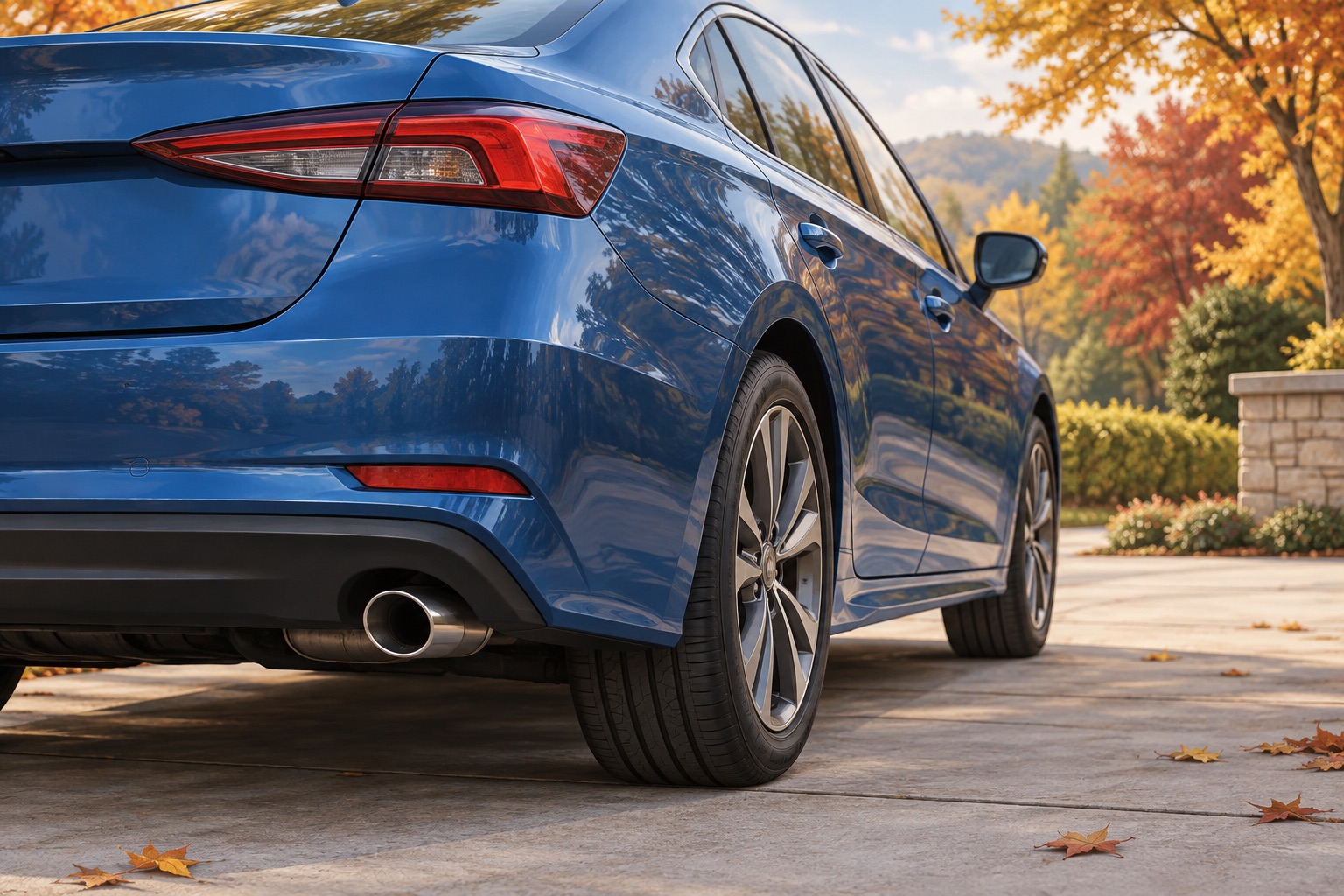
Featured image: AI-generated illustration of a generic parked car and tailpipe, not a photograph of an Albion Auto customer vehicle or a diagnosed defect.
Common questions
Does a louder exhaust always mean the muffler needs replacing?
No. An inspection should locate the cause and assess the system before a particular part is recommended.
What should I tell the shop about an intermittent rattle?
Describe when it occurs, when it started and any recent work or impacts. Do not drive an unsafe vehicle to reproduce the sound.
Can I rely on smell to rule out carbon monoxide?
No. Carbon monoxide has no smell. Treat possible exhaust fumes in the cabin promptly and arrange assistance rather than continuing to investigate while driving.