Using More Fuel? Build a Clear Comparison Before Booking Repairs
Track litres and distance, note changes in driving conditions and investigate symptoms before guessing at replacement parts.
If your vehicle seems to need fuel more often, start by separating three questions: are you driving farther, paying more per litre, or actually using more fuel for the same distance? A larger receipt alone cannot distinguish them. A few consistent records can make the concern much clearer before a repair appointment.
For drivers in Bolton and Caledon, changing routes and cooler weather can complicate comparisons. The goal is to establish what changed, identify any accompanying symptoms and investigate the cause before buying sensors, cleaners or other parts on a guess.
Compare consumption, not just the cost of a fill
Fuel consumption is commonly expressed in litres per 100 kilometres. A higher number means more fuel used for the same distance. Keep the units consistent when comparing your own records, a dashboard display or information from another driver.
For a conventional gasoline or diesel vehicle, one practical record starts with a normal full fill and the odometer reading. At the next comparable full fill, record the litres added and distance travelled. Divide litres by kilometres and multiply by 100. Do not keep adding fuel after the pump's normal automatic shutoff to try to make the measurement more precise; follow the vehicle's refuelling instructions.
As a calculation example only, 40 litres used over 500 kilometres gives 8.0 L/100 km. This is not a target for your vehicle. Individual fills vary, so a consistent series is more useful than treating one result as proof of a mechanical fault.
If you make partial fills, keep all the receipts and compare a period that starts and ends at comparable full levels. Do not divide one small top-up by all the distance travelled since an earlier full tank. For plug-in hybrids, also record charging and electric driving, because petrol use alone does not describe total energy use.
Know what the dashboard number represents
Check the owner's manual to distinguish average consumption, current consumption and estimated distance remaining. Note when the average was reset. An average covering one short journey is a different comparison from an average accumulated across weeks of driving.
Natural Resources Canada encourages drivers to track fuel consumption and use available consumption displays to understand driving habits. Use the display as a consistent observation rather than watching it continuously while driving. Write down readings or take photographs only when safely parked.
When booking, explain which measurement changed. “My recorded litres per 100 kilometres increased across several fills” is more specific than “the range number looks low.” If you only have an impression so far, say that honestly. You can still report a concern without presenting an estimate as a measured result.
Add the context that makes a comparison fair
Natural Resources Canada identifies cold weather as a contributor to higher fuel consumption in its fuel-efficiency guidance. Its testing explanation also notes that an engine does not reach its best fuel efficiency until warm and that weather and road conditions affect results.
Alongside the fuel records, note changes in your routine: more short local trips, a different commute, heavier traffic or extra time spent parked with the engine running. Include towing or a change in the load carried. These observations help the technician compare similar use instead of treating two very different weeks as identical.
Do not use the season as an automatic explanation for every increase. A persistent change under similar conditions, particularly with a new symptom, deserves assessment. Equally, comparing a summer highway trip with repeated cold local starts does not isolate the vehicle's mechanical condition.
Check maintenance records without guessing at a cure
Bring the service history and note any overdue items identified under the vehicle's maintenance schedule. Ask whether scheduled work is due independently of the fuel-use concern. Completing maintenance and diagnosing a change in consumption are related discussions, but one should not be presented as a guaranteed cure for the other.
Tire pressure is also worth checking against the vehicle's specified cold pressure. Natural Resources Canada notes that pressure falls as temperatures drop and that underinflation can increase fuel use. Use the vehicle placard or owner's manual for the correct specification rather than choosing a pressure to chase a dashboard number.
Avoid changing several things at once simply to see whether the next tank improves. Record what was checked or corrected and when. A clear sequence makes it easier to understand the result and prevents an improvement from being attributed to a part that was never shown to be faulty.
Report symptoms promptly instead of waiting for more data
Do not postpone an assessment just to complete a fuel log if the vehicle has a warning light, poor running, stalling or another new operating problem. Report the symptom, when it began and any display message. Follow the vehicle's instructions for warning lights and stop-driving messages.
If you suspect a fuel leak or notice a strong unexplained fuel smell, stop safely, switch off and arrange assistance. Do not keep driving to measure another tank. Consumption records are useful for an otherwise routine concern; they do not take priority over an immediate safety issue.
At the appointment, ask what the inspection or testing established and what supports any recommended replacement. If the cause remains uncertain, ask what evidence is needed next. Avoid approving a part solely because it is commonly mentioned in discussions of poor fuel economy.
Keep the follow-up comparable
After any confirmed repair, keep recording consumption under similar use and note the repair date. Ask what was verified at the shop and what follow-up is appropriate. There is no universal litres-per-100-kilometres target that proves every vehicle is repaired.
See our engine diagnostic service information or contact Albion Auto Service with the vehicle details, available fuel records and any accompanying symptoms. A clear comparison helps turn a vague concern into a focused assessment before parts are selected.
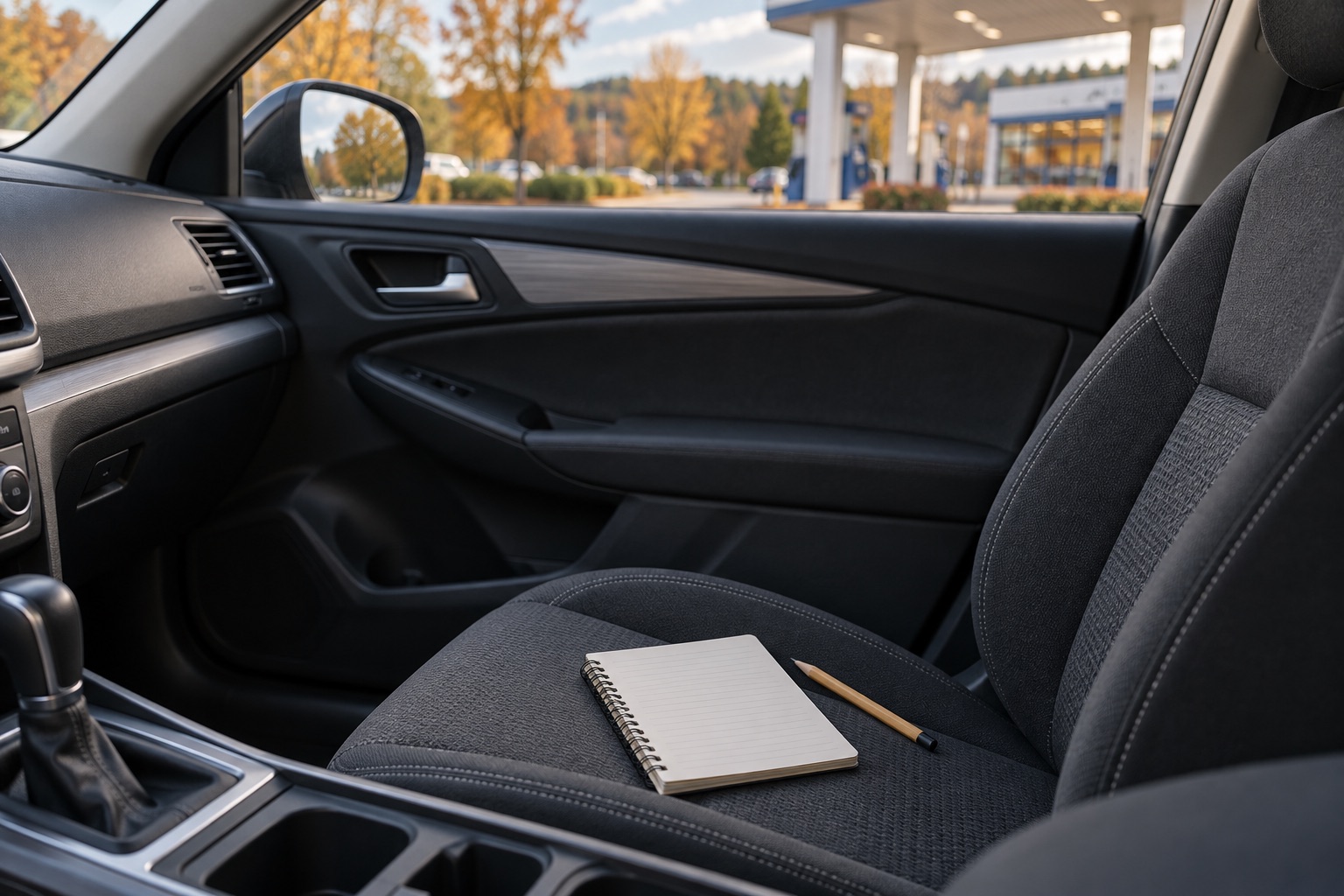
Featured image: AI-generated illustration of a notebook in a generic parked vehicle, not an Albion Auto customer photograph or an actual fuel-consumption record.
Common questions
Does a more expensive fill prove the vehicle uses more fuel?
No. Compare fuel volume and distance, since the price per litre and the distance driven can change.
How do I calculate litres per 100 kilometres?
For comparable full-tank measurements, divide the litres used by kilometres travelled and multiply by 100. A series of consistent records is more useful than one fill.
Should I wait for several fills if the vehicle has new symptoms?
No. Report warnings or operating problems promptly. If a fuel leak is suspected, stop safely, switch off and arrange assistance.