Why Your Rear Door Opens From Outside but Won’t Open From Inside
When an unlocked rear door opens from outside, the child lock is a useful first check. Which handle works, and on which side, narrows the next step.
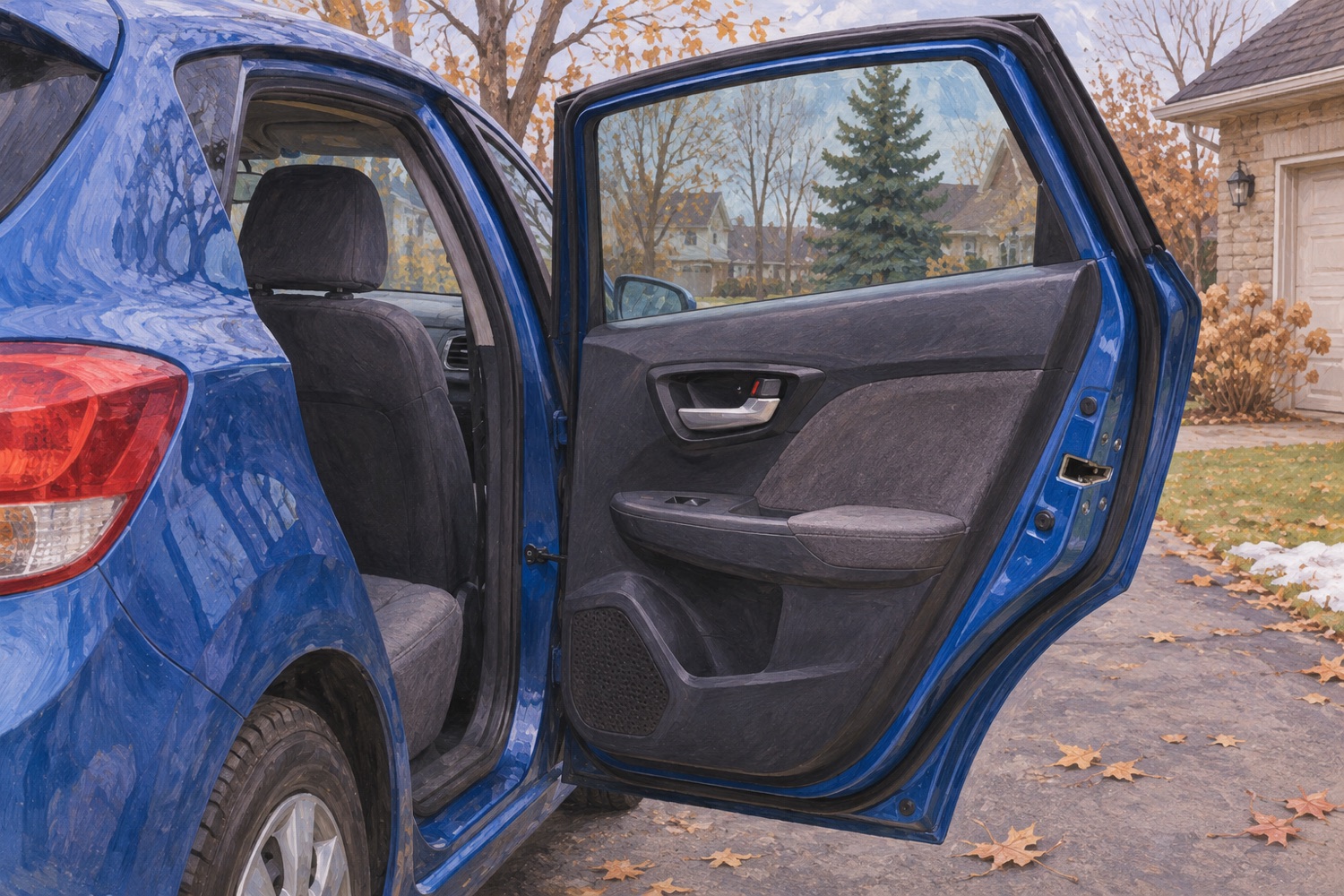
At pickup, your passenger pulls the rear handle and nothing happens. You walk around, pull the outside handle and the door opens normally. That difference is the first thing to remember. A rear child lock is designed to prevent a passenger from opening the door from inside. Before paying for a latch or an interior handle, find out whether the car did exactly what someone set it to do.
First, make sure the door closes securely. **If it will not stay latched, leave the vehicle parked and arrange assistance.** A door that can swing open creates a different problem from one that stays securely closed but resists an opening command. If a passenger cannot exit as expected and the reason is unknown, leave that seating position empty until the issue is resolved.
Start with the door that actually failed
With the car securely parked away from traffic, unlock all doors using the procedure in your owner’s manual. Take note of the seating position, such as “right rear, behind the front passenger.” Check what the outside handle does. If it opens the door, you can inspect the door edge and consult the manual without taking anything apart. If neither handle opens it, stop there and report that detail. An engaged child lock by itself does not explain why the outside handle on an unlocked door also fails.
Compare the result with the other rear door. One rear passenger might exit normally while the other needs help. That can seem like strong evidence that something broke on one side, yet a manual child lock can be set separately on each door. The setting on the working door gives you a point of comparison. Keep children out of the car during checks and have an adult available outside if checking operation from inside.
Find the control for your vehicle
Look up “child locks” or “child safety locks” in the owner’s manual for your model year. Check which equipment your vehicle has. For example, Volvo describes manual and electric versions for the S60. On the manual version, the control is accessible on the edge of the open rear door, and each control affects that door alone. The diagram identifies the control and shows which position allows the interior handle to work.
Match the diagram to the actual door before moving anything. A door edge also contains latch hardware. Avoid turning an unidentified slot or moving the latch with a screwdriver. If the child lock is engaged, decide which setting the family needs. When a child regularly sits there, opening the door for them from outside may be the intended arrangement. If you temporarily change the setting for a check, restore the intended setting before the next trip and verify it while parked.
When the rear windows also seem to have stopped working
On an S60 equipped with Volvo’s electric child safety lock, activation can disable both the rear interior door releases and the passengers’ rear window controls. The driver can still operate the rear windows from the driver’s panel. A passenger may therefore report two symptoms after a single button press. The dashboard indication and the response at the driver’s panel help explain that combination.
Use the instructions for your own car. Even within one make, equipment varies. If a passenger mentions a window, ask which switch they tried and whether the driver’s switch still works. If a dashboard message appeared, write it down. Those details let you compare what the car did with the behaviour the manual describes.
When the setting doesn’t explain it
A rear handle that still fails with the child lock correctly disengaged deserves inspection. Tell the shop whether the handle feels loose, moves through its usual travel or sticks. Describe what happened the last time the fault occurred. If it first showed up on a frosty morning in Caledon and worked again later, give both observations. A temperature pattern is useful even if the door works by the time you reach the shop.
Keep the release problem and the locking problem distinct when describing them. “All doors unlocked, the left rear opened from outside, and the inside handle moved freely without opening it” gives a technician something specific to reproduce. “The locks are broken” leaves several different functions to investigate. Mention recent door, trim or body work and whether the problem started before or after it.
Before authorizing parts, ask which function failed during inspection. Could the technician reproduce the complaint with the child lock disengaged? Did the inside handle operate the release mechanism? If an electric control is involved, what happened when the command was issued? The answers should connect the proposed repair to what failed on your car. Bolton and Caledon drivers can review Albion’s services or contact the shop with the door position, handle behaviour and any message.
*Featured artwork is an AI-generated illustration.*
Common questions
Why does this happen on only one rear door?
A manual child lock can be engaged independently on each side. Check the affected door against your vehicle’s instructions.
Does unlocking the car with the remote release the child lock?
Central unlocking and the child safety setting serve different functions. Check the separate child-lock control described in the manual.
Should I replace the latch if the door opens from outside?
That symptom alone is insufficient. Check the child-lock setting first, then arrange inspection if the inside release still fails.