Squealing Under the Hood? Inspect the Accessory-Belt System
The belt, tensioner and pulleys work together. An inspection should explain the cause before replacement parts are chosen.
A squeal or repeating chirp from under the hood can be easy to describe and difficult to locate. You might hear it briefly after starting, during normal driving or after recent repair work. Calling it a “belt noise” is a useful description of your suspicion, but it does not establish which part needs replacing.
For drivers in Bolton and Caledon, the practical next step is an inspection that connects the sound with a confirmed cause. A new accessory belt may be appropriate, but the recommendation should account for the system it runs on, not just the most visible component.
Describe the sound without trying to reproduce it
Tell the shop whether you hear a continuous squeal, a repeating chirp or another kind of noise. Your own words are sufficient. Mention when it starts, roughly how long it lasts and whether it has changed since you first noticed it. Avoid guessing at an exact duration if you did not time it.
Include what you remember about the circumstances: the first start of the day, a warm restart, wet weather or a recent change in use. Say whether the sound seems to come from under the hood or whether its location is uncertain. A short description of what actually happened is more helpful than a confident diagnosis based on a similar online recording.
Do not rev the engine, reach into the engine bay or lean toward moving parts to make a better recording. Do not place a phone, tool or other object near a running belt. If you already have a safely obtained recording, share it, but leave deliberate diagnostic testing to the repairer.
The belt works as part of a system
Gates' accessory-belt overview describes the belt, tensioner and pulleys as parts of a shared drive system. It explains that the tensioner maintains belt tension and that wear elsewhere in the system can contribute to slipping, misalignment and noise. The equipment driven by the belt depends on the vehicle.
That relationship is why replacing only the belt is not automatically a complete repair. Ask whether the source of the noise has been identified and whether the surrounding components have been assessed. A worn belt and another fault can be present at the same time.
This article concerns the accessory or serpentine belt system. When discussing a recommendation, ask the shop to identify exactly which belt or drive system it means. Avoid treating an invoice that simply says “belt” as a complete explanation of the service performed or the maintenance still due.
What a professional assessment should establish
Gates' technical bulletin on tensioner diagnosis identifies pulley-bearing problems and weak tensioner spring tension as possible causes of belt or bearing noise. It also tells technicians to confirm the correct belt length before replacing a tensioner. Its discussion of tensioner wear includes alignment and excessive movement.
Those points support a system inspection, rather than a repair selected from the sound alone. Ask which finding explains the complaint and how the proposed work addresses it. The shop should distinguish a confirmed defect from a possibility that still needs investigation.
A useful explanation can be straightforward: the inspection found a particular condition, that condition accounts for the reported behaviour, and the recommended work addresses it. If the noise cannot be reproduced, ask what additional information would help. Uncertainty should be documented rather than concealed behind a list of parts.
Recent repairs are useful context
Bring invoices for recent belt or accessory work. Explain whether the noise existed before the repair, appeared afterward or disappeared for a while and then returned. Those sequences are different, and the timing alone does not establish that previous work was incorrect.
If you know which parts were fitted, provide the record instead of relying on memory. If the vehicle was bought used and the service history is incomplete, say that. Unknown history should lead to checking the current condition and application, not assuming a particular component must be original or worn out.
Tell the shop if anyone has already attempted to quiet the noise. Do not apply a spray or other substance as an improvised test before the appointment. Giving the technician an accurate account of prior interventions is more useful than temporarily changing the symptom without understanding its cause.
Report warning lights or changes in operation
Mention any warning message, unusual temperature indication, change in steering effort or other change that accompanied the sound. Do not decide that these observations must all have the same cause. They are information the repairer needs when assessing both urgency and the diagnostic approach.
If the vehicle overheats, steering becomes difficult, smoke appears or another condition makes continued driving unsafe, stop safely and arrange assistance. Follow the vehicle manual's instructions for warnings. Do not keep driving merely to see whether the squeal disappears, and do not open a hot cooling-system cap.
If you are unsure whether to drive to an appointment, describe the full situation when you call. A brief online article cannot confirm that an individual vehicle is safe to drive. A noise that comes and goes still deserves a clear assessment if it persists or returns.
Approve the work with a clear reason
Ask the estimate to identify the proposed parts and the basis for each recommendation. Clarify whether an item addresses the noise, is due by the vehicle's maintenance guidance or is recommended because of a separate inspection finding. These reasons can all be valid, but they should be understandable.
After service, ask how the original complaint was checked and keep the findings with the invoice. Report a returning sound with the circumstances, rather than assuming another belt is the next step. Our maintenance information can help with planning routine care. You can contact Albion Auto Service with the vehicle details, service history and the sound you noticed. Diagnose the cause, explain the work and verify the result.
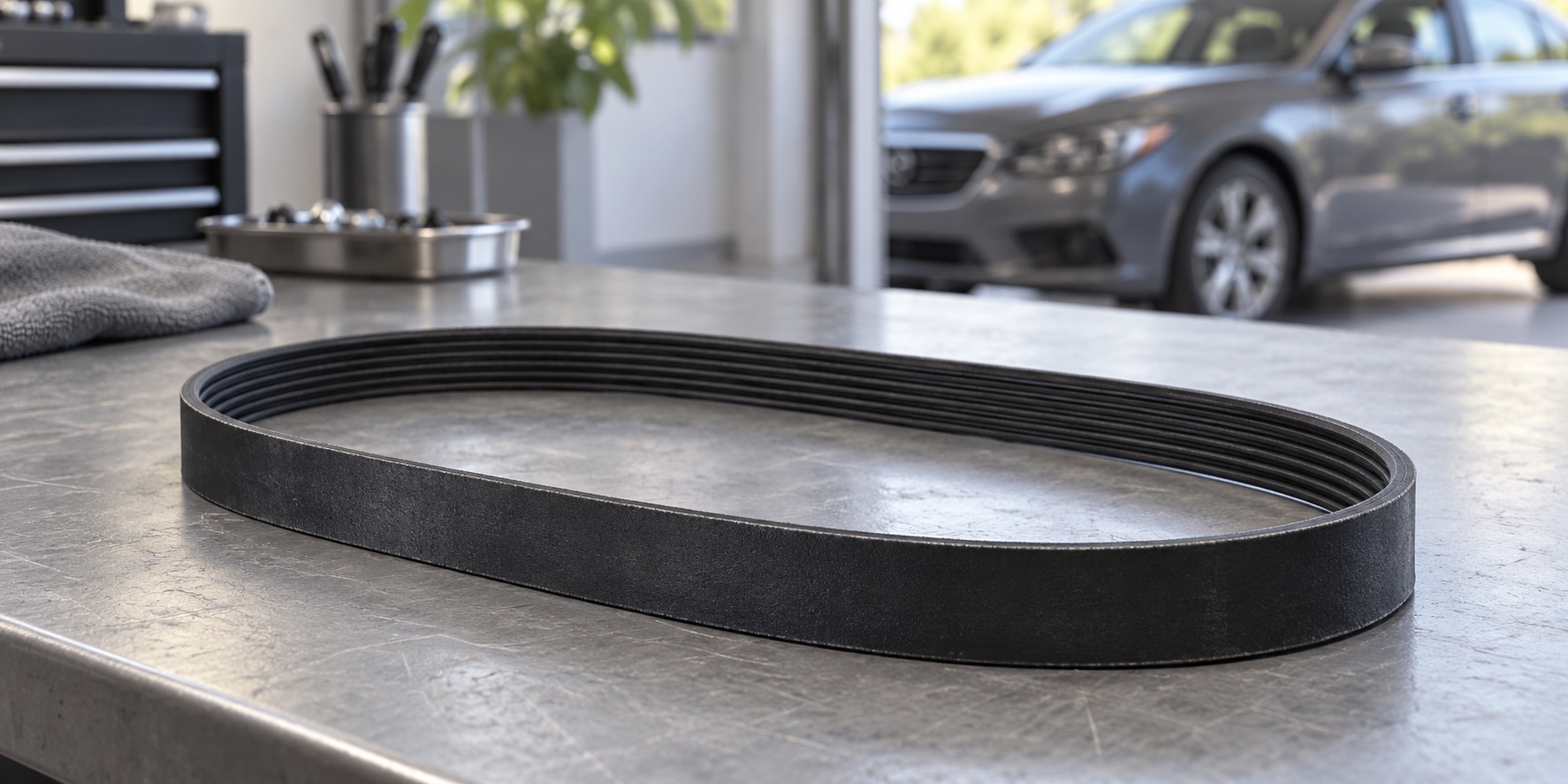
Featured image: AI-generated illustration of a generic accessory belt on a workbench, not an Albion Auto shop or customer photograph.
Common questions
Does a squeal mean I only need a new belt?
Not necessarily. The belt works with other components, so ask what the system inspection confirms before selecting a repair.
What information helps with an intermittent noise?
Describe when it occurs, how long it lasts, any accompanying warnings and recent repairs. Share an existing safely obtained recording if available.
Should I reach near the belt to locate the sound?
No. Keep yourself, tools and recording devices away from moving parts and leave diagnostic testing to the repairer.