Automatic Headlights or Daytime Running Lights? Know What Is On
Understand the lighting settings, check the exterior safely and describe the actual pattern before assuming a sensor or lamp has failed.
A bright instrument panel can make a car feel ready for an evening drive, even when the exterior lighting is not set as expected. Before assuming that an automatic-headlight sensor or lamp has failed, establish which lights are actually operating and which setting is selected. That distinction is useful for drivers in Bolton and Caledon as more everyday journeys take place in fading light.
The goal is not to become an electrical technician in the driveway. It is to understand the controls, recognize a lighting concern and give the shop a clear account of it. If you cannot see adequately or your required lights are not working, do not continue a journey simply to investigate the behaviour.
Start with the controls, not the dashboard brightness
Transport Canada cautions that an illuminated dashboard does not necessarily mean the headlights and tail lights are on. It also explains that daytime running lights do not provide sufficient lighting for darkness or bad weather. Seeing light reflected ahead of the car is therefore not a complete check of the lighting configuration.
While safely parked, find the lighting section in the owner's manual for your exact vehicle. Identify the main switch and learn what the displayed symbols mean. A borrowed car, a recently purchased vehicle or an unfamiliar courtesy vehicle deserves this check before the first evening trip, even if its dashboard looks similar to one you already know.
Do not rely on the switch position you remember from last week. Check its current position. If another driver used the vehicle, ask whether they changed anything, but avoid treating that possibility as a diagnosis. Record the setting you found before making a normal adjustment described in the manual.
Separate automatic headlights from automatic high beams
Transport Canada describes automatic headlights as responding to outside light levels; the automatic setting must be selected for the feature to work. Automatic high beams are a separate function that manages the upper beam in relation to other traffic. Having one feature does not tell you how every lighting control in your particular car is configured.
Use the manual to identify which features are fitted and how to select ordinary low beams when appropriate. Avoid experimenting with menus or switches while moving. If the controls are unclear, work through them while parked or ask for a demonstration when arranging service.
Write down the actual concern. “The headlights do not come on in automatic mode” is different from “the high beams do not switch automatically.” A third concern might be that one lamp stays dark in every normal setting. Keeping these descriptions separate helps avoid a conversation in which the driver and technician mean different things by “automatic lights.”
Check the exterior from a safe position
Use a level, safe parking area away from traffic and follow the vehicle's parking instructions. If another person helps, agree on what you are checking before operating the controls. Never stand in a vehicle's path or use a running engine in an enclosed garage for a lighting check.
Observe the front and rear lighting in the setting prescribed by the manual. Record which side or lamp appears different. Do not assume that a visible light at the front confirms the rear lighting, and do not confuse a brake-light check with a tail-light check. Describe the function being selected as well as the location being observed.
Keep the inspection simple. You do not need to remove trim, unplug a headlamp or probe a connector to report that a lamp is dark. If there is visible exterior damage, photograph it from a safe position. An observation is useful even when you cannot explain its cause.
Bad weather needs a deliberate lighting check
Government of Canada fog guidance advises drivers to ensure headlights and tail lights are on and to avoid high beams, which reflect in fog and make seeing harder. It also advises slowing down for the conditions. More light in the wrong direction is not a substitute for suitable lighting and a safe speed.
Before a trip in poor visibility, confirm the lighting instructions for your vehicle rather than assuming an automatic setting has covered every condition. If visibility becomes unsafe, prioritize finding a safe place to stop and reassess. Do not use the journey as an opportunity to compare settings or take dashboard photographs.
When reporting a concern, distinguish darkness from weather. Note whether it happened at dusk, in daylight rain or in fog, and whether you checked the exterior lights or only noticed the instrument panel. Say when you are unsure. An honest uncertainty is more useful than turning an impression into a definite claim.
Record a repeatable pattern without creating a risky test
If the issue has occurred during normal use, note whether it affects one side or both, whether a warning message appears and whether ordinary manual selection changes the result. Include the exact message rather than a description such as “something about lights.” Take photographs only while safely parked.
Mention recent work, a collision, accessory installation or earlier lighting repairs if relevant. Provide the invoice when available. These details establish history; they do not prove that a previous repair caused the problem. Avoid buying a sensor or headlamp assembly merely because a similar symptom appears in an online discussion.
Do not cover sensors, bypass wiring or repeatedly change configuration settings to force a response. Ask the shop how the concern should be assessed for that vehicle. If it cannot be reproduced immediately, your notes can still explain the circumstances in which you noticed it.
Ask what the inspection established
A useful repair discussion separates normal operating behaviour, an incorrect setting and a confirmed fault. Ask what was checked and what evidence supports the recommended part or adjustment. If the recommendation is an expensive assembly, it is reasonable to ask how its failure was established and what operation will be verified afterward.
Review our service information or contact Albion Auto Service with the vehicle details, selected setting and exact symptoms. Understanding what the lights are doing is the first step toward choosing the right next action.
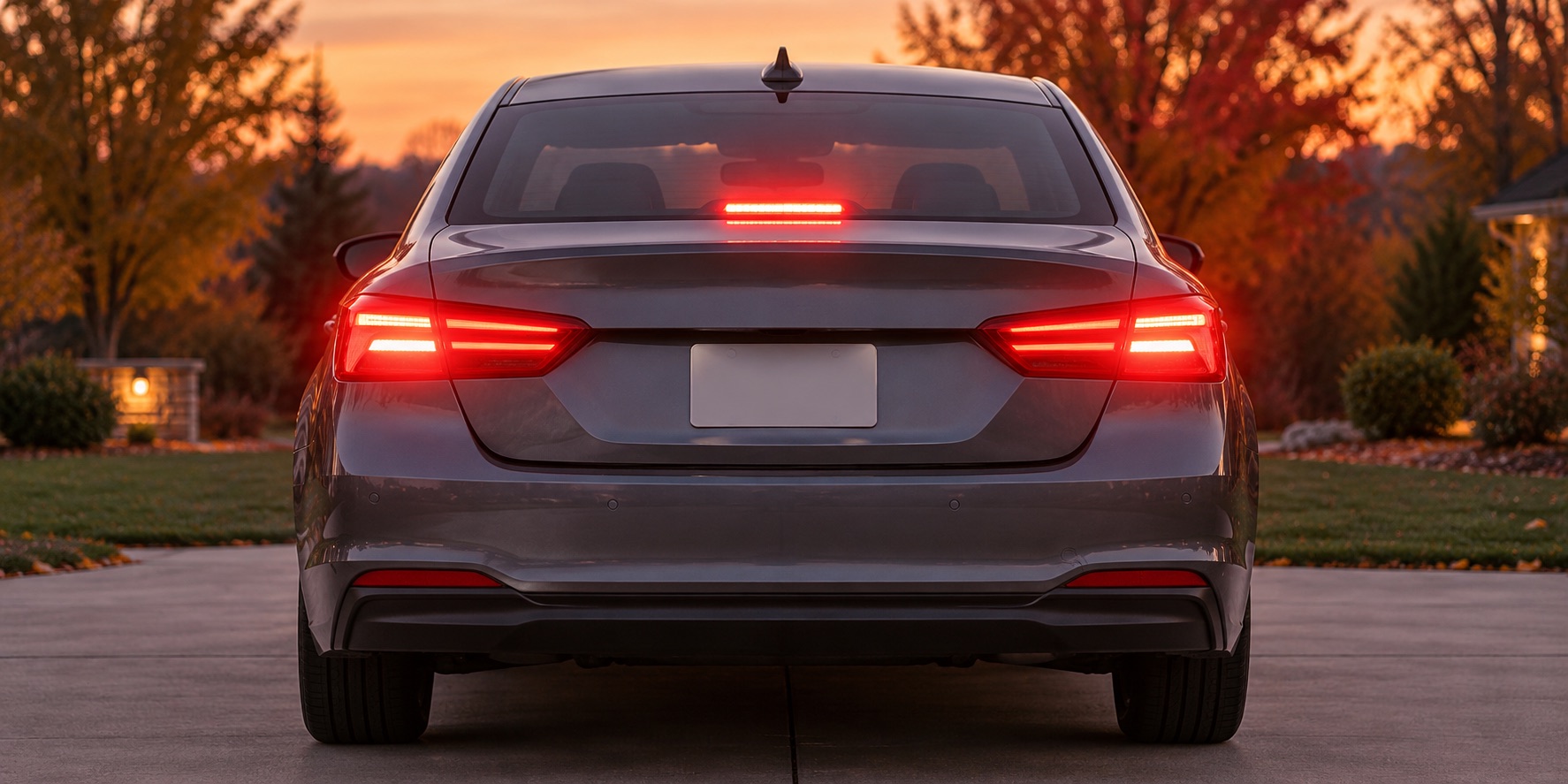
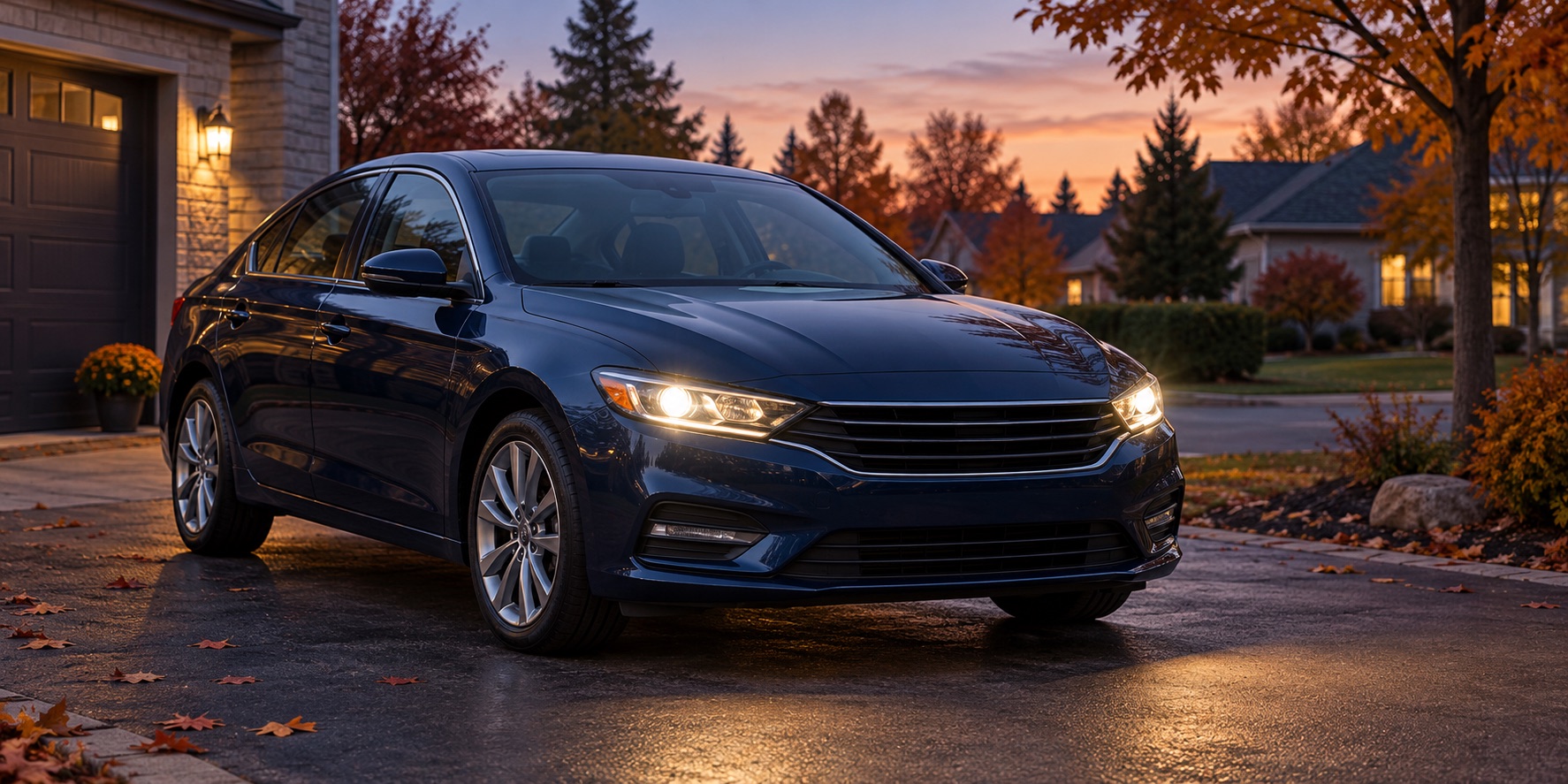
Featured image: AI-generated illustration of a generic parked car with illuminated headlights at dusk. It is not an Albion Auto shop or customer photograph and is not a technical beam-pattern demonstration.
Common questions
Does a bright dashboard prove the headlights are on?
No. Check the selected lighting setting and follow the vehicle manual rather than relying on instrument-panel brightness.
Are automatic headlights and automatic high beams the same feature?
No. Consult the manual to identify which functions are fitted and how each is selected.
Should I buy a sensor if automatic lighting seems wrong?
Establish the setting, actual exterior-light behaviour and inspection findings first. A symptom alone does not identify the failed part.