Before You Plug In Your Engine Block Heater This Winter
A heater cord that spent the summer behind the grille deserves a look before it goes back into service. Start with both ends disconnected.
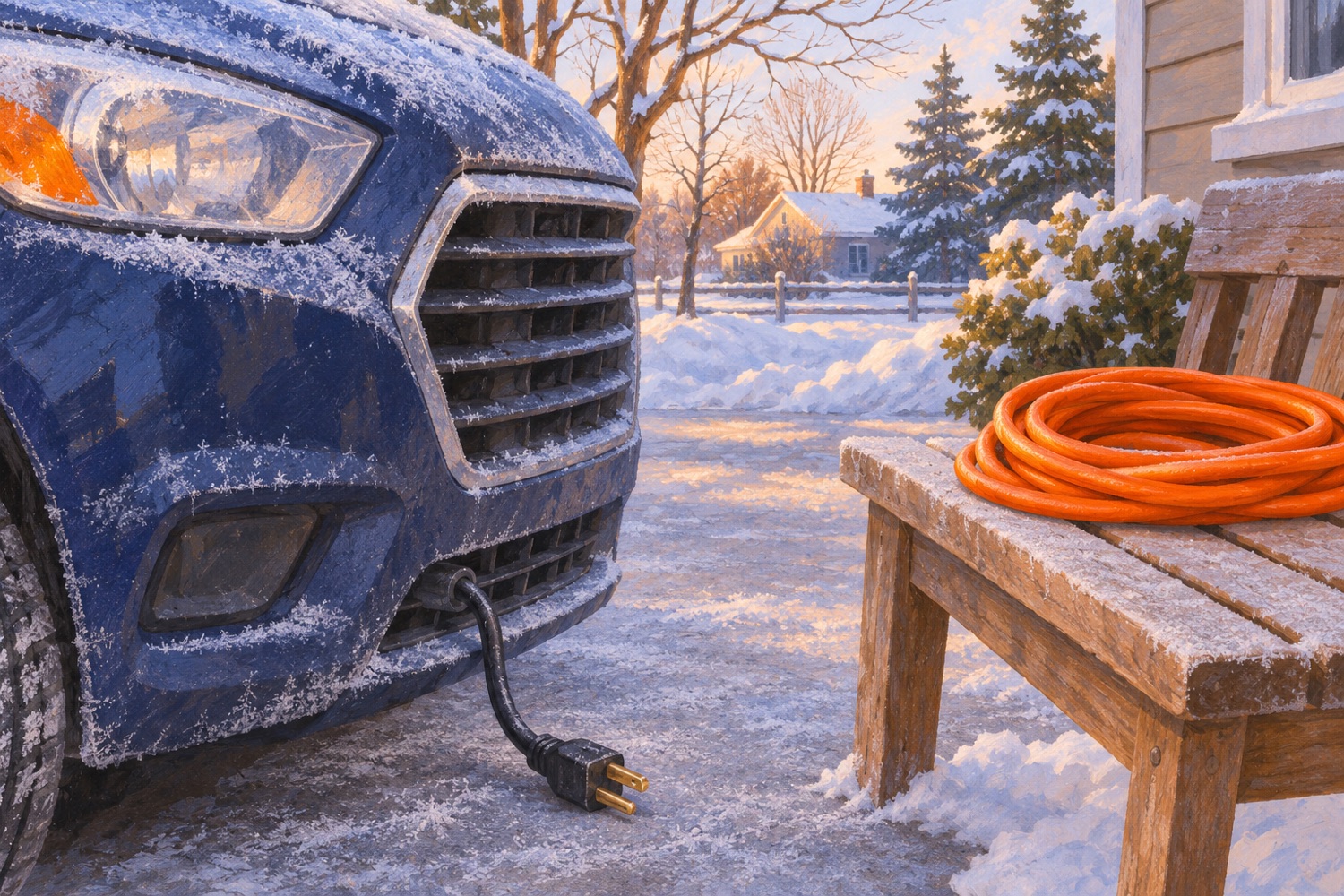
Before the first deep freeze in Caledon, take a daylight look at the plug tucked behind your grille. Road spray reaches that plug even when the heater goes unused. The extension cord you plan to use may have spent the summer under a workbench or caught beneath a garage door. With everything disconnected from power, check both cords before you bring them together. Cracked insulation or a corroded plug is reason to stop there.
Identify what the plug powers
If the car is new to you, check the owner’s manual and any installation paperwork. Find the section for the engine block heater and confirm that your vehicle actually has one. Manuals often describe equipment offered as an option. If someone added a heater later, look for the instructions for that unit. Ask a shop to identify an unfamiliar lead before you energize it.
Ford describes its coolant heater as a starting aid. Warming the coolant helps prepare the engine for a cold start. A block heater on its own does not recharge the starting battery. If the engine barely turned over last winter, putting the heater back into service and checking the starting system are two separate jobs. A receipt for a new heater will not tell you whether the battery can deliver enough power on a cold morning.
Inspect the two cords separately
Park the car, switch it off and keep the cords disconnected. Look at the accessible portion of the vehicle lead, especially the point where it emerges from the grille and the flexible section immediately behind the plug. Look for cuts, crushed insulation, exposed conductors, a cracked plug body or bent, loose or corroded pins. Leave tucked-away wiring in place. If inspection would require reaching into the engine compartment near belts or fans, have the vehicle side checked at the shop.
Next, uncoil the extension cord in good light and look along its length. A plug can look clean while a section several metres away has a flattened or split jacket. Check both ends for damage or signs of overheating. Manitoba Public Insurance warns that damage to these cords and corrosion at a plug can lead to electrical failure and fire. Set damaged equipment aside. Avoid taping over a split or plugging the cord in briefly to see whether it still works.
Keep track of which item has the damage. A cut extension cord is a reason to replace that cord. Damage to the short lead attached to the car calls for inspection of that lead and its connection. Neither observation by itself establishes that the heating element inside the engine needs replacement.
Match the cord and outlet to the heater
Follow the heater instructions for grounding, outlet protection, cord rating and permitted length. Look for markings confirming that the extension cord is suitable for outdoor use in cold weather. Colour cannot tell you its rating. If the cord has lost its markings, choose one you can positively identify against the manual. Use one suitable cord long enough to reach the vehicle without strain.
Plan the route before plugging in. Keep the connection dry and clear of snow, slush and standing water. Route the cord away from walkways, tires and places where a closing door could pinch it. If the only route to the driveway leaves a plug sitting in meltwater or a cord stretched across a public sidewalk, find another suitable parking arrangement. Questions about the outdoor receptacle or its protection belong with a qualified electrician.
Check your own instructions for the recommended temperature and heating time. If you use a permitted outdoor timer, confirm its rating and programmed hours. Before starting the vehicle, disconnect the extension cord as directed, replace the protective cover if fitted, and secure the vehicle lead clear of moving parts. A reminder beside the keys can help when another household member is first out of the driveway.
If the car still struggles to start
Describe what happened before guessing at a part. Did the starter turn the engine slowly, did you hear a click, or did the engine turn at its usual speed without starting? Note the outdoor temperature, how long the vehicle was parked and whether the timer was meant to supply power during that period. If a protective device tripped or a connection showed heat damage, stop using the setup and report it. Repeatedly resetting protection can conceal a fault.
A timer display or a light on an extension cord cannot, by itself, establish that the heater element delivered heat to the engine. Ask what was checked on the vehicle lead and heater, and whether the starting complaint also warrants battery, connection or starter testing. That distinction helps avoid replacing the heater to fix a weak battery, or buying a battery while a damaged cord remains in use.
For a recurring cold-start concern in Bolton or Caledon, see Albion’s vehicle electrical service information or contact the shop with the vehicle year, engine and what you observed.
*Featured artwork is an AI-generated illustration.*
Common questions
Can I use a block heater cord with a cracked plug?
Leave it disconnected and have the vehicle lead assessed. Replace a damaged extension cord before use.
How long should I plug the heater in?
Use the guidance for your vehicle or installed heater. The recommended conditions and duration depend on the equipment.
Does a block heater keep the starting battery charged?
A conventional engine block heater warms the engine. Battery charging requires equipment designed for that purpose.