Where Is Your Wheel Lock Key? Check Before Your Winter Tire Change
One small adapter can hold up a seasonal tire change. Here’s how to spot it, keep it with the right vehicle and use the lock paperwork if it goes missing.
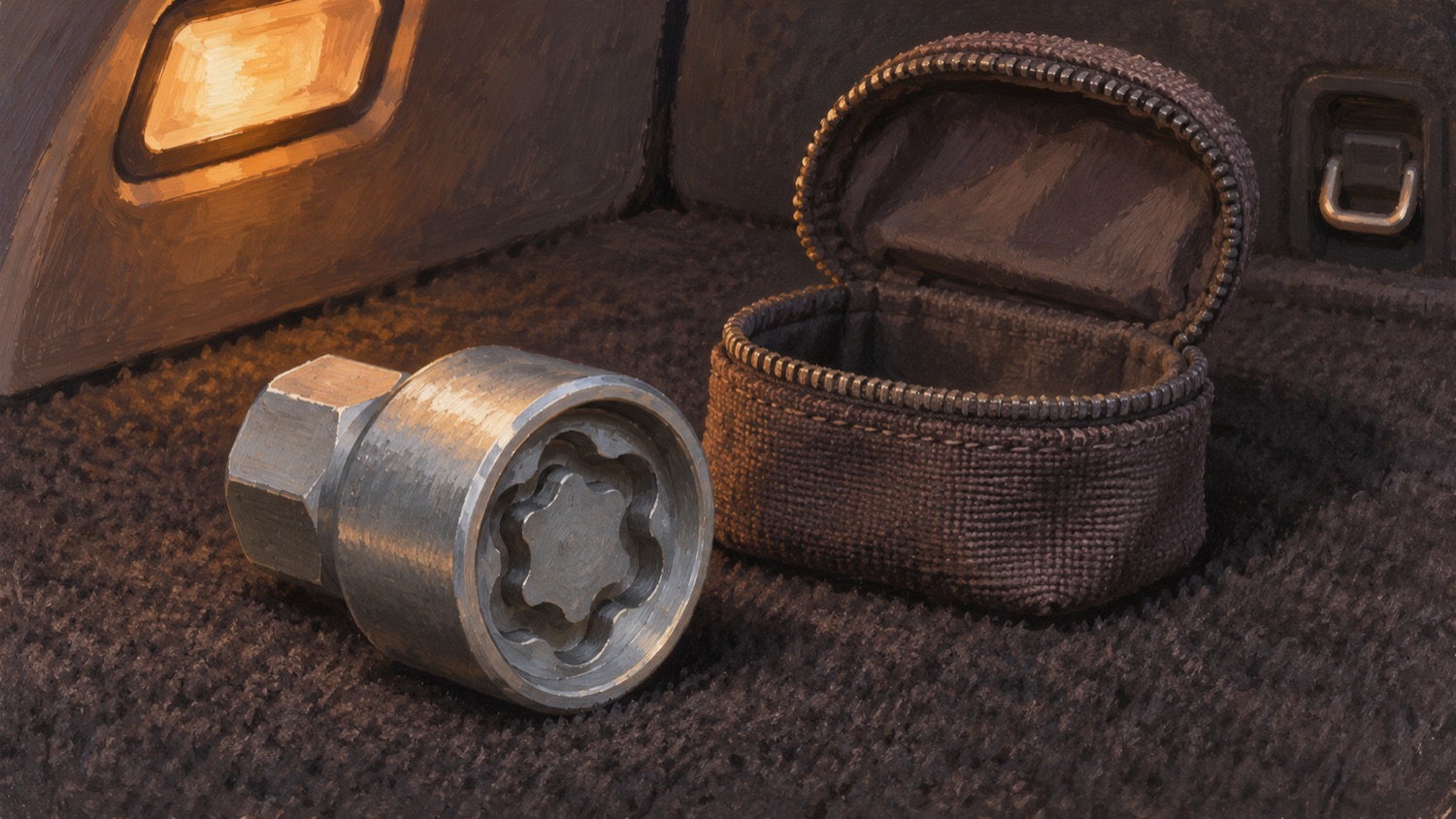
You can have all four winter wheels loaded and still leave the one piece the technician needs on a shelf at home. If your car has locking wheel nuts or bolts, the wheel lock key is the small adapter that fits their patterned heads. It often looks enough like an ordinary socket to get put away with the wrong tools. Finding it before a tire change is easier than looking for it while the car is waiting for service.
What the shop means by “the key”
A wheel lock replaces an ordinary wheel nut or bolt and has a head that takes a matching tool. One end of the adapter engages that pattern. The other gives the wrench something to turn. The key the shop is asking for may be a short, plain piece of metal with no handle or key ring. The registration card that came in the lock package can help you obtain a replacement, but it cannot turn the installed lock.
With the vehicle parked, look at the visible wheel fasteners. Does one head have a different face from the others? That is a reason to look for a matching adapter. Some wheels have covers that make a visual check inconclusive. If you are unsure, send the shop a clear picture of the accessible hardware before the appointment. There is no need to jack up the car or loosen a wheel to answer a booking question.
Search where the wheel tools and seasonal hardware live
Start with the vehicle’s tool kit. Look in the moulded tray under the cargo floor if your vehicle has one, inside pouches and beside the wheel wrench. Check the glove compartment for a small lock case or an envelope with an identification card. Then think back to the last wheel change. Was a bag of nuts, bolts or centre caps handed back to you? The adapter might be tucked inside. Look in that bag before emptying a whole garage cabinet.
For households with two cars, keep track of where each adapter came from. Two pieces of steel can have the same outer wrench size and different patterns on the working end. If a used vehicle came with several loose adapters, bring them in a labelled bag and explain that the match is uncertain. Leave the job of confirming engagement to the person doing the wheel work. Trying each one under force can turn a missing-key question into a damaged-hardware repair.
If you find the card but the key is gone
Look for the brand name and the identification information supplied with the locks. McGard, for example, has a replacement-key process tied to its registration information. Contact the maker of your particular set or the dealer that supplied it. Have the card and original packaging handy and ask what information they need for a Canadian order. Keep the identification code private when posting photos or asking for general advice online.
If you have no paperwork, call before the tire appointment. Tell the shop whether the lock came with the vehicle or was installed later, whether you have found any adapters, and when someone last removed the wheels successfully. If you know which shop did the last change, a quick call may locate a key that was set aside. If the car changed hands recently, ask the previous owner whether a second key or registration card was kept at home.
A missing key leaves one question open: what will allow the fitted locks to be serviced? It does not establish that a wheel, tire or complete set of fasteners is defective. Ask whether a matching replacement can be identified and what options remain if it cannot. Discuss any additional removal work before it begins.
If the key is present but slips
Set a damaged adapter aside and keep it available for inspection. A chipped pattern on the tool and damage on the fastener are separate findings. Ask the technician to show which surface is affected, whether the hardware can be serviced using the maker’s procedure and which items would actually need replacement. Hammering on an almost-fitting socket or using more force can make the original problem harder to assess.
If your winter wheels have their own supplied nuts or bolts, bring them separately and tell the shop which set they came with. Hand the wheel lock key to the service adviser or point out its exact location before leaving. “In the zipped pouch under the cargo floor” is more useful than “somewhere in the trunk,” particularly once the summer wheels are loaded for the drive home.
Before you leave with the winter wheels
Ask which hardware is now on the car and which pieces go into storage with the other wheel set. Check that the matching key for the installed locks is back in its designated spot in the vehicle. Store the registration information somewhere you can find it even when the car is away. A note in your seasonal service record can save the next driver the same search if roadside assistance needs to remove a wheel.
Planning a changeover in Bolton or Caledon? Review Albion’s tire services or contact the shop before your appointment if a lock key is missing or damaged.
*Featured artwork is an AI-generated illustration.*
Common questions
Can I use a key from another car of the same model?
The adapter must match the lock pattern. The vehicle model and the outer wrench size alone cannot confirm a match.
What should I do if I only have the identification card?
Contact the lock supplier about a matching key and tell the shop before your appointment. Keep the card available when you call.
Should the key stay with the summer wheels?
Keep the key for the locks currently installed in a secure, accessible place in the vehicle. Label hardware stored with the other wheel set.