Why Your Tire Pressure Light Comes On During Cool Mornings
Cooler mornings can reveal low tire pressure. Here is how to separate a seasonal pressure change from a slow leak or a monitoring-system problem.

A tire-pressure warning on the first cool morning of fall can feel like a new problem arriving overnight. You parked normally, nothing looks flat, and now the dashboard wants your attention. Around Bolton and Caledon, the change from warm afternoons to cooler early commutes makes this a useful time to check your tires.
Temperature can explain the warning, but it does not tell you whether the tires are safe to drive on. Start with actual pressure readings. Then decide whether the vehicle needs an adjustment, a leak inspection or a check of its monitoring system.
Why cooler air can trigger the warning
As the air inside a tire cools, its pressure falls. A tire that was already near the warning threshold may cross it overnight. Driving warms the tires and can raise the pressure enough for the light to disappear again. That does not establish that the cold pressure was correct.
Think of the light going out as another observation, rather than proof of a repair. Record when it appeared and whether it disappeared after driving. Michelin's tire-pressure guide explains the relationship between temperature, inflation and an intermittent morning warning.
Measure first, using the vehicle's specification
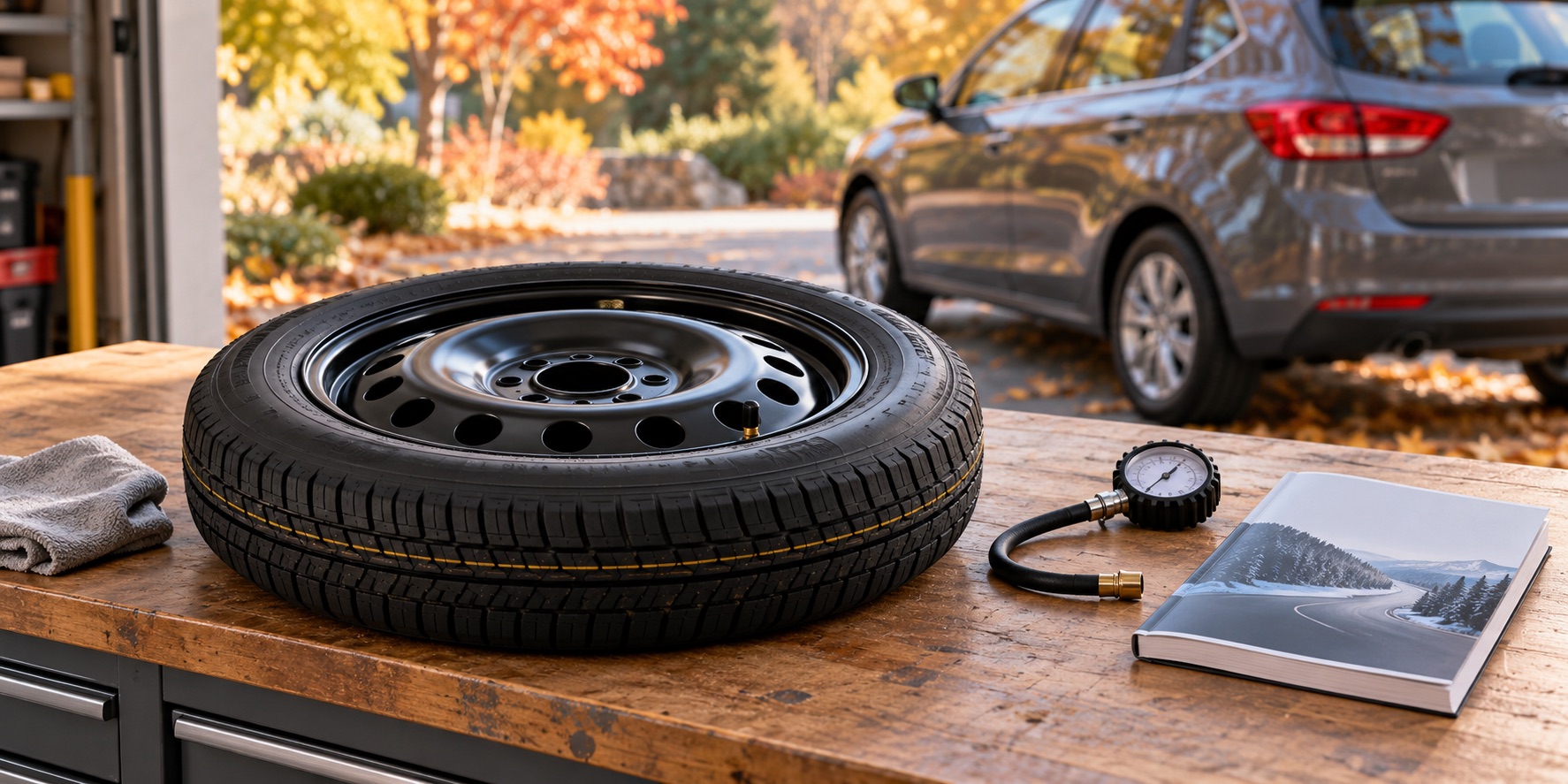
Park somewhere safe and check the tires before your next trip. A tire does not have to look flat to be underinflated. Use a reliable gauge and compare the readings with the vehicle's tire-information label, usually on the driver's door opening, or the owner's manual. Check the specified front and rear pressures separately; they may differ.
For a cold reading, check before driving after the vehicle has been parked for at least three hours. Remember the spare if your vehicle has one. Replace the valve caps after checking. Do not continue driving on a seriously underinflated tire or one with a bulge, deep cut or other obvious damage; arrange appropriate assistance.
Transport Canada's tire-maintenance guide explains cold-pressure checks and the warning signs that need attention.
Avoid two common inflation mistakes
The maximum pressure moulded into the tire sidewall is not the everyday inflation target for your vehicle. Use the vehicle manufacturer's recommendation for the fitted tire configuration. If the wheels or tires have been changed from the original specification, ask a qualified tire professional to confirm the appropriate setup.
Also, do not release air from a warm tire simply to make its gauge reading match the cold specification. Recheck under cold conditions. A monitoring light is not a substitute for regular measurements: some systems warn only after pressure is already significantly low. NHTSA's TireWise guidance covers these inflation precautions and how to respond to a pressure warning.
Temperature change or a slow leak?
Compare all four readings and write them down with the date. If several tires are similarly low after a colder night, temperature may be contributing. If one tire is noticeably lower, or repeatedly needs air while the others remain stable, investigate that pattern instead of repeatedly topping it up. These are clues, not a diagnosis.
A puncture is only one possible leak location. Air can also escape around a valve, the tire-to-wheel sealing area or the wheel itself. A tire inspection should identify the source before a repair or replacement is recommended. Michelin's guide also discusses these possible leakage points.
When arranging service, useful details include:
- Which tire needed air, and the reading you measured.
- When you last adjusted it and whether the tires were cold.
- Whether the warning began before or after a tire change.
- Whether the dashboard displays a pressure value or a system-fault message.
Bring the observations you have. You do not need to decide which component is faulty before booking tire service in Bolton.
A monitoring-system fault is a different question
Vehicles use different approaches to tire-pressure monitoring. Some measure pressure with wheel-mounted sensors; others infer a pressure change from wheel-speed information. The correct reset or relearn procedure depends on the vehicle.
If the pressures are correct but the warning persists, consult the owner's manual and have the system checked. A recent wheel swap, an incompatible sensor or an incomplete reset may be relevant. Do not assume every warning requires a new sensor, and do not reset a system to hide an unresolved pressure problem. Transport Canada's TPMS overview explains the two system types and their limitations.
Make the next check easy
Keep a gauge where you can find it and set a monthly reminder. Add a pressure check to your preparation for a longer drive or a seasonal tire appointment. If you are planning that appointment, our guide to when to install winter tires in Ontario covers the separate question of seasonal tire timing.
For a recurring warning, the useful result is more than a dashboard light that happens to be off. You want the pressures verified, any continuing loss investigated, and the monitoring system operating as intended. That gives you a clear next step instead of another round of guessing.
Featured image: AI-generated illustration; not a photograph of an Albion customer vehicle or repair.
Common questions
Should I ignore the light if it goes out after driving?
No. Check the pressures when the tires are cold. Warming during driving can switch the light off without correcting low cold inflation pressure.
Does every warning mean a pressure sensor has failed?
No. Measure the tire pressures first, then follow the vehicle-specific monitoring-system guidance. A warning alone does not identify the failed component.
What should I tell the shop about a recurring warning?
Bring the pressure readings, the affected wheel position, when air was last added, and any recent tire or wheel work. Those observations help guide the inspection.