Moisture Inside a Headlight: When Does It Need Inspection?
A hazy patch and accumulated water are different concerns. Document the pattern and find the cause before replacing a headlamp.
A misty patch inside a headlight can be unsettling, especially when you first notice it before an early drive. Does the lamp need replacing, or is the moisture temporary? Start by describing what is actually visible and checking the guidance for your vehicle. A hazy patch and a pool of water deserve different attention.
For owners in Bolton and Caledon, autumn is a useful time to notice lighting concerns before the next drive in darkness. The goal is to establish whether the lamp is behaving normally or needs a repair, then identify the cause before buying an assembly.
Fine mist is not the same as accumulated water
Ford's headlamp troubleshooting guidance explains that vented headlamps can develop temporary internal mist as humid air cools. In the manual cited here, fine mist is distinguished from large droplets, streaks and pooled water; those latter conditions call for a vehicle check.
That is an example of manufacturer guidance, not a universal pass-or-fail rule for every lamp. Find the instructions for your exact vehicle, or ask the repairer to identify them. Avoid borrowing a clearing time from another model and treating it as a guarantee that yours is fine.
Look at the lamp while safely parked. Is there a thin cloudy area, distinct droplets, a trail down the inside or water at the bottom? A clear description helps the technician understand why you are concerned without deciding in advance which part has failed.
Record the pattern before the evidence disappears
If safe to do so, take a photograph of the affected lamp and one of the other side for comparison. Include a wider view showing which lamp it is. Do not dismantle anything to get a better photograph, and do not inspect the vehicle beside moving traffic.
Note when you noticed the moisture and what preceded it: rain, a wash, overnight parking or recent work. Record whether the appearance later changed. These observations are useful context, but they do not prove that a wash caused damage or that a recent repair was performed incorrectly.
A short booking note could say: “Left front headlamp, droplets noticed this morning after rain; photograph available.” Add any lighting warning or operation problem separately. You do not need to supply a diagnosis. If you do not know how long the moisture has been there, say that rather than guessing.
Treat lighting performance as a separate concern
Do not dismiss a lamp that fails, flickers or leaves you unable to see adequately just because some condensation can be normal. Explain the operating problem when booking, even if the lens looks clear by the time of the appointment. Avoid driving in conditions where the lighting is inadequate; arrange help when needed.
If a warning appears, record its wording while parked. Tell the shop whether it happens immediately or intermittently and whether one or several lighting functions seem affected. A photograph of the warning is more useful than trying to remember the wording later.
Equally, a lamp that still illuminates has not passed a complete condition assessment. Appearance, operation and the cause of moisture are related questions, but none should be used as a shortcut to answering the others.
What an inspection should establish
Lighting manufacturer HELLA's technical guidance on condensation calls attention to seals and ventilation when water accumulates. It also explains that moisture can enter through electrical connections and travel along wiring. The visible water therefore does not, by itself, identify the entry point.
Ask what was found on your vehicle and how it explains the symptom. Depending on the lamp and the findings, the assessment may need to consider the housing, closures, ventilation and connections. Vehicle-specific service information should guide the work rather than a generic internet drying trick.
Useful questions include:
- Is this appearance consistent with the manufacturer's guidance?
- Was accumulated water or physical damage found?
- What supports the proposed cause?
- What repair is recommended, and how will it be checked?
A good explanation connects the observation to the proposed work. “Moisture is visible” is the starting point for that conversation, not a complete justification for an expensive replacement.
Avoid altering the lamp before diagnosis
Do not drill a drain hole, cover ventilation openings or apply sealant as an experiment. Ask for the correct procedure before modifying a lighting assembly. Likewise, leave heat guns and improvised drying methods out of the initial assessment. Documenting the concern preserves more useful evidence than trying several unverified fixes first.
Tell the shop about previous bulb changes, collision repairs, lamp replacements or aftermarket lighting. Include any attempts already made to remove moisture. This is practical repair history, not an admission that those changes necessarily caused the problem.
If you still have an earlier invoice, bring it. The part description and work date can help the repairer understand what is fitted and what was done. Do not rely on the vehicle's appearance alone to identify the assembly.
Approve the repair based on the findings
Before authorizing work, ask whether the recommendation is inspection and monitoring, a repair to an identified problem or replacement of the assembly. Have the estimate explain its scope. If replacement is recommended, ask what finding makes that necessary and what checks apply afterward.
Keep the photographs, diagnosis and invoice together. If moisture returns, report when it happened and whether it looks the same. Comparing documented observations is more useful than starting again with “the headlight is foggy.”
For help with a lighting concern, see our vehicle electrical service information or contact Albion Auto Service. Share the vehicle details, affected side, photographs and any operating symptoms. Start with evidence, identify the cause and choose the repair that the findings support.
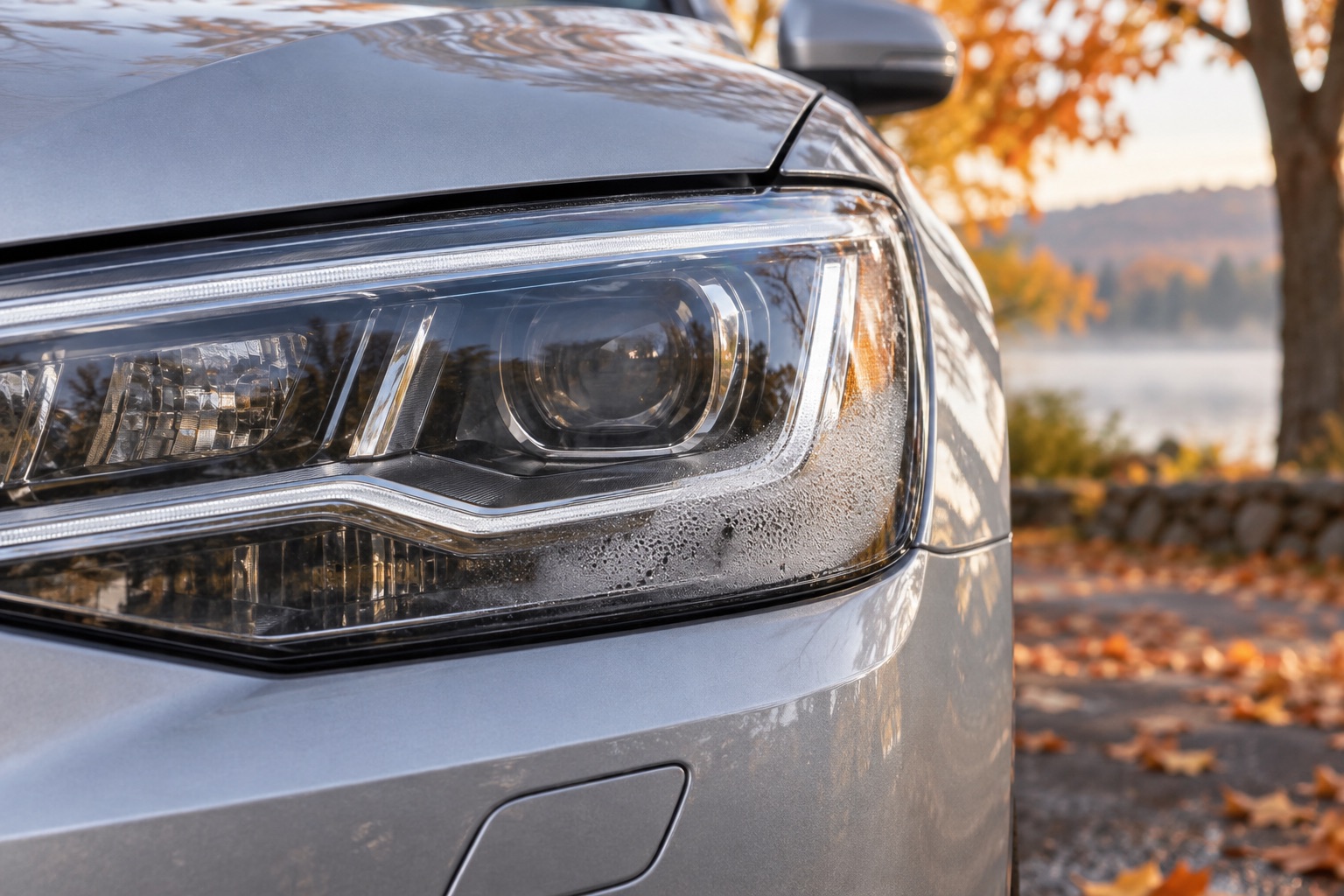
Featured image: AI-generated illustration of moisture in a generic headlamp, not an Albion Auto shop or customer photograph and not a diagnostic example of acceptable condensation.
Common questions
Does every misty headlight need replacement?
No. Temporary mist can occur in vented lamps. Compare the condition with guidance for your exact vehicle and have concerning moisture assessed.
What should I record before an appointment?
Photograph the affected side while safely parked, note when it appeared and report any lighting warning or operating problem.
Should I drill a hole to drain the lamp?
Do not modify the assembly as an experiment. Have the cause assessed and follow the appropriate repair procedure.