Rear Defroster Not Clearing? Check the Pattern Before Replacing Glass
Check the operating instructions, photograph the clearing pattern and establish the cause before replacing rear glass or controls.
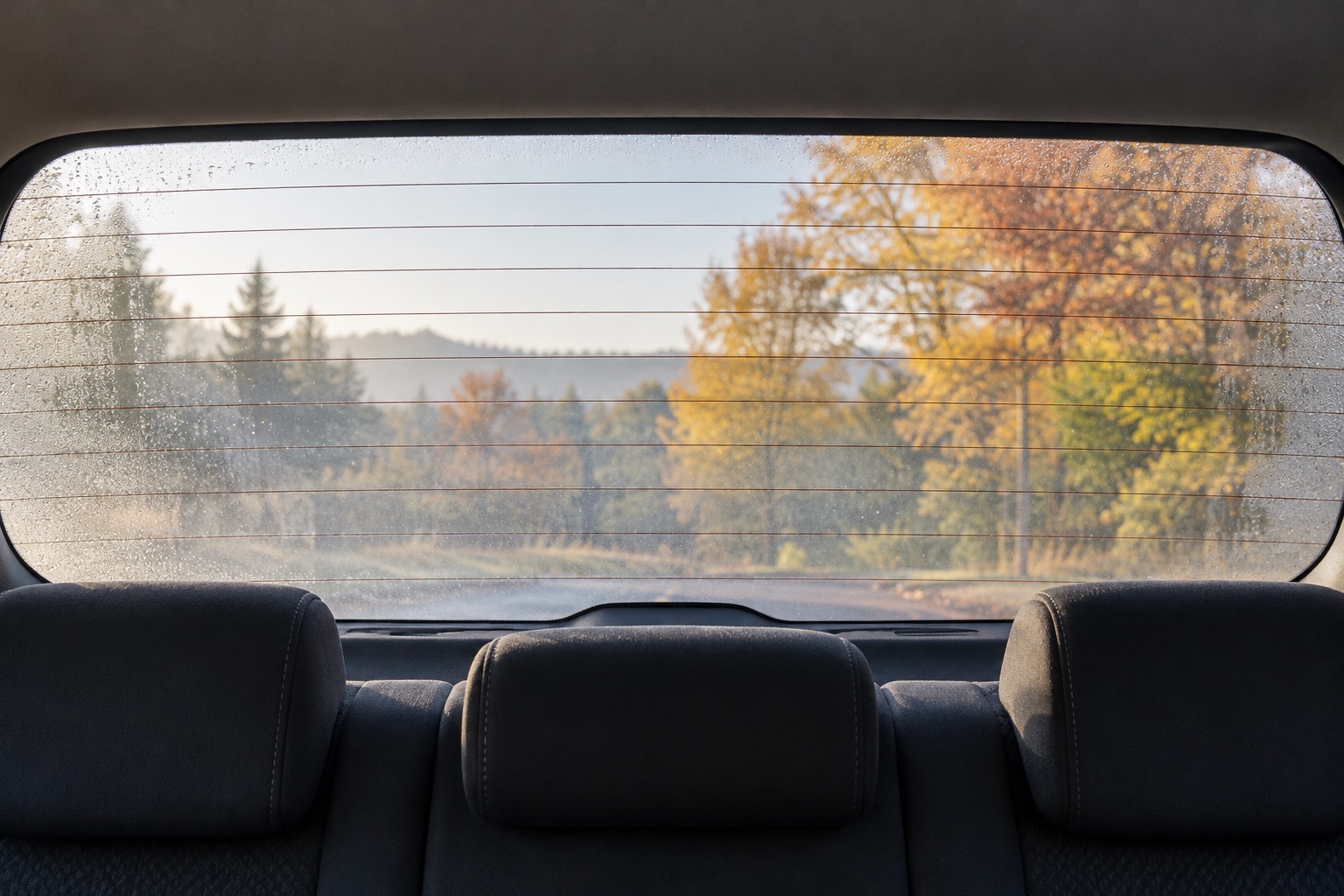
A rear window that stays misty after you press the defroster button is frustrating on a cool morning. Before assuming the glass or switch needs replacing, describe what is happening: does none of the window clear, do only some areas clear, or does the system seem to switch off before you expect it to?
For drivers in Bolton and Caledon, this is a useful visibility concern to address before colder weather. Start with the operating instructions for the exact vehicle, record the clearing pattern while parked and have the cause checked before choosing a repair.
Confirm how your vehicle operates the rear defroster
Look up the heated rear window or rear-window defogger section in the owner's manual. Check which control activates it and any operating conditions described. Do not assume the front-windshield demist setting automatically activates the rear-window heater on your vehicle.
Ford's heated rear-window instructions describe a system that switches off after a short period. That is a reminder to check the intended behaviour before treating an automatic shutoff as a fault. The timing and requirements should come from your own manual, not a different vehicle's instructions.
Note whether the control indicator illuminates when selected and whether it later goes out. Report both the indicator behaviour and what happens on the glass. They are separate observations; seeing a light on the button does not tell you which part needs repair if the window remains obscured.
Photograph the clearing pattern while parked
If possible, take a photograph before switching the system on and another after observing it for the period described in the manual. Keep the vehicle safely parked and never reach for a phone while driving. Do not run a combustion engine in an enclosed garage to carry out an observation.
Describe the pattern in plain language. Perhaps the upper area clears while a band stays misty, or perhaps the entire window appears unchanged. A photograph can communicate that more precisely than “the defroster is weak.” It is a useful starting point, not a complete electrical test.
Also say whether the obscuration is moisture inside, frost outside or something you cannot identify. Avoid scraping or rubbing aggressively to find out. If you cannot obtain adequate visibility, resolve that before setting off rather than planning to wait for the window to clear while moving.
Protect the heating lines during cleaning
The fine lines on heated rear glass need care. Ford's rear-window care guidance warns against harsh chemicals, razor blades and other sharp objects on the inside of the heated window because they can damage the grid.
Follow the cleaning instructions appropriate to your glass and any installed film. Do not remove a sticker or tint with a blade as an experiment to improve clearing. If something needs removal, explain that the glass is heated and ask for a suitable method before work begins.
If you notice a loose connection near the window or a visibly damaged line, photograph it without pulling, bending or reattaching anything. Mention it when booking. Avoid turning a small observed problem into a larger one while trying to prove what caused the symptom.
Give the shop the relevant history
Tell the repairer when you first noticed poor clearing and whether it was previously working normally. Include recent glass replacement, tint installation or removal, interior cleaning, electrical work or repairs around a tailgate. These details help establish the sequence of events without assigning blame.
If you have an invoice for previous rear-window work, bring it. If a repair product has already been applied, identify it and explain where it was used. The technician needs to assess the condition that exists now, including earlier attempts to fix it.
A concise booking note might read: “Rear defroster button lights up, but a wide band stays misty. First noticed this week; photo available.” If the system works intermittently, say that too. You do not need to decide whether the cause is the glass, connection or control before making the appointment.
Ask whether a localized repair is suitable
Poor clearing does not automatically mean the complete rear window must be replaced. Permatex's defogger repair information describes products for certain damaged grid lines and detached tabs. Its instructions require identifying the damage and following preparation and curing requirements.
That shows why inspection matters; it does not establish that every damaged window can be repaired with a kit. Ask whether the actual fault has been identified, whether a localized repair is appropriate and what the alternative is if the condition falls outside the repair method's limits.
For a window that does not clear at all, ask what testing established about the system before approving glass replacement. The recommendation should explain the findings, not simply repeat the symptom. Leave electrical probing and repair selection to the technician using the correct vehicle information.
Check the result and follow the aftercare
Before collecting the vehicle, ask how operation was verified and whether any curing time or cleaning restriction applies. Keep the diagnosis and invoice with the service history. If the same area remains obscured later, report it with a fresh photograph and the conditions in which it occurred.
See our vehicle electrical service information or contact Albion Auto Service to discuss the concern. Bring the vehicle details, clearing-pattern photographs and relevant repair history. The aim is to find the cause and choose a supported repair while restoring useful rearward visibility.
Featured image: AI-generated illustration of a generic misted rear window with heating lines, not an Albion Auto customer photograph or an example of a confirmed defect.
Common questions
Does poor rear-window clearing always require new glass?
No. Some localized grid or tab damage may be repairable, but the fault and suitability of a repair must be assessed.
Is automatic shutoff necessarily a fault?
No. Check the operating instructions for your exact vehicle before treating the shutoff as a malfunction.
Can I scrape a sticker off the inside of heated rear glass?
Avoid razor blades and other sharp tools on the heating grid. Follow the appropriate glass and film care instructions.