Heater Blowing Cold Air? Separate the Symptoms Before Choosing Repairs
Poor heat and poor airflow are different complaints. Describe the settings, timing and warning signs so an inspection can establish the cause.
When the fan runs but the air stays cold, “the heater is broken” is only the beginning of the description. The important distinction is between air that is not warm enough, air that barely moves and air that goes somewhere other than the outlet you selected. Those complaints can lead an inspection in different directions.
For drivers in Bolton and Caledon, noticing a change before colder weather arrives gives you an opportunity to explain it clearly. You do not need to select a thermostat, heater core or control component yourself. Start with the conditions, settings and symptoms, then ask what checks support the repair recommendation.
Deal with warnings and visibility first
A cold cabin is uncomfortable, but a heater complaint accompanied by an overheating warning needs a different response. Follow the vehicle's warning instructions and stop safely when directed. Do not keep driving to see whether more engine heat will improve the heater. If the vehicle cannot be operated safely, arrange assistance rather than treating the problem as comfort alone.
Visibility also comes first. If you cannot keep the windscreen clear enough to see properly, do not continue driving. Arrange an assessment and explain that the heating concern is affecting demisting. A heated seat may make an occupant more comfortable, but it does not resolve the underlying heater complaint or restore a clear view.
Never open a hot pressurized cooling system to investigate missing cabin heat. Keep hands away from fans, belts and hot components, and leave checks that require access to those areas to a technician.
Separate temperature from airflow
Describe what the system actually does. Is there a strong stream of cool air, very little air at any temperature, or no response when the fan setting changes? Does air come from the dashboard when you selected the footwell? Report those observations separately rather than reducing everything to “no heat.”
Record what you noticed during normal use; do not take extra trips to reproduce a concern. Once safely parked, a photograph of the climate-control settings can help explain the complaint. Include the selected temperature, fan setting, outlet selection and whether automatic control was active.
If the vehicle has separate temperature zones, say whether the concern affects both front occupants or only one side. If rear controls are fitted, mention their behaviour too. That comparison is useful information, not proof that a particular actuator or heater component has failed.
Allow for the type of heating system
The AA explains that a conventional engine-coolant heater uses heat transferred from the engine's coolant through a heater core. Air may initially feel cool after a cold start because the heat source has not warmed up yet. That does not mean a persistent loss of heat should be dismissed as normal.
Compare the vehicle with its own usual behaviour in similar conditions. Has a familiar journey changed from comfortably warm to consistently cold? Did the change happen suddenly, or have you noticed it developing over time? Avoid assuming every vehicle should deliver heat within the same number of minutes.
Tell the shop whether your vehicle is petrol, diesel, hybrid or fully electric. Heating arrangements differ, and an explanation based solely on a conventional engine-coolant heater may not fit your vehicle. Use the owner's manual for operating guidance rather than applying a generic warm-up routine.
Check the settings before choosing parts
When stationary, review the ordinary controls described in the manual. Confirm that you are asking for heat and that individual vents have not been closed. If you use automatic climate control, describe the selected temperature and what the system did instead of changing several settings and losing track of the original condition.
Do not dismantle the dashboard or force a control that resists movement. If a control does not respond normally, include that in the complaint. Record clicking or other new sounds you have already noticed, but do not repeatedly operate the system simply to provoke them.
A useful appointment note might list the selected setting, which outlets were affected and whether the concern was present from startup or began later. Keep it factual. There is no need to turn those notes into a diagnosis before contacting the shop.
Bring coolant and service history
The AA identifies low coolant and thermostat faults among possible causes of poor heat. It also notes that low coolant can indicate another problem needing professional attention. Neither possibility establishes what is wrong with your particular car.
Bring any recent cooling-system invoices and records of coolant top-ups. Explain when the heating changed relative to that work. If you have noticed a puddle, damp carpet or a new smell, report it separately without assuming that all the symptoms share one cause.
Only perform an owner fluid-level check when the manual describes a procedure you can follow safely. Use the specified conditions and correct reservoir identification. Do not add an unknown product, mix fluids by colour or use a stop-leak additive as a substitute for locating a fault. Tell the technician about any product already added.
Ask what the inspection established
RAC's heater guidance describes several possible areas of concern, including coolant circulation, the heater core and controls. A list of possibilities is useful background, but it is not a reason to replace each item in turn. Ask which finding connects the proposed repair to the symptom you reported.
If a component replacement or system service is recommended, ask why it is needed and how the result will be checked. A routine maintenance item and a diagnosed fault may both deserve attention, but they should be explained separately. Keep the inspection notes so that future work starts with an accurate history.
After service, report whether the original complaint has changed under comparable ordinary use. If the system still does not provide adequate heat, or a warning appears, contact the shop with the exact symptoms. Review our service information or contact Albion Auto Service to describe the concern and arrange the next step.
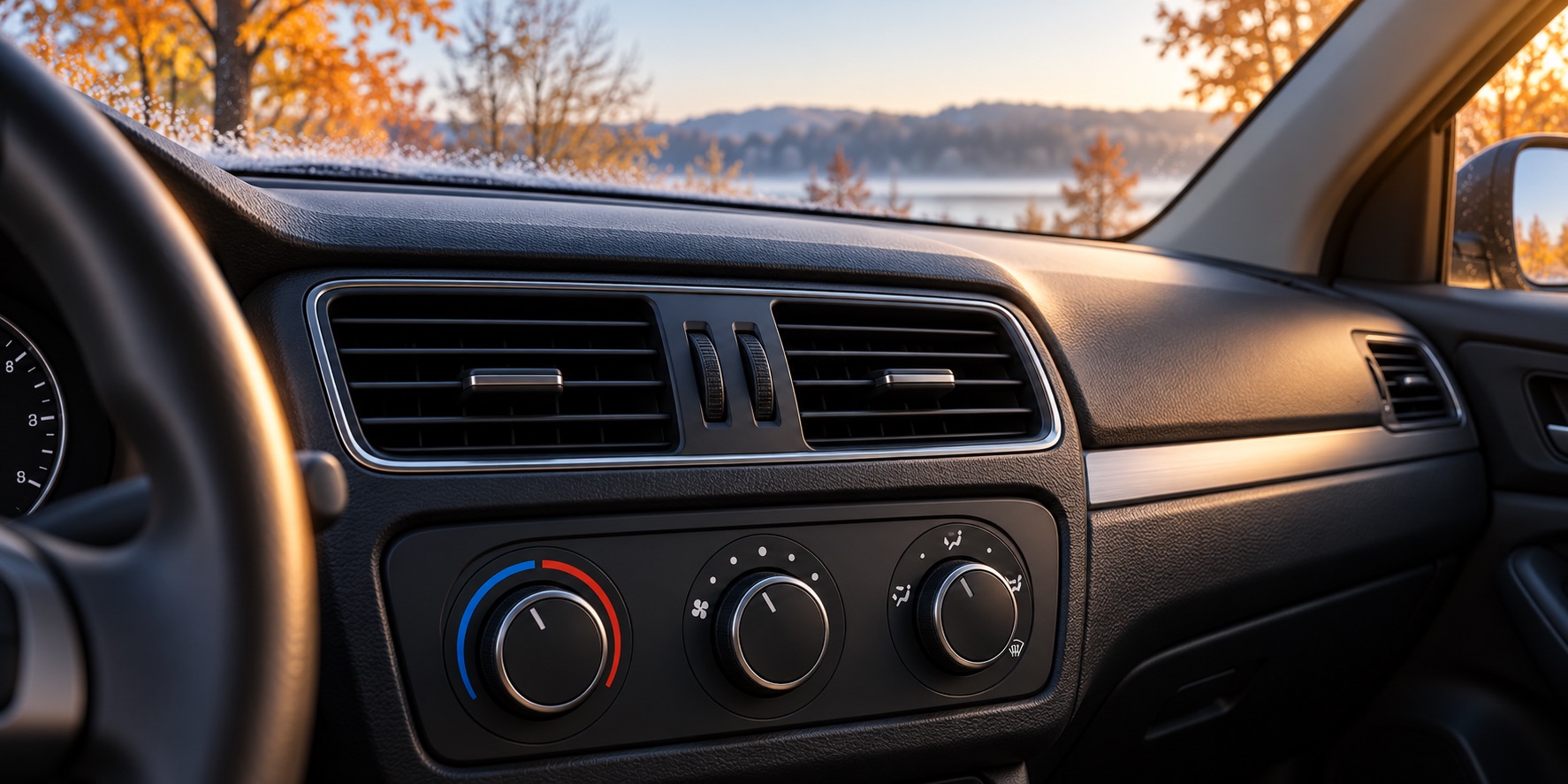
Featured image: AI-generated illustration of generic dashboard vents and climate controls. It is not an Albion Auto shop or customer photograph and does not identify a particular vehicle or diagnosed fault.
Common questions
Does cold air prove the thermostat needs replacement?
No. Several conditions can affect cabin heat. The repair should follow inspection findings.
Is cool air immediately after startup always a fault?
Not necessarily. Conventional coolant-based heaters need a heat source that has warmed up. Report a persistent change from the vehicle’s usual behaviour.
What if there is an overheating warning too?
Follow the vehicle warning instructions and stop safely when directed. Do not continue driving to improve cabin heat or open a hot cooling system.