Key Not Detected? What to Check Before Replacing Your Remote
A key warning does not identify a failed part. Bring the exact message, key history and symptoms to an assessment before choosing a repair.
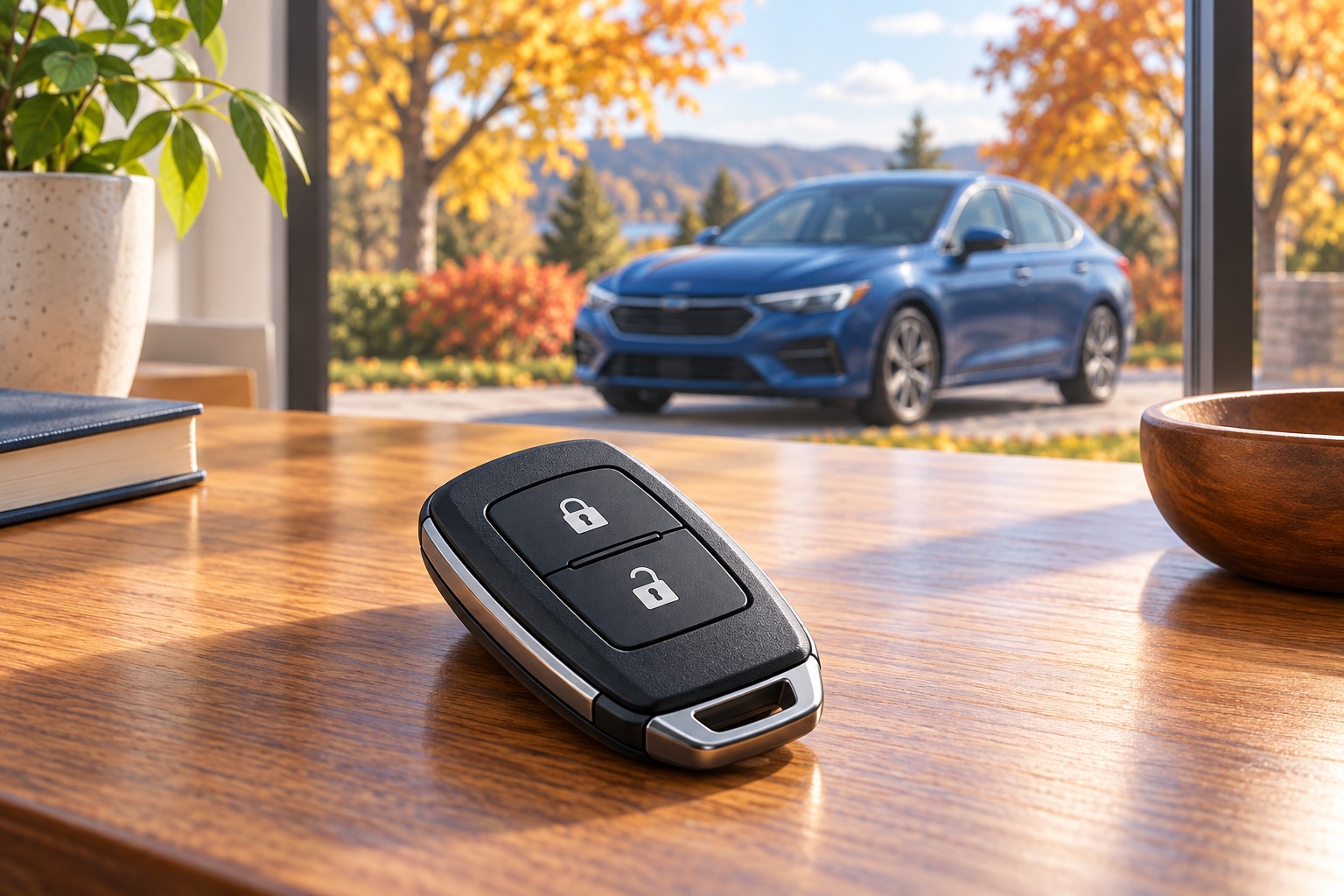
You have the key in your hand, but the car says it cannot detect it. Before ordering a replacement remote or asking for key programming, pause and record exactly what is happening. A warning message is useful information, but it is not a parts list.
For drivers around Bolton and Caledon, the most useful next step is a clear description of the problem, the correct owner's manual and an assessment when the cause is uncertain. A remote that will not unlock the doors, a push-button start that will not respond and a phone key that has stopped connecting are different complaints. Describing them separately helps the shop investigate the right concern.
Write down the exact message
Take a photo of the dashboard while safely parked, or copy the wording before it disappears. Note whether it mentions a weak remote battery, an undetected key or another starting condition. Include any other messages that appear at the same time.
Also describe what the vehicle actually does. Does pressing a remote button unlock it? Do the dashboard lights come on? Does the engine turn over without starting, or is there no response when you try to start? You do not need technical vocabulary. A short description in your own words is more useful than selecting a repair name because it sounds related.
Do not repeatedly try to start the car simply to gather more evidence. If you are stranded somewhere unsafe, arrange assistance first. Never run an engine in an enclosed garage while investigating a remote or starting concern.
Use the instructions for your exact vehicle
Some vehicles provide a specific way to recognize a remote whose battery is weak. Honda Canada's smart-entry guidance, for example, describes bringing the remote to the start button and following a timed starting sequence. That is a manufacturer example, not a procedure to copy onto every push-button vehicle. See Honda Canada's smart-entry battery guidance.
Look up the instructions for your model year and equipment before trying a backup method. If you cannot identify the correct instructions, ask the shop or roadside-assistance provider. Do not guess where the key should be placed or assume a video for a different vehicle applies to yours.
If the handbook's backup method works, record that result. It is a useful observation to bring to an appointment. It does not establish that every part of the system is working normally or explain why ordinary operation stopped.
Separate a physical remote from a phone key
If you use a phone to access or start the vehicle, say so when requesting help. Report whether the problem concerns the phone, a physical remote or both. Include any recent phone replacement or app change, without sharing passwords or security codes.
Ford's Phone as a Key troubleshooting guidance identifies a disrupted or missing Bluetooth connection as a possible explanation for a no-key-detected message in that system. The same guidance discusses checking the app connection when unlocking fails. Those instructions are specific to equipped Ford vehicles; they are not a diagnosis for every keyless-entry fault. Read Ford's Phone as a Key guidance.
The practical lesson is to identify which access method failed before choosing a solution. Replacing a physical remote would not answer a question about an app connection by itself. Follow the instructions for the system actually fitted to the vehicle.
Bring the spare and the recent history
If you have a spare that has previously worked with this vehicle, tell the shop and ask whether to bring it. Note any difference you have already observed between the two remotes. A spare of unknown history is not the same as a known working comparison.
Tell the technician whether the problem started before or after a battery replacement, a dropped remote, water exposure, vehicle service or an attempted repair. These details provide context; they do not prove the cause. Be especially clear about work that was attempted but did not change the symptom.
If the remote battery has already been replaced, record that rather than repeatedly fitting more batteries. Bring the packaging or battery specification if available and mention whether anyone opened or repaired the case. Use the vehicle's instructions for handling the remote, and ask for help if you are unsure how it opens.
Ask for evidence before buying a replacement
“Key not detected” is a good reason to investigate. It is not, by itself, proof that a new remote, programming session or vehicle control module will solve the problem. Ask what checks will distinguish the possibilities on your vehicle and which findings support the proposed work.
A useful explanation should connect the complaint to an observation or test result. Ask what has been confirmed, what remains uncertain and whether the next step is diagnosis or a repair. If a replacement is proposed, ask how compatibility will be established before ordering it. A similar-looking case is not enough information for you to choose a remote confidently.
Avoid starting unrelated reset procedures while waiting for an appointment. Instead, keep a record of the current symptoms and any steps already tried. That gives the technician a clearer starting point and avoids turning an intermittent concern into an undocumented sequence of changes.
Make the appointment request specific
When contacting Albion Auto Service, include the vehicle's year, make and model, the exact message, whether it currently starts and which keys you have. Ask what identification or vehicle documents to bring if key-related work is needed. If the vehicle cannot be driven, discuss transport before arranging the visit.
Our car key programming information and electrical repair information explain relevant service areas. The right appointment should begin with your symptoms and the vehicle's requirements, rather than an assumption that programming is always the answer.
You can request an appointment and describe the concern in the booking notes. Keep the message photo and any service records for the visit. The goal is straightforward: establish why the vehicle is not recognizing the intended key, explain the findings and choose the next step on that evidence.
Featured image: AI-generated illustration, not a photograph of an Albion Auto customer key, vehicle or repair.
Common questions
Does a key-not-detected message mean I need a new remote?
Not necessarily. Record the exact message and symptoms, and use the guidance for your vehicle. Ask for findings that support replacement or programming before authorizing that work.
Should I hold the remote against the start button?
Only follow the backup-start method specified for your exact vehicle. Manufacturers use different procedures; an example for another model is not a universal instruction.
What should I bring to a key-related appointment?
Bring the keys requested by the shop, a photo or note of the message and relevant repair history. Ask ahead which identification or vehicle documents are needed.