Oil-Pressure Warning or Oil-Change Reminder? Know the Difference
Identify the exact warning, follow the stop-engine instructions and use diagnostic evidence before selecting replacement parts.
An oil-pressure warning while the engine is running needs a different response from an oil-change reminder. If the vehicle reports low engine oil pressure or tells you to stop the engine, stop as soon as it is safe and switch the engine off. Do not treat it as a reminder to book an oil change when convenient.
For drivers in Bolton and Caledon, the useful first question is not which part to buy. It is which message appeared, when it appeared and what the vehicle's own instructions require. Identify the warning before deciding whether the next step is scheduled maintenance, roadside assistance or diagnosis.
Read the exact message
The phrase “oil light” can describe several different displays. An oil-change message concerns service timing. A low-oil-level message concerns the amount of oil. An oil-pressure warning concerns the engine's lubrication pressure. Your vehicle may use different symbols, wording and display arrangements, so consult the manual for its year, model and engine.
Ford's oil-change reminder explanation describes a dashboard message that tells the driver when an oil change is due. That is a maintenance function; it should not be used to reinterpret a separate pressure warning as harmless.
Once safely parked, record the wording and symbol if you can do so without restarting the engine. Do not photograph the instrument panel while driving. If you are uncertain which warning you saw, describe that uncertainty when calling for help rather than guessing that it was only a service reminder.
A pressure warning is not a drive-to-the-shop appointment
Ford's warning-lamp guidance directs the driver to stop safely and switch off if the engine-oil warning appears with the engine running. It also says not to continue the trip with the warning illuminated even when the oil level is correct. Honda's 2026 Pilot warning guidance explains that operating with low pressure can quickly cause serious mechanical damage.
These manufacturer examples explain why waiting for a convenient service date is the wrong response. Follow your own vehicle's warning instructions and arrange assistance if safe operation has not been established. Do not keep the engine running to see whether the light eventually clears, and do not repeatedly restart it just to capture a video.
Tell the shop or roadside provider that an oil-pressure warning occurred while the engine was running. Ask about transporting the vehicle rather than assuming you should drive it in. A short distance to the shop is not evidence that driving is safe.
An oil-level check does not measure oil pressure
A dipstick reading and an oil-pressure warning answer different questions. Finding oil within the specified level range does not establish that lubrication pressure is correct. Likewise, a recent oil change is useful history, but it does not prove that a new warning can be ignored.
If the manual calls for a level check, perform it only where safe and according to its procedure. Vehicles differ in how level is measured, the required waiting conditions and whether a dipstick or electronic display is used. Do not improvise a universal checking sequence from another vehicle's instructions.
Do not add oil blindly. Establish whether oil is actually needed and use the required specification and quantity guidance. If you cannot check safely or cannot identify the correct procedure, leave the engine off and seek assistance. Topping up is not a substitute for finding why the warning appeared, and it should not become permission to continue driving with a pressure warning.
Give the technician a useful sequence of events
A clear account helps distinguish what you observed from what someone has suggested online. Write down whether the message appeared after starting, during the journey or after the engine had already stopped. Include any unusual sound, visible leak or other warning you noticed, without restarting the engine to reproduce it.
Bring the most recent service invoice if available. Include the date and distance since the oil service, any oil added afterward and any other work completed recently. If you do not know the oil specification or quantity used, say so. A missing detail is better than an assumed one that sends the assessment in the wrong direction.
Keep the chronology simple. For example, record the warning first, the safe stop next, and any level check or assistance afterward. This is a reporting format, not a reason to delay getting help. The technician can ask for additional details once the vehicle's immediate situation is understood.
Ask what supports the repair recommendation
A warning does not identify a failed component by itself. Before approving a sensor, pump or other replacement, ask what the assessment established and how the recommended work addresses the finding. The diagnostic procedure and specifications need to match the particular engine.
Useful questions include whether the concern has been confirmed, what checks support the proposed repair and what will be verified afterward. If further testing is needed, ask what question that testing is intended to answer. Avoid selecting a part simply because a similar vehicle owner reported the same dashboard message.
For an ordinary service reminder, review the maintenance schedule and oil-change service information. For a pressure-warning event, contact Albion Auto Service with the exact message and arrange the appropriate next step before driving. Keeping those two situations separate helps protect the engine and keeps repair decisions tied to evidence.
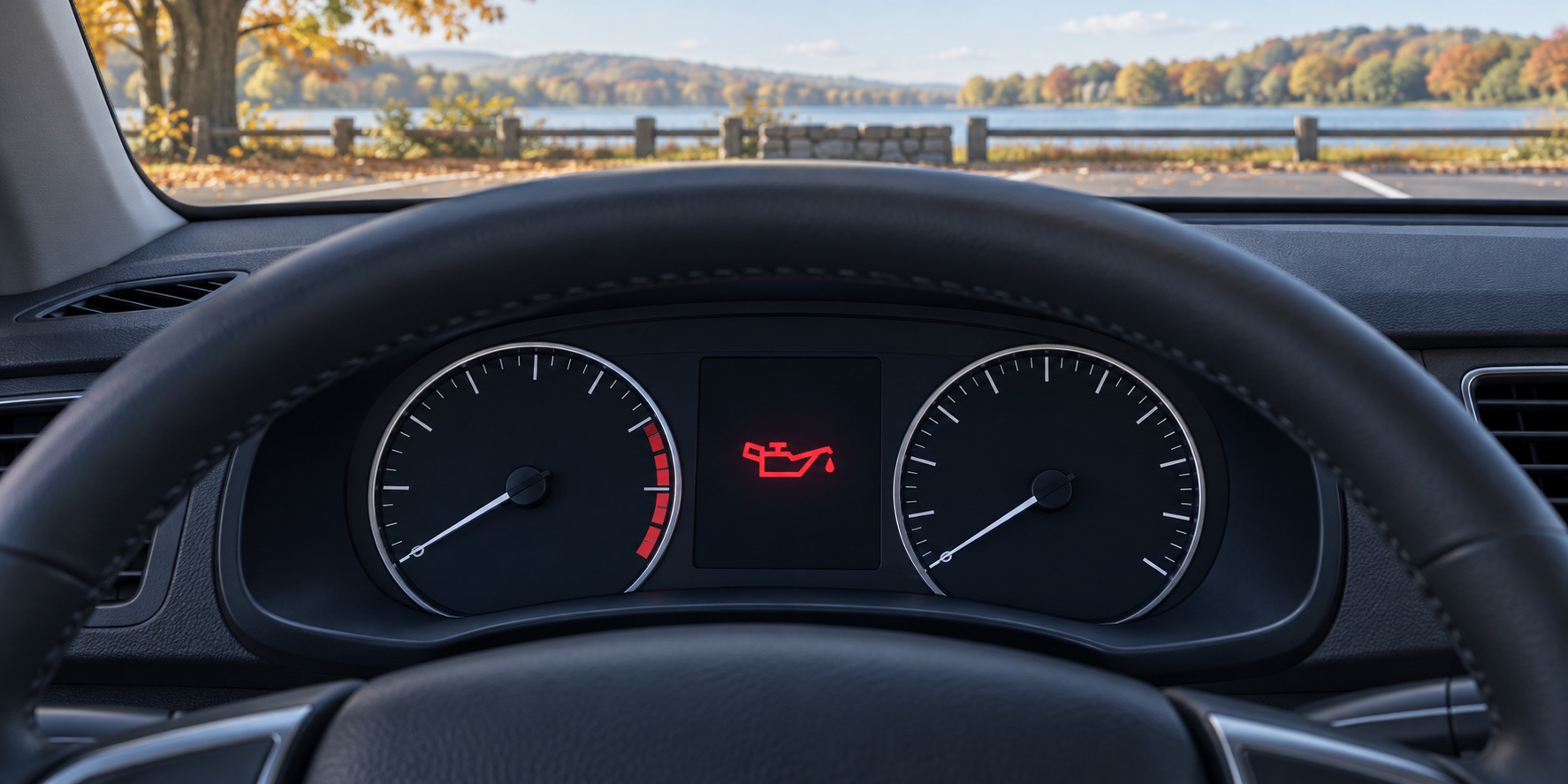
Featured image: AI-generated conceptual illustration of an oil-can warning symbol on a generic dashboard. It is not a real vehicle display or an Albion Auto shop or customer photograph; consult your own manual to identify warnings.
Common questions
Can I drive to the shop with an oil-pressure warning?
Stop safely and switch the engine off. Follow your vehicle manual and arrange assistance rather than assuming a short drive is safe.
Does a normal oil level prove pressure is correct?
No. Oil level and oil pressure are different measurements. A normal level does not rule out a pressure problem.
Will resetting an oil-change reminder fix a pressure warning?
No. A service reminder and a pressure warning are different functions. Identify the exact message and have the warning assessed.