Can a Punctured Tire Be Repaired? Start With an Inspection
The injury location, internal condition and pressure-loss history guide whether a punctured tire can be safely repaired.
Finding a screw in a tire often leads to an immediate question: can it be repaired, or do I need a replacement? The answer depends on more than the visible object. The location and extent of the injury, the tire's condition and what happened while it was losing air all matter.
For drivers in Bolton and Caledon, the useful first step is a professional assessment. A photograph can help explain the concern when booking, but it cannot show the complete condition inside the tire. Avoid treating “it still holds air” as confirmation that the tire is safe or repairable.
Deal with the immediate situation first
If the tire is flat or the vehicle feels unstable, stop in a safe location and arrange assistance. Do not continue driving simply to reach a preferred shop. Avoid inspecting or changing a wheel where traffic exposes you to danger; getting help is the better choice when the location or equipment is unsuitable.
If you use a spare tire or an emergency mobility kit, follow the instructions and limitations for your vehicle and that equipment. Do not assume a temporary measure restores normal driving capability. Tell the repairer exactly what was used and what happened afterward.
Do not pull out an embedded object just to see how deep it goes. Leave assessment and removal to the technician. Record which wheel is affected and, if it can be done safely while parked, what you noticed. No close-up photograph is worth putting yourself beside moving traffic.
A tread puncture and a sidewall injury are different
Michelin Canada's tire-repair guidance says some minor damage in the central tread may be repairable, while damage in the shoulder or sidewall is outside its repairable area. It also requires assessment of puncture size and whether the tire was driven flat. Meeting one condition does not establish that all the others are satisfied.
Ask the shop to show you the injury and explain the decision under the applicable tire-manufacturer guidance. Avoid using a ruler against an online photograph to approve a repair yourself. A visible screw head does not provide a complete measurement of the resulting injury.
If you are told that replacement is necessary, ask which finding rules out repair. A clear explanation is more useful than debating whether the tire looks nearly new. Equally, the presence of an object alone should not replace the inspection needed to determine the appropriate outcome.
Why the tire needs to come off the wheel
Michelin's guidance calls for removing the tire from the wheel and inspecting it internally before deciding on repair. For a suitable injury, it describes sealing the inside and filling the puncture channel. An outside-only plug does not provide that internal inspection and is not considered a permanent repair in its guidance.
That is why an assessment may take more than a quick look at the tread. Ask what the inspection found inside as well as outside. If an earlier temporary repair was made, disclose it even if the tire has appeared to hold pressure since then.
Do not ask the shop to skip an inspection just because you need the vehicle back quickly. Instead, explain the time constraint when booking and ask about the assessment process. You can plan the visit without deciding the outcome before the condition is known.
Explain the pressure-loss history
Tell the repairer when you first noticed the problem and whether you drove after noticing it. If you know the distance or approximate time, provide it; if you do not, say so. Mention any pressure readings you recorded, repeated inflation or change in handling.
The purpose is to help assess the tire, not to produce a perfect timeline. A short factual account is enough: the warning appeared, you stopped or continued, and the tire was then inflated, changed or transported. Do not guess at readings that were never measured.
Pressure loss is not always explained by a visible puncture. Michelin's tire-assessment information notes that a valve or wheel can also be involved. Ask whether the actual leak source has been established, especially if the tire has needed air more than once without an obvious object in the tread.
Make the repair or replacement recommendation clear
Before approving the work, ask whether the tire is suitable for repair and what supports that conclusion. If replacement is required, provide the vehicle details and let the shop confirm the appropriate tire specification and fitment. Mention whether the fitted wheels or tires differ from the vehicle's original equipment.
If the estimate includes more than one tire, ask for the reason for that scope and how it relates to your vehicle and the remaining tires. Avoid deciding from a generic rule that one tire is always enough or that a complete set is automatically required.
Useful questions include:
- Where was the leak or injury found?
- What did the internal inspection show?
- Is the tire repairable under the applicable guidance?
- What work is included, and what checks will follow it?
Keep the explanation and invoice together. If a tire cannot be repaired, a documented finding helps you understand why replacement was recommended rather than leaving the decision as an unexplained expense.
Follow up on any returning concern
After the work, ask what was checked and whether any temporary equipment still needs attention before being stored. Keep the repair record with your vehicle's service history. If a warning returns or the tire appears to lose air again, report it promptly rather than assuming the earlier repair explains everything.
Our tire sales and service information is a starting point for arranging an assessment. You can contact Albion Auto Service with the vehicle details, affected wheel and pressure-loss history. The goal is to find the cause, inspect the condition and choose a repair only when the evidence supports it.
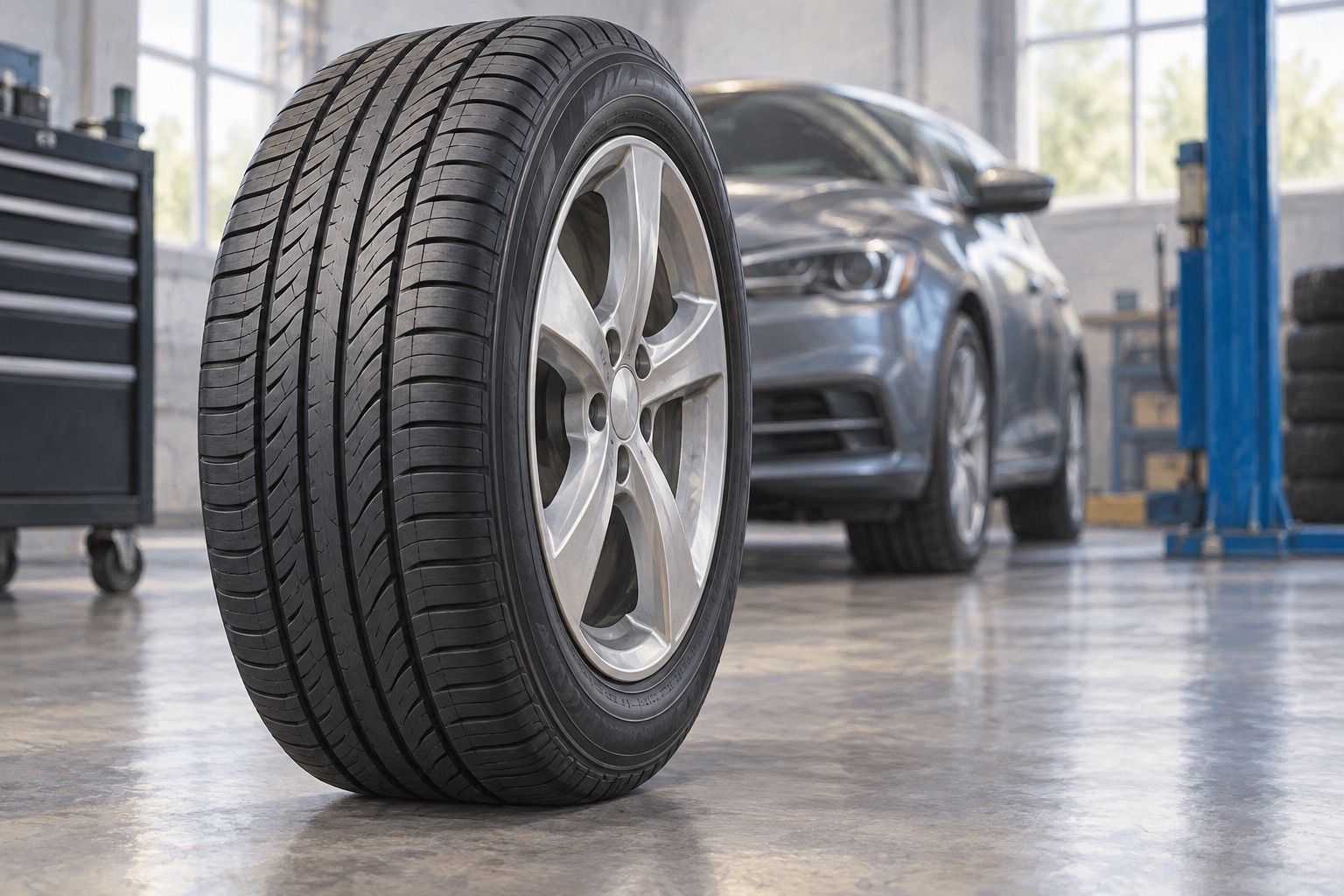
Featured image: AI-generated illustration of a generic tire and wheel, not an Albion Auto customer photograph or an example of a repairable puncture.
Common questions
Can a photo confirm that my tire is repairable?
No. It may help describe the concern, but the tire needs a professional assessment including its internal condition.
Is holding air after an outside plug enough?
No. Michelin does not consider an outside-only plug a permanent repair. Have the tire properly assessed.
What should I tell the shop?
Identify the affected wheel, when the problem appeared, any driving after pressure loss and any inflation, sealant or temporary repair already used.