Storing Seasonal Tires? Record Their Condition Before Putting Them Away
Good storage starts with a suitable space and a clear record of wear, air-loss concerns and any work still needed.
A seasonal tire change is not finished when the outgoing set comes off the vehicle. How you store that set matters, and so does the information you keep with it. A tire that needed frequent air top-ups or showed unusual wear should not disappear into a bag with the expectation that the problem will be forgotten by spring.
For owners in Bolton and Caledon preparing for a seasonal changeover, this is a useful time to make a simple record, have concerns assessed and choose a suitable storage space. The goal is to bring back a clearly identified set next season, with its condition and any outstanding work understood.
Record concerns before the set is put away
Think back over the last few months. Was one tire repeatedly low? Did you notice a vibration, pulling or a change in road noise? Mention those observations when booking the changeover, even if the vehicle currently feels normal. Describe what happened rather than asking for a particular part or service based on a guess.
If you have been adding air, note which tire and how often. Do not assume that a seasonal temperature change explains a recurring issue with one tire. Ask the shop to investigate the concern and explain what it found before the set is stored.
A short note on your phone can be enough: the date, the vehicle, the symptom and the wheel position as you understood it. State when you are unsure. An accurate description of uncertainty is more helpful than a confident but incorrect label.
Ask for a condition record you can use later
Michelin's storage guidance recommends noting tire positions and inspecting for damage or uneven wear before storage. Ask for the findings to be recorded so you can distinguish an observed concern from a recommendation that still needs assessment.
If the shop recommends replacement, ask which tire is affected and what evidence supports the recommendation. If it recommends further investigation of uneven wear, ask what that assessment would involve. Replacing a tire and identifying why it wore unusually are related decisions, but they are not the same task.
Keep any inspection report with the changeover invoice. A photograph can help preserve a visible finding, but it does not replace a professional assessment or establish that a tire is safe to reuse. Do not attempt to repair visible damage before the shop has evaluated it.
Prepare the tires and the storage location
Michelin advises cleaning tires and wheels with water, drying them thoroughly and keeping them in a clean, cool, dry indoor setting. Its guidance also calls for avoiding sunlight, heat, ozone sources and surfaces contaminated with substances such as oil or solvents. Read the tire manufacturer's directions for your particular set before putting it away.
Choose the storage location before the appointment. A space that only becomes available after moving fuel containers or oily equipment may need more preparation than expected. Check that you can move the set in and out without blocking an exit or balancing heavy assemblies on an unsuitable shelf.
If someone else will store the tires, ask where and how they will be kept. Confirm what preparation is included, what identification you will receive and how retrieval works. Do not assume that storage is included in a changeover price or that every service provider offers it.
Mounted and unmounted tires need different arrangements
Whether the tires remain on wheels affects the storage method. Continental's tire-storage guidance distinguishes bare tires from mounted assemblies: unmounted tires should stand upright, while tires on rims can be stacked or hung using an appropriate arrangement. Do not hang an unmounted tire from a hook.
Follow the manufacturer's instructions and the load limits of any rack or support. This article is not a design guide for a wall-mounted storage system. If you cannot safely handle the weight or do not have suitable equipment, arrange help rather than improvising an overhead stack.
Continental also recommends allowing tires to dry before enclosing them in storage bags. A carry tote and a sealed storage bag are not necessarily the same thing. Ask what the product is intended to do, and avoid treating packaging as a substitute for an appropriate storage environment.
Keep identification separate from next season's installation plan
Label the set so it can be associated with the correct vehicle and service record. This is especially useful when a household has more than one vehicle or several sets in the same room. Keep a copy of the record where you can find it without unpacking everything.
A previous wheel-position label records history; it is not an instruction to reinstall that tire in the same place. Ask the installer to determine the appropriate arrangement for the vehicle and tires when the set goes back into service. Do not make a rotation plan solely from a generic diagram found online.
Keep any wheel-related hardware clearly identified too. Tell the shop what you are bringing to the next appointment and ask what it needs. That conversation is easier before the vehicle arrives than after someone discovers that an essential item is still at home.
Make the next changeover an assessment, not an assumption
Before the stored set returns to the road, bring forward the previous report and any unresolved concern. Ask for its suitability to be checked rather than assuming that being stored indoors guarantees it is ready. If a concern was deferred, explicitly mention it again when booking.
Ask the shop to distinguish work required now from something to monitor, and keep the explanation with your records. This helps you make a decision based on the condition of the set rather than its appearance through a storage bag or a vague memory of last season's conversation.
Our tire sales and services information explains a relevant service area. You can contact Albion Auto Service with your vehicle details, the type of seasonal set and any concerns you noticed. Confirm available services and storage arrangements directly when booking.
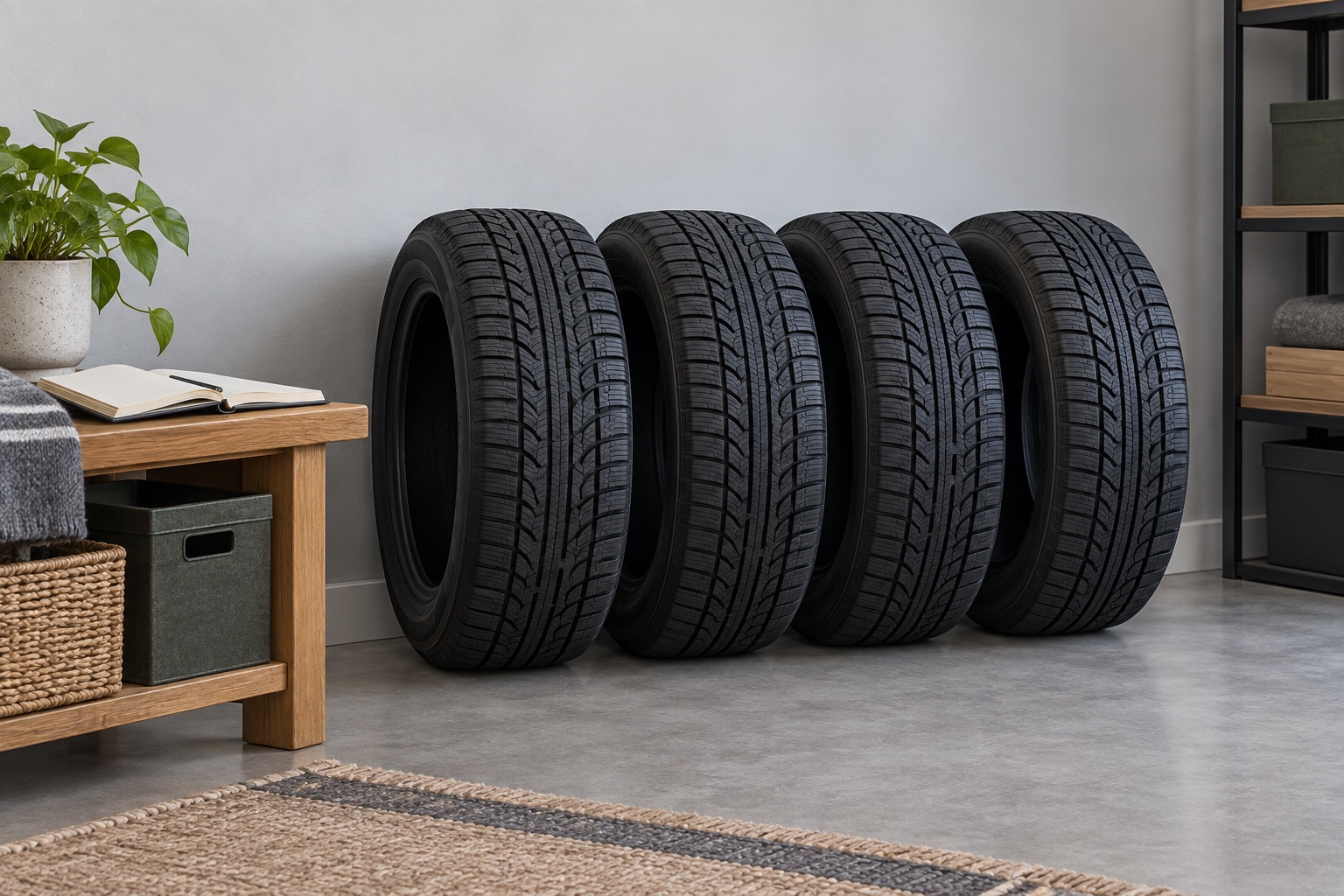
Featured image: AI-generated illustration of unmounted tires stored upright indoors, not a photograph of Albion Auto Service or a customer's tire set.
Common questions
Should I report a slow leak before storing a tire?
Yes. Explain which tire needed air and how often, and ask for the concern to be assessed rather than leaving it unresolved until next season.
Are tires stored the same way with and without wheels?
No. Follow the tire manufacturer’s guidance for mounted or unmounted tires and use suitable storage supports.
Does indoor storage guarantee a tire is ready to reinstall?
No. Bring the previous condition report and ask for the set to be assessed before it returns to service.