Refresh Your Car Emergency Kit Before Winter
Check what is actually in your car emergency kit, replace missing supplies and make sure every driver knows where to find it.
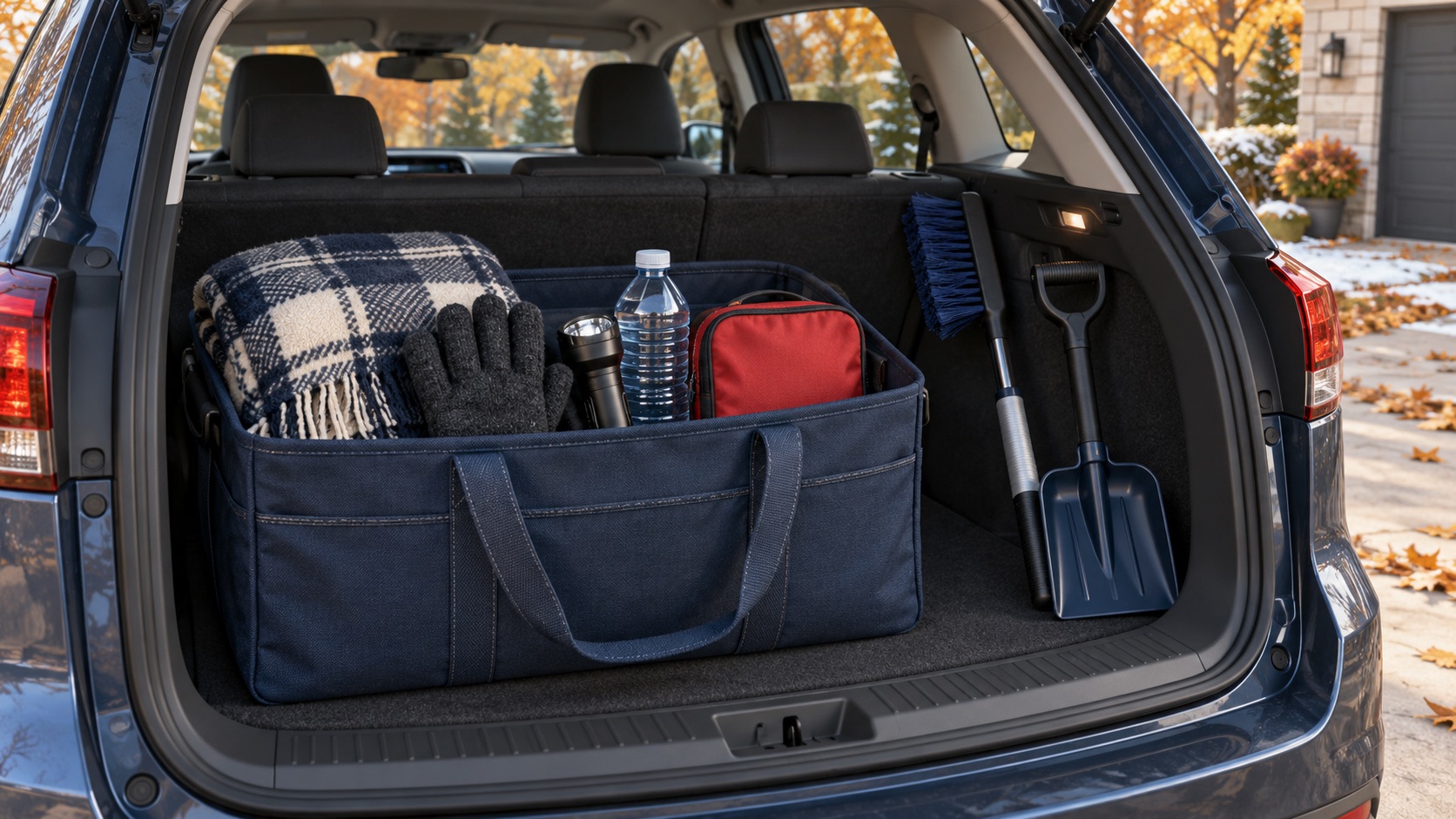
An emergency kit is easy to forget once it disappears under shopping bags and sports equipment. Before colder weather arrives in Bolton and Caledon, take it out of the vehicle and check what is actually there. A sealed bag bought years ago is not the same as supplies that are complete, usable and suited to the people travelling today.
This is a practical preparation task you can do while parked at home. It also creates an opportunity to separate missing supplies from vehicle concerns that need inspection. Carrying equipment is useful; it does not establish that a recurring starting problem, warning light or air leak has been repaired.
Start with an inventory, not a shopping list
Empty the kit onto a clean surface and sort it into three groups: ready to return, needs attention and missing. Check packaging, condition and any expiry or replacement dates. Switch the flashlight on. Make sure clothing still fits the people who would use it. Replace things that were borrowed and never returned.
Public Safety Canada's emergency car kit checklist includes non-perishable food, water, a blanket, extra clothing and footwear, first aid supplies, a flashlight, a whistle, maps, and a small shovel, scraper and snowbrush. It recommends plastic water bottles and changing the water every six months. Use the official checklist to review the complete recommended contents rather than treating this article as an exhaustive kit specification.
Write a short inventory with the date you checked it. A simple note is enough: what is packed, what needs replacing and when you plan to check again. Keep that list with the kit so another household member can understand it without unpacking everything.
Pack for the people who actually travel
Count the usual occupants rather than assuming one blanket and one snack will meet everyone's needs. Consider the regular school run, weekend trips and passengers who occasionally join you. Think through any personal requirements before setting off, including how you will carry necessary items that cannot remain in a car through temperature changes.
Ask each regular driver to look through the kit. They should know where it is, what it contains and which supplies must be brought from the house before a journey. A useful family check is to describe a delayed trip and ask what each person would need while waiting for assistance.
For food, choose items appropriate for the people travelling and check the packaging instructions. Do the same for batteries, electronics and other equipment: follow the manufacturer's storage guidance instead of assuming every product can stay in the vehicle year-round. Put replacements on the list as soon as something is used.
Make the kit practical to find
Choose a consistent storage location that follows the vehicle's cargo guidance. Secure the contents appropriately and keep them clear of pedals, controls and seat mechanisms. A container that looks tidy in the driveway is only useful if it remains properly stored when the vehicle is moving.
Check accessibility with your normal load in place. If the snowbrush is buried under luggage, rearrange the load before leaving. Keep the inventory readable, and explain the storage arrangement to anyone borrowing the car. Avoid packing loose, heavy equipment where it could move around the passenger compartment.
Keep essential contact information available in a form you can use if your phone is unavailable. Include your roadside-assistance details if you have that service, and check that the information is current. Knowing whom to contact is a separate task from owning a charging cable.
Know the limits of the tools you carry
Finding jumper cables, a tire inflator or a recovery strap in the trunk does not mean every driver should use them in every situation. Review the vehicle manual and the equipment instructions beforehand. If you are unsure about compatibility, connection points or the procedure, get clarification before you need the equipment.
Do not practise roadside repairs beside moving traffic. This kit review is for a safely parked vehicle at home; it is not permission to attempt a repair in an unsafe location. In an actual emergency, follow the directions of emergency responders or roadside assistance. Call 911 for immediate danger.
If you carry a portable power pack, check its condition and charging requirements under its own instructions. Avoid assuming a device is ready merely because it has been stored in its case. The same principle applies to any powered warning light or flashlight: check function, not just presence.
Pair preparation with a clear vehicle concern list
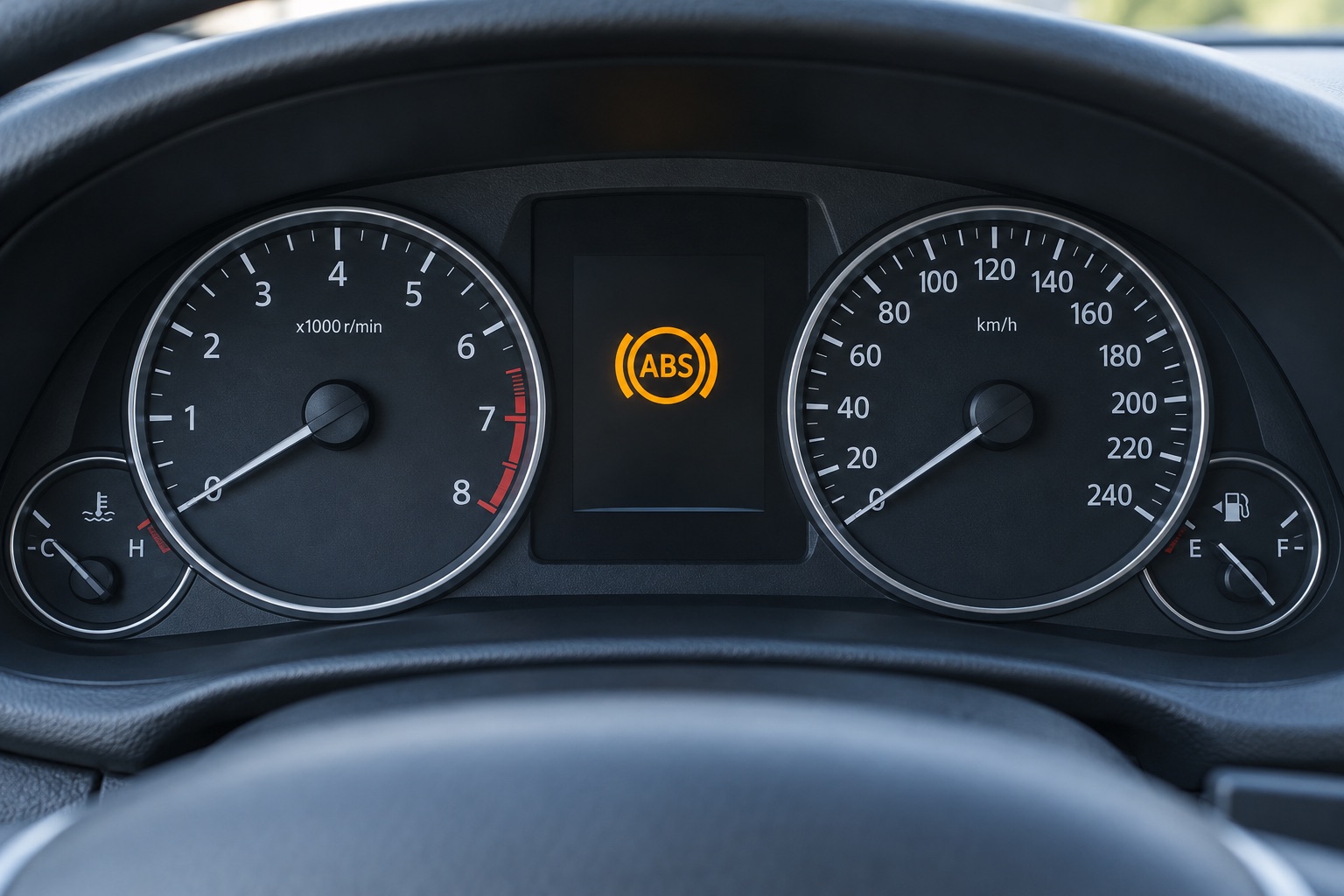
While you are organizing supplies, write down anything the vehicle has been doing differently. Examples might include repeated slow starting, a tire that needs frequent inflation, a washer that does not spray or a new warning message. Record when the symptom happens and any recent work, rather than choosing a replacement part in advance.
Ask the shop to distinguish scheduled maintenance from diagnosis. An overdue maintenance item can be due on its own merits, while a symptom may require separate testing. A stocked kit or successful boost cannot explain why a vehicle failed to start. An inspection should connect the recommendation to the evidence found.
Review our maintenance service information and bring the vehicle details, maintenance history and symptom notes when you contact Albion Auto Service. State any time constraints when booking, especially before a planned trip, so the scope can be discussed clearly.
Give the kit a place in your routine
Choose a reminder you will notice, such as your seasonal tire appointment or a regular household calendar check. Review it again after using supplies, changing vehicles or changing who normally travels with you. Keep a short replenishment list rather than starting over each season.
Finish by returning everything to its proper place and showing the other drivers what changed. The aim is a kit you understand and can maintain, alongside a vehicle whose concerns are assessed before parts are replaced. That is more useful than a trunk full of unfamiliar equipment.
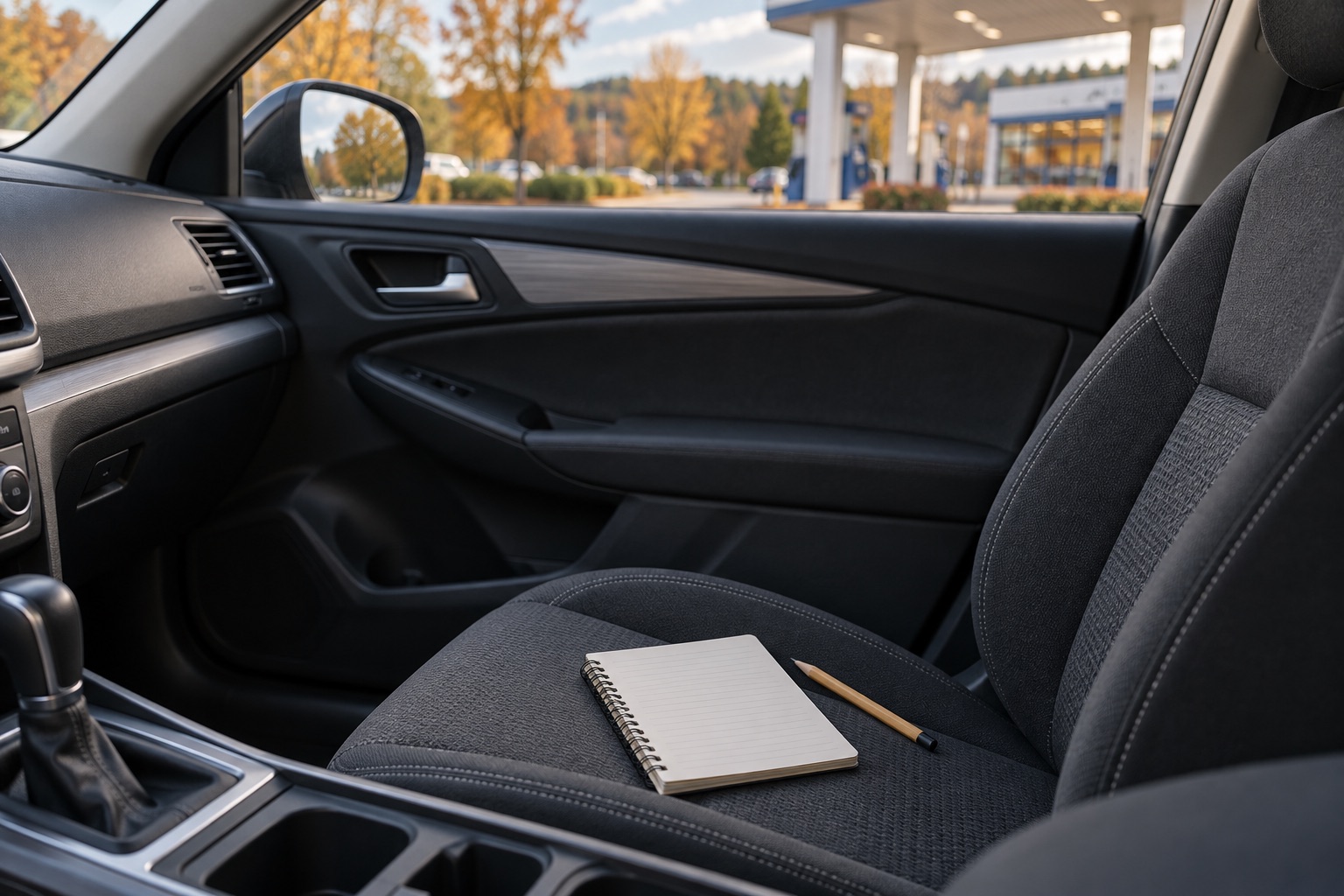
Featured image: AI-generated illustration of emergency supplies in a generic parked vehicle, not an Albion Auto shop or customer photograph.
Common questions
When should I check my car emergency kit?
Review it before colder weather, after using supplies, and when vehicles or regular passengers change. Follow product replacement and storage instructions.
Is a purchased kit ready to use indefinitely?
No. Check its contents, condition and dates, test powered items and adapt the supplies to your passengers.
Does carrying a booster solve a starting problem?
No. Equipment can help in suitable circumstances, but a recurring starting concern needs assessment to identify the cause before parts are replaced.