Do Your Shocks or Struts Need Replacing? Start With the Evidence
Ride changes and visible fluid are clues. An inspection should explain what they mean before parts are replaced.

A car that feels less settled over familiar roads deserves attention. Perhaps it continues moving after a bump, feels different through a turn or has developed a noise near a wheel. Shocks and struts may be part of the investigation, but a change in ride quality does not identify a failed component by itself.
For drivers in Bolton and Caledon, the useful starting point is an assessment of the vehicle and a clear description of the change. Ask what the inspection found and how that finding relates to your complaint. That approach is more useful than choosing replacement parts from a mileage figure, a photograph or a neighbour's experience with a different vehicle.
Describe what has changed on familiar roads
Explain the sensation in your own words. Does the vehicle feel bouncy, harsh, unsettled or noisy? Did the change appear suddenly, or have you gradually become aware of it? You do not need to distinguish every suspension component to give the shop a useful starting point.
Mention whether it happens on ordinary road surfaces, after a particular type of bump, with passengers or when carrying your usual load. Include recent tire work, suspension repairs or an impact if relevant. The timing helps frame the assessment without proving what caused the concern.
Avoid making special trips to hit bumps or trying abrupt steering and braking manoeuvres to test the vehicle. Describe what you have already noticed during normal driving. If steering, braking or stability feels unsafe, stop in a safe place and arrange assistance rather than continuing to demonstrate the symptom.
An inspection should consider more than one component
KYB's professional shock-and-strut diagnostic guidance calls for a vehicle inspection before a performance road test. It notes that other worn suspension parts and low tire pressure can affect the assessment. It also identifies excessive continued bouncing after bumps as a potential sign of shock or strut wear.
Those points explain why a responsible recommendation should connect the complaint with the condition of the vehicle as a whole. A noise and a handling change may need separate explanations. Ask the technician which findings account for each concern instead of assuming that one replacement will necessarily resolve everything.
If the shop cannot reproduce an intermittent issue, ask what remains uncertain. A useful report may distinguish a confirmed defect from a symptom that still requires investigation. That distinction lets you make an informed decision without treating an unconfirmed possibility as an established diagnosis.
An oily mark needs interpretation
A photograph showing oil near a shock or strut can be concerning, but the extent and nature of the finding matter. Monroe's guidance on weepage and leakage distinguishes a small amount of surface weepage from substantial wetness or dripping. Its guidance says minimal weepage alone does not require replacement, while diagnosed leakage does.
That is a reason to ask for a clear assessment, not to dismiss every oily component as normal. Ask whether the finding is minor weepage or leakage under the applicable inspection guidance, and whether there is other evidence of a problem. The source of any fluid should be established before deciding which part needs attention.
Do not crawl underneath a vehicle supported only by a jack to obtain a better photograph. If an inspection image is unclear, ask the shop to explain or provide a clearer view. An owner photo can document a concern, but it cannot substitute for checking the component properly.
Bring the service history and vehicle details
If shocks, struts, springs or related parts have been replaced, bring the invoice and approximate date. Tell the shop about any suspension modifications you know of. If you bought the vehicle used and do not know what is fitted, say that rather than guessing.
Also explain whether the current complaint existed before the previous work, improved afterward or appeared only later. These are different histories. A concise sequence of events is more useful than describing every previous repair as having “done the suspension.”
Give the exact vehicle details when requesting an estimate. Ask the shop to identify the equipment fitted and confirm the appropriate replacement specification if replacement is recommended. Avoid ordering parts simply because an online listing uses the same model name; the repairer needs to confirm the application for the actual vehicle.
Make the recommendation easy to understand
Ask for the estimate to identify the parts, labour and any related work included. If more than one component is recommended, ask why each is part of the job. Clarify which item addresses the current complaint and whether anything is being recommended for a separate reason.
Useful questions include:
- What did the inspection confirm?
- Which finding explains the ride change or noise?
- Is further assessment needed before choosing the repair?
- What checks will be completed afterward?
- Is there any follow-up I need to arrange?
If wheel alignment or another service is included, ask how it relates to the proposed work and the vehicle's procedure. Do not assume every estimate with a different scope is an equivalent quote. Compare the actual work and its explanation, then agree on how any additional findings will be handled before repair begins.
Review the result and keep the record
At collection, ask how the original concern was checked after the work. Keep the inspection report and invoice together, including any item the shop advised monitoring. If a noise remains, report it specifically rather than assuming it is an unavoidable part of a new component settling in.
When describing the result, distinguish what improved from what stayed the same. That helps the next assessment if more than one issue was present. Continue to treat any unsafe change in handling as a reason to stop and seek assistance, regardless of how recently the vehicle was serviced.
Our steering and suspension repair information describes the service area. You can contact Albion Auto Service with the vehicle details and the change you noticed. Begin with the complaint, review the evidence and choose the work that addresses the confirmed cause.
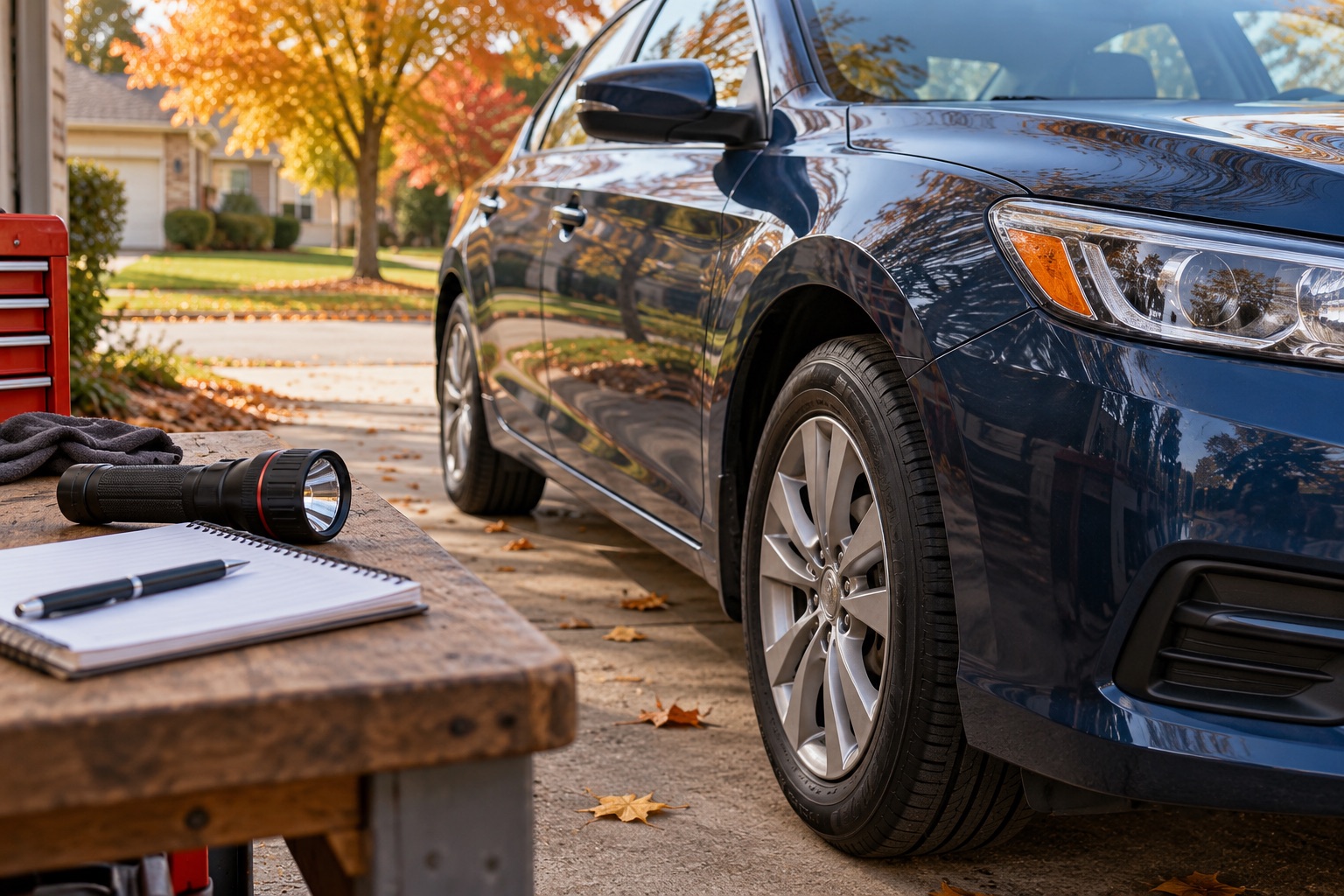
Featured image: AI-generated illustration of a generic parked car and front wheel, not an Albion Auto customer photograph or an illustration of a diagnosed suspension defect.
Common questions
Does a small oily mark automatically mean a shock has failed?
No. Manufacturer guidance distinguishes minimal weepage from leakage. Ask for a proper assessment of the extent, source and other findings.
Can bouncing identify the exact part that needs replacing?
It is a useful symptom, but the vehicle should be inspected before selecting parts. Other suspension and tire conditions can affect the assessment.
Should I test the suspension with sudden steering or braking?
No. Report what you noticed during ordinary driving and leave diagnostic testing to the shop. Arrange assistance if the vehicle feels unsafe.