Short Trips and Oil Changes: Why Kilometres Are Only Part of the Story
Low mileage does not tell the whole maintenance story. Use your vehicle’s guidance, driving pattern and service history to plan the next oil change.
If most of your driving is a few kilometres to work, school or the shops, an oil-change reminder can feel surprisingly early. The odometer has barely moved, yet the vehicle is asking for service. Should you trust the reminder, wait for a familiar mileage number, or simply change the oil more often?
The best starting point is the maintenance guidance for your exact vehicle, combined with an honest description of how you use it. For drivers around Bolton and Caledon, a short daily trip and an occasional highway run can add up to a very different routine from a long, steady commute.
Low kilometres do not tell the whole story
Some vehicles calculate an oil-service reminder using operating conditions, rather than counting distance alone. Ford describes its Intelligent Oil-Life Monitor as responding to vehicle use: frequent short journeys, heavy loads and prolonged idling can shorten the estimated service interval. That is an explanation of one manufacturer's system, not a universal schedule for every make. Read Ford's explanation of its oil-life monitor.
The practical lesson is to tell the shop about your driving pattern. An odometer reading does not show how much time you spend waiting with the engine running or how often a trip ends shortly after starting. Those details help put a reminder into context.
You do not need to calculate a new interval yourself. Ask which manufacturer guidance applies to the vehicle and whether its maintenance schedule includes special requirements for the way it is used.
Start with the right vehicle information
A useful maintenance conversation begins with the model year, engine and service history. Do not assume that a schedule for another vehicle of the same brand applies to yours. A neighbour's mileage rule or a generic online chart may omit a relevant engine, market or model-year distinction.
Bring the previous service invoice if you have it. Check the recorded date and odometer reading, and note whether the reminder was reset at that visit. If the history is uncertain, say so. An estimate is useful when clearly identified as an estimate; it should not become a precise service record by accident.
If you recently bought the vehicle, distinguish between what you were told and what is documented. A sticker on the windshield, a dashboard percentage and a dated invoice are different kinds of information. Ask the shop to help reconcile them before deciding what is due.
Understand what the dashboard percentage means
An oil-life percentage is not a universal measure of how much oil is in the engine. Honda Canada explicitly explains that its Maintenance Minder does not monitor engine oil level and that owners should check level according to the owner's manual. Its maintenance guidance also says leaks, unusual noises and unresolved warning lights need attention regardless of the reminder's status. See Honda Canada's maintenance guidance.
For your own vehicle, learn the difference between a routine service message and a warning that requires immediate action. Read the exact message instead of treating every oil-related symbol as an appointment reminder. Follow the handbook's instructions; do not continue running an engine when its warning instructions say to stop.
This is also why clearing a message is not the same as carrying out maintenance. Before any reset, establish which work has actually been completed and keep the record with the vehicle's service history.
Ask about both time and distance
If you drive very little, ask how the schedule handles elapsed time as well as kilometres. Where the manufacturer specifies a time limit, a low odometer reading does not replace that requirement. If the vehicle has a maintenance monitor, ask how its guidance works alongside any additional instructions in the handbook.
Avoid treating a number from this article, an advertisement or another owner's experience as your service limit. There is deliberately no single kilometre or month recommendation here. The right answer should be traceable to the guidance for the actual vehicle.
The same approach applies when someone recommends an earlier appointment. Ask why: is the recommendation based on the maintenance schedule, the vehicle's usage, missing service history or an observed concern? A clear explanation is more useful than a disagreement between two unexplained numbers.
Keep routine maintenance separate from diagnosis
Tell the shop about a new leak, noise, warning or repeated need to add oil when you book. Do not assume that an oil change will identify or correct the cause. Describe what you observed, when it started and any previous work or checks.
Ask which part of the appointment is routine maintenance and whether investigating a concern needs separate testing or authorization. That keeps expectations clear. It also gives the technician a specific question to answer instead of discovering the complaint after the service is finished.
If the explanation is uncertain, ask what evidence would resolve it. A maintenance visit should not become a sequence of speculative component replacements. Equally, a normal service reminder should not be presented as proof that a part has failed.
Make your next visit easier
Before arranging an oil change and maintenance appointment in Bolton, gather a short set of details:
- Current kilometres and the date of the last documented service.
- The exact dashboard message or remaining-life display.
- Typical trip length and any regular idling, towing or unusual use.
- Any warning lights, leaks or changes in how the vehicle runs.
- Questions about the next service date and what should be recorded.
At collection, review what was done and the guidance for the next visit. Keep the invoice somewhere you can find it. A digital vehicle inspection can also help communicate documented findings and maintenance priorities.
The goal is a service plan you can understand: the correct information for your vehicle, a record of completed work and a clear reason for the next appointment. That is more dependable than choosing an oil-change interval from mileage alone.
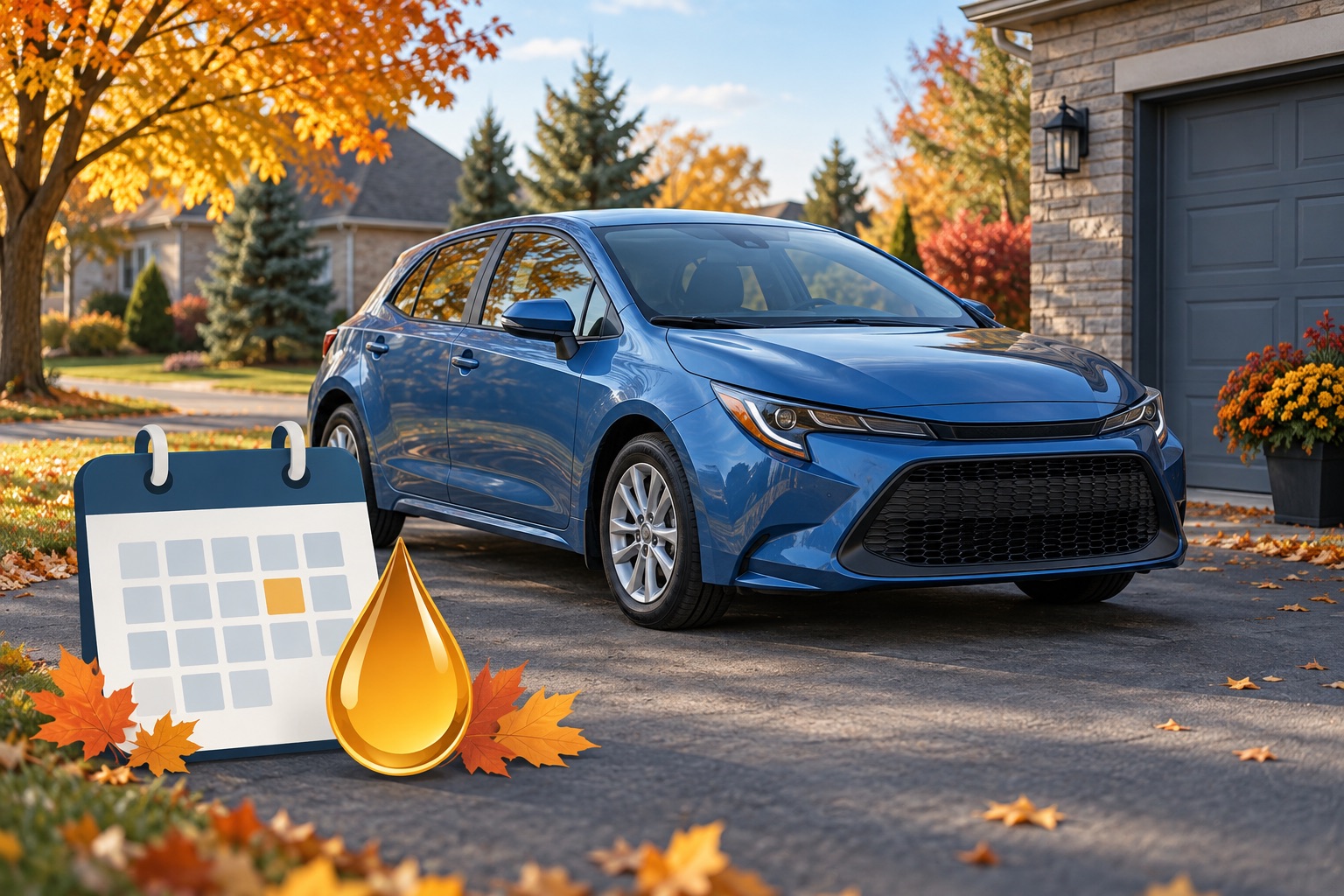
Featured image: AI-generated illustration, not a photograph of an Albion Auto customer vehicle or repair.
Common questions
Do short trips mean every car needs the same shorter oil-change interval?
No. Use the maintenance guidance for the exact model and engine, including any instructions for its operating conditions. Describe your usual driving when planning service.
Does the oil-life percentage tell me the oil level?
Do not assume it does. For example, Honda says its Maintenance Minder does not monitor oil level. Follow your own vehicle handbook for level checks and warning instructions.
What if the last oil change is not documented?
Tell the shop the history is uncertain and bring any invoices or other records you have. Ask for a plan based on the vehicle’s guidance and available evidence rather than treating an estimate as a confirmed service.