What Happens During a Proper Wheel Alignment?
A sound suspension, suitable tires and correct measurements come before adjustment. Verification checks the result against the complaint.
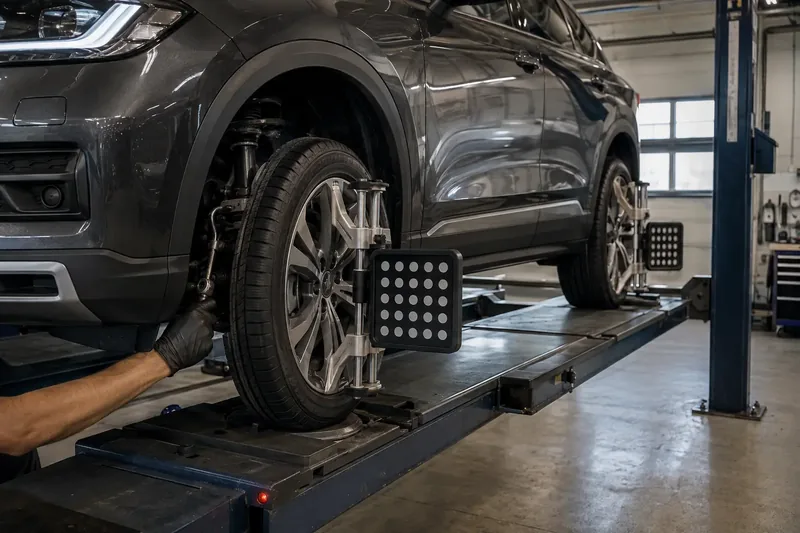
A proper wheel alignment starts before any adjuster is turned. The tires, steering and suspension need to be in a condition that allows accurate measurement and a stable result. The technician then compares the measured angles with the correct vehicle specifications, makes the supported adjustments and checks the outcome.
The alignment report is useful, but it is only one part of the service. A page of green readings does not explain every pulling or tire-wear complaint. The result needs to make sense alongside the vehicle's condition and the symptom that brought it into the shop.
Begin with the complaint
Tell the shop whether the vehicle pulls, the steering wheel sits off-centre, the tires wear unevenly or the handling changed after an impact. These concerns can overlap, but they are not identical. Knowing when the symptom occurs helps direct the inspection.
Mention recent tire replacements, suspension work, wheel changes and pothole or curb impacts. If the concern varies between roads or only appears during braking, include that detail. The technician should not assume every directional complaint can be solved by adjusting toe.
A road assessment, when appropriate and safe, can help establish the starting condition. It gives the final check something meaningful to compare against.
Tires affect how the vehicle tracks
Tire pressure, condition and fitment need attention before interpreting the alignment result. Uneven wear or a tire-related force can contribute to a pull. An alignment change will not necessarily correct a problem caused by the tire itself.
The technician should examine the wear across each tire and compare the findings with the vehicle's history. A single worn edge is evidence to investigate, not a complete diagnosis by itself. Inflation, alignment, component condition and operating use may all be relevant.
If a tire is damaged or unsuitable, that concern must be addressed on its own merits. Adjusting suspension geometry to compensate for a defective tire can create a misleading result.
Check for looseness and damage
Steering and suspension components need to hold the wheels in predictable positions. Excessive movement in a joint or damaged mounting hardware can prevent the alignment from remaining stable as the vehicle is driven. Measurement alone cannot repair that condition.
The inspection should use methods appropriate to the particular suspension. Not every joint is assessed in the same way or with the same loading condition. Vehicle-specific information helps distinguish normal movement from a service problem.
If repair is needed before adjustment, the shop should explain why. It is more useful to correct the underlying condition and then align the vehicle than to sell an adjustment that cannot hold its settings.
What the main angles describe
Toe describes the direction the wheels point relative to the reference used for measurement. Camber describes wheel tilt when viewed from the front or rear. Caster concerns the steering axis as viewed from the side. These are different relationships, and their effects need to be interpreted together.
The target values and tolerances belong to the specific vehicle and suspension configuration. There is no universal set of “perfect” numbers for every car or truck. Loading conditions and manufacturer instructions may also be relevant to obtaining and interpreting measurements.
Some angles are adjustable through the normal service provisions and others are not. A reading outside specification may call for further inspection rather than an improvised adjustment.
Measure the vehicle as a system
Rear-wheel geometry can influence the direction in which a vehicle tracks. That is why a front-end complaint does not always mean the rear measurements are irrelevant. The appropriate alignment procedure considers the vehicle's design and the relationship between its axles.
The equipment must be set up and used correctly, including any compensation and preparation steps it requires. Those steps support accurate measurements; skipping them is not made acceptable by a digital display.
Once the baseline is established, the technician can determine which adjustments are available and whether the readings suggest damage, wear or another condition that needs attention first.
Ontario corrosion can affect adjustment
On vehicles exposed to road salt, adjusters and fasteners may be seized or deteriorated. The ability to measure the angles does not guarantee that the adjustment hardware will move. Additional work may be required before a setting can be corrected.
If that happens, the estimate should identify the actual condition and the proposed remedy. Not every vehicle needs the same corrosion allowance, and the need should not be assumed solely from its age or location.
A pothole impact can also lead to a closer inspection. If a component is bent or a mounting point is displaced, adjusting the remaining available settings may not be a complete repair.
Steering resets and driver assistance vary
Some vehicles require a steering-related reset or another procedure after alignment. Driver-assistance calibration requirements can also depend on the vehicle and work performed. These steps must be checked in current manufacturer information rather than added or omitted by habit.
Alignment and driver-assistance calibration are related services in some repair situations, but they are not the same operation. A camera or radar calibration should not be assumed complete simply because wheel alignment has been carried out.
Ask the shop which follow-up procedures apply to your vehicle and whether they are included. That avoids confusion about what the service covers.
Read the report with the symptom in mind
A before-and-after report helps document the changes. It should identify the vehicle correctly and show the relevant measurements. If a reading remains outside the specified range, ask why and what that means for the repair plan.
The final check should also consider steering-wheel position and the original complaint. If a pull remains despite appropriate alignment readings, further investigation may be needed. That is a reason to examine the remaining causes, not to keep changing angles without a test plan.
Keep the report with your service records. It can provide useful context if tire wear or a handling concern develops later.
Choose the service for a reason
Uneven tire wear, an off-centre wheel, a handling change, a significant impact or relevant suspension repair can all justify an alignment assessment. The correct maintenance approach also takes account of manufacturer recommendations and the vehicle's condition.
For wheel alignment service, the aim is accurate geometry on a sound vehicle, followed by a meaningful check. That combination provides more value than treating the alignment machine's display as the whole diagnosis.
Common questions
Will alignment fix every vehicle pull?
No. Tire condition, tire-related forces, braking concerns and other faults can contribute. The symptom needs to be assessed alongside the readings.