Why Modern Vehicles Sometimes Need Module Programming
A module may need software and vehicle configuration before it works correctly. That does not make programming a universal fix.
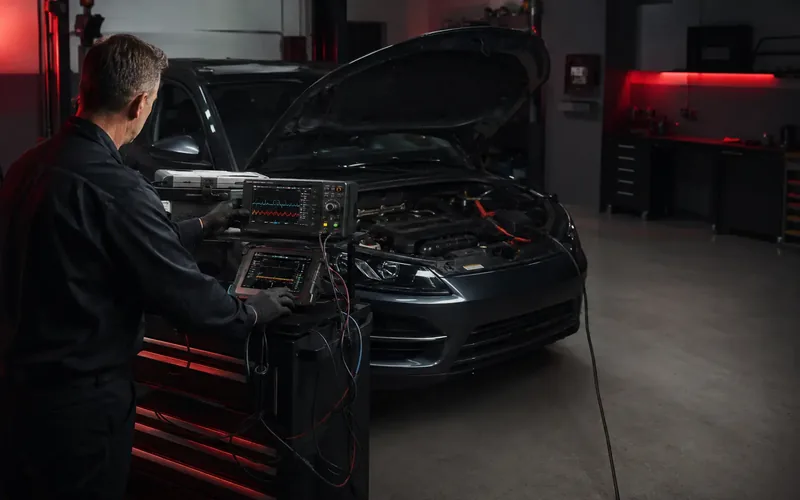
A replacement electronic module is not always ready to work as soon as it is connected. Modern vehicles use software, configuration data and security relationships to coordinate different systems. Depending on the vehicle and the module, installation may need programming, configuration, initialization or another manufacturer-specified procedure before the job is complete.
Those terms describe different tasks. They should not be used as interchangeable promises that a computer connection will fix any electronic problem. The first question is still whether the module needs replacement or a software change, and what evidence supports that decision.
Programming changes software
In general terms, programming writes software or calibration information to a control module. A manufacturer may provide an update for a defined application, or a replacement module may require the correct software before it can operate in the vehicle.
The correct file depends on the specific vehicle and hardware. A similar model name is not enough. Vehicle identification, module identification and the applicable service information are part of selecting the right procedure.
An available update is not automatically the cause or cure of the customer's concern. The shop should establish whether the update applies and whether its intended purpose relates to the symptom. Installing software without that connection can leave the actual fault unresolved.
Configuration tells the module about the vehicle
Vehicles of the same model can have different engines, drivetrains and optional equipment. A module may need configuration information so that it works with the equipment fitted to that particular vehicle. The process and terminology vary between manufacturers.
Configuration is different from repairing a wiring fault. If a module has no reliable power supply or cannot communicate because of a damaged circuit, entering configuration data does not correct that condition. Basic electrical checks remain relevant even when the final repair involves software.
A complete estimate should identify the required setup work rather than simply listing a replacement module and assuming the rest will happen automatically.
Initialization and relearns have specific purposes
Some systems need a learning or initialization procedure after a component is replaced or settings are changed. These procedures establish values or relationships needed for operation. Whether one is required, and how it is performed, depends on the vehicle and the work completed.
A relearn should not be added to every repair just because a scan tool offers it. The technician should follow the applicable service instructions and confirm that the prerequisites are satisfied. Performing an unrelated reset may complicate diagnosis by changing previously learned information.
Likewise, disconnecting the battery is not a universal substitute for the proper procedure. Some information is retained, other information may be lost, and a number of systems can require attention after power has been interrupted.
Security-related modules need additional checks
Keys, immobilizers and other security-related components may require authorized procedures and proof of vehicle ownership. Compatibility is important: a part that physically fits may not be usable or adaptable to the vehicle in the way expected.
Used modules need particular caution. Their prior configuration, security state and hardware version can affect whether they are suitable. There is no reliable universal answer that every used module can be reprogrammed for a different vehicle.
Before buying one, ask the shop to confirm the proposed part and the manufacturer's supported installation path. A low purchase price is not a saving if the part cannot be commissioned or does not match the vehicle's requirements.
Diagnosis still comes before programming
Multiple warning lights or communication faults do not automatically mean that a control module has failed. Low system voltage, poor connections or network wiring problems can affect several systems at once. Those possibilities need to be assessed before a replacement is recommended.
The diagnostic process should determine whether the module receives the required supplies, whether it communicates as expected and whether the fault is internal or caused elsewhere. The exact testing depends on the circuit and system design.
A software update should also be tied to a verified application. Information about another model, engine or production range may be useful background, but it is not enough to establish that the same update belongs on the vehicle in the bay.
The programming environment matters
Programming requires the conditions specified by the vehicle manufacturer and the service equipment. Stable electrical support, compatible interfaces and a dependable connection can all be part of the process. The required settings must come from the relevant instructions, not from a universal voltage or charger recommendation.
Interrupting a procedure can leave a module unable to operate until a recovery process is completed. That is why the work should be planned and carried out with the correct equipment rather than treated as an ordinary accessory reset.
This does not mean every update is unusually complicated. It means the process has prerequisites that form part of the service, even when the software transfer itself appears straightforward.
What to tell the shop before booking
Provide the vehicle identification number, the concern and details of any modules or keys that have already been replaced. If a used component is fitted, say so. Mention any attempted programming, interrupted procedure or battery issue that occurred during earlier work.
Keep the original parts and identification labels available until the installation has been assessed. Depending on the system, information from an original module may be relevant. Do not assume it can be discarded simply because a replacement has arrived.
The shop should explain whether it is diagnosing the vehicle, carrying out a known programming operation or completing a replacement-module installation. Those are different starting points and can involve different amounts of work.
Verification is part of the repair
After the procedure, the relevant functions need to be checked and any required follow-up steps completed. A successful software transfer message does not by itself prove that the customer's symptom has been corrected. Fault records and system operation still need to be reviewed.
For vehicle module programming, the goal is correct software and setup on a correctly diagnosed vehicle. That approach avoids treating programming as a catch-all solution and gives you a clearer explanation of what the work is intended to achieve.
Common questions
Can every used module be programmed to another vehicle?
No. Compatibility, hardware, security state and manufacturer-supported procedures must be checked before purchasing a used module.