Winter Floor Mats: Check Fit and Pedal Clearance Before Driving
Use the correct mat, secure it as instructed and keep the pedals clear. Recheck the fit after cleaning or a seasonal change.
Before putting winter mats into your vehicle, check that they belong in that exact footwell and can be secured correctly. A mat that slides, folds or reaches the pedals is more than a housekeeping problem. Keeping the driver's controls clear matters more than protecting the carpet underneath.
For Bolton and Caledon drivers preparing for wet boots and slush, the seasonal change is a useful time to inspect the mats already in the car. Do this while safely parked with the vehicle switched off. If a mat cannot be fitted as the vehicle manufacturer requires, resolve the fitment before driving.
Remove the old mat before fitting another
Transport Canada warns that floor mats can interfere with the accelerator or brake pedal. Its floor-mat safety guidance specifically advises removing the original removable mats when installing rubber mats for winter. An extra layer changes the space beneath the pedals and may prevent the upper mat from being secured properly.
Take the existing removable mat out rather than covering it. Do not add towels or loose carpet pieces to absorb water in the driver's footwell. Check the vehicle manual and mat instructions before installing the replacement. The fixed vehicle carpeting and a removable accessory mat are different things; this is not an instruction to remove the vehicle's fitted interior carpet.
Put the removed mats somewhere outside the driver's operating area. If transporting them, store them securely with the rest of the cargo. Finish the changeover completely before the vehicle is used again, so another driver does not unknowingly encounter a loose or partly installed mat.
Confirm the application and the position
A mat that looks approximately the right shape is not enough. Check its intended vehicle application and whether it is the driver's mat, passenger mat or a rear mat. Pay attention to the model year and any fitment distinctions listed by the manufacturer. Do not assume a mat from another vehicle is suitable because the vehicles are similar in size.
Toyota's floor-mat safety page emphasizes correct fit, secure installation and keeping the pedals clear. Use your own vehicle's instructions for its retention system and installation checks; another manufacturer's example is not a substitute for those details.
If identifying information is missing, seek clarification from the supplier or vehicle manufacturer. Bring the mat or clear photographs when asking about fitment. Avoid describing it simply as “universal” and assuming that resolves the question. The important result is a mat that is appropriate for the vehicle and remains properly positioned.
Check the fasteners as well as the mat
Look for the retaining points specified in the owner's manual and inspect the matching parts of the mat. If a clip, hook or fastening hole is missing or damaged, do not treat the mat's weight as a substitute for correct retention. Ask which part is required and whether the mat itself remains suitable.
Follow the specified fastening method. Do not improvise with screws, cable ties or adhesive, and do not cut the mat to make it fit unless the product and vehicle instructions expressly provide for that installation. A modification that looks tidy is not proof that the mat will stay clear of the controls.
After installation, complete the manufacturer's stationary clearance check with the vehicle safely secured and switched off. If you cannot confirm correct fit and unobstructed operation, do not test it by driving. Remove the unsuitable removable mat and obtain advice before using the vehicle.
Repeat the check after cleaning
Cleaning is another opportunity for a mat to be returned to the wrong place, left unfastened or installed over another one. Whoever reinstalls it should check the position and retention again. If several people use the vehicle, show them how its fasteners work rather than assuming the arrangement is obvious.
Inspect for curling, distortion, tears or damaged attachment points. If the mat no longer lies as intended, ask whether replacement is needed. A mat that was suitable when new still needs attention if its condition changes. Cleaning does not establish that a damaged mat is safe to reinstall.
Keep the footwell free of loose items too. Before setting off, make sure bottles, tools and other objects are stored where they cannot move into the driver's operating area. This is a quick check to perform while parked, not something to reach down and correct while driving.
Treat a changed pedal feel as a concern to assess
If a pedal has felt restricted or failed to behave normally, report the exact symptom and when it occurred. Mention recent cleaning, mat changes or interior work, but do not decide in advance that a mat explains everything. A visible obstruction and a separate mechanical or electronic concern can require different responses.
Do not drive to reproduce a sticking or restricted pedal. If the vehicle's controls cannot be operated safely, arrange assistance. Once safely stopped, describe the circumstances to the shop and ask about the appropriate way to bring the vehicle in. Do not reach into the footwell while the vehicle is moving.
The diagnostic principle is the same as with other symptoms: confirm the cause before selecting parts. Buying a new mat will not repair an unrelated pedal problem, and replacing a component without checking the operating area may miss a straightforward obstruction.
Make fitment part of the seasonal routine
Keep the mat's application details and installation instructions with your vehicle records. When changing vehicles, reassess the mats rather than transferring them automatically. When purchasing a used vehicle, check what is actually installed instead of assuming the previous owner's accessories are correct.
See our vehicle inspection information or contact Albion Auto Service if you need to discuss a fitment or pedal-operation concern. Explain what you observed and any recent changes. The goal is a clear driver's footwell, properly secured accessories and an assessment of any symptom before a repair is chosen.
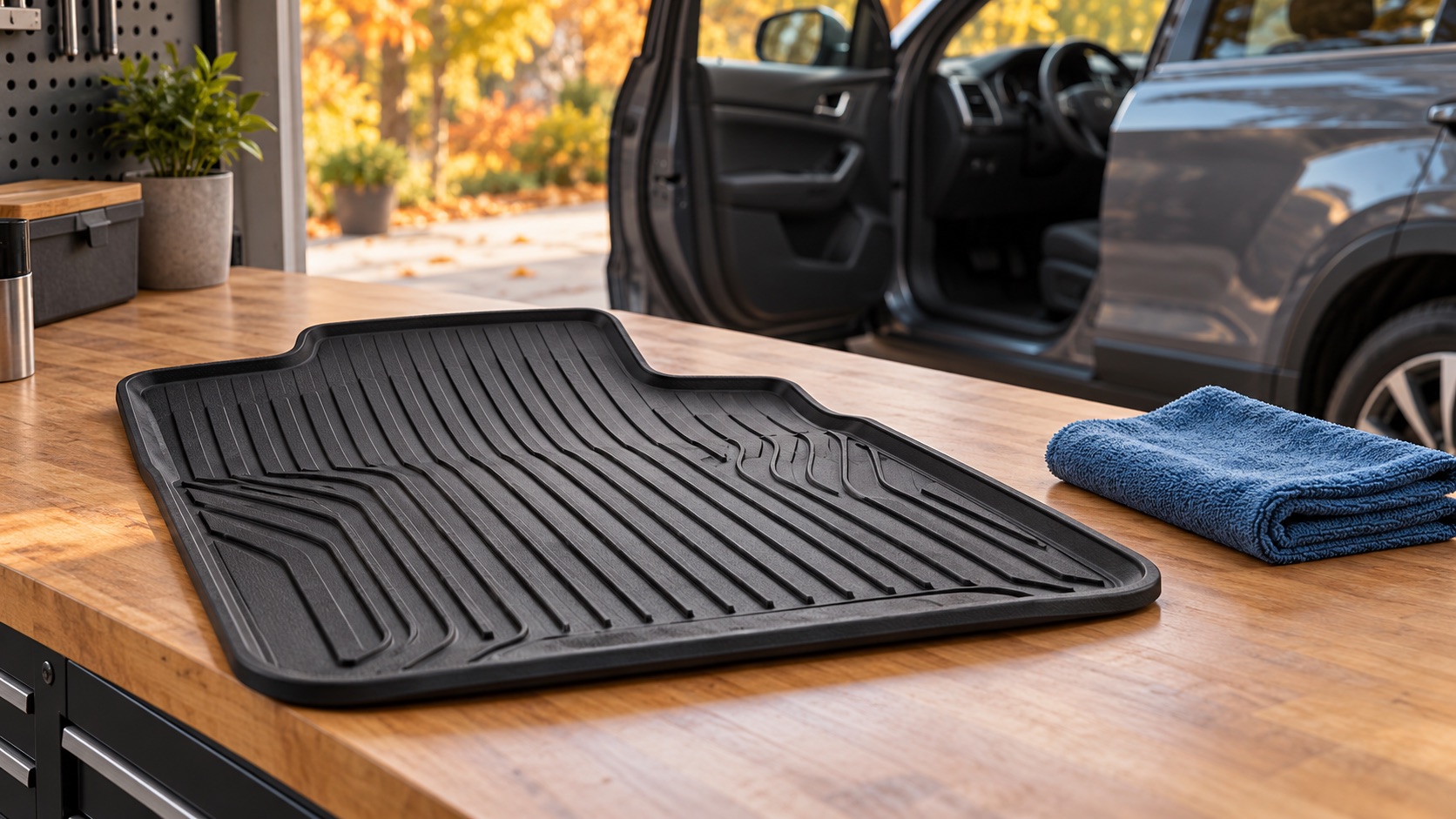
Featured image: AI-generated illustration of a generic floor mat on a workbench. It does not demonstrate fitment for any vehicle and is not an Albion Auto shop or customer photograph.
Common questions
Can I put a winter mat over the existing removable mat?
No. Transport Canada advises using only one set and removing the original removable mats when installing winter mats.
What if a retaining clip is broken?
Do not rely on the mat staying in place by weight alone. Confirm the correct replacement and installation before using it.
Should I drive to test a restricted pedal?
No. Do not reproduce the problem on the road. Arrange assistance if safe operation is in doubt.