Replacing One Tire on an AWD Vehicle? Check the Whole Set First
The right replacement quantity depends on the vehicle requirements and the remaining tires. Ask for measurements and a clear explanation before ordering.
One damaged tire can lead to an unexpected question: does an all-wheel-drive vehicle need one replacement tire, a pair or a complete set? The answer should come from the vehicle manufacturer's instructions and an inspection of the tires already fitted. Neither “always replace just the damaged one” nor an unexplained recommendation for four gives you enough information to make a confident decision.
For owners in Bolton and Caledon, this is worth discussing before ordering a tire online or authorizing a replacement. The important comparison is between the proposed replacement, the remaining tires and the requirements for the exact vehicle. Start with those facts rather than a rule borrowed from someone else's car.
Why AWD makes the comparison important
Michelin explains that AWD and four-wheel-drive systems can require matching tire diameters and that differences can put additional stress on drivetrain components. Its guidance directs owners to the vehicle manufacturer's specifications, including any permitted circumference variation. A size printed on a sidewall is therefore not the whole compatibility decision.
That does not mean an owner should attempt to calculate a universal allowance from a forum post. Ask the shop which manufacturer's requirement applies to your year, model and drivetrain. If a numerical limit is part of the recommendation, ask to see the applicable instruction and how the tires compare with it.
Keep the discussion specific. A neighbour's replacement experience may have involved a different vehicle, different tires or much less wear. It can be a useful question to raise, but it cannot establish whether your own set is suitable for a single replacement.
Identify what is on the vehicle now
Bring the vehicle details and any tire invoices to the appointment. Record the brand, tire model and size from the tires you can safely see while parked. Do not assume all four match because the vehicle was sold to you as a complete set. If you cannot read a marking, leave that part for the inspection.
Subaru's published replacement guidance recommends tires matching the original equipment and directs owners to their vehicle's manual for tire information. That is one manufacturer's example of why the vehicle instructions matter. It is not a replacement specification for every AWD vehicle sold in Canada.
Mention aftermarket wheels, previous individual replacements and any seasonal set currently fitted. A receipt showing the exact tire purchased is more useful than a description such as “the same brand.” Ask the shop to confirm the installed configuration before it orders anything on the assumption that the vehicle is still as delivered.
Ask for measurements of the remaining tires
An inspection should explain the condition of the whole set, not just point to the visibly damaged tire. Ask for the tread-depth readings by wheel position and for any uneven wear or damage to be identified. You should be able to connect the proposed replacement quantity with the findings and the vehicle's requirements.
Michelin notes that tread-depth differences can affect handling and recommends consulting the vehicle manufacturer when uncertain. It also advises against mixing tire models simply because their marked sizes match. Those are reasons to ask for a complete comparison, not reasons to invent a universal tread-depth threshold.
If the remaining tires are described as “nearly new,” ask what that means in measured terms. If they are described as unsuitable, ask whether that conclusion comes from wear, damage, age, mismatch or the manufacturer's instructions. A clear explanation can reveal why two apparently similar quotes recommend different work.
Separate the damaged tire from the replacement decision
First establish what happened to the tire that prompted the visit. Tell the shop about an impact, loss of pressure, previous repair or any distance driven while it was low. Do not hide an uncertain history; say what you know and what you do not.
Whether that tire can safely remain in service or be repaired requires its own assessment. Our article on punctured-tire inspection explains why the location and condition of damage matter. A replacement-quantity discussion should follow a clear finding about the original tire, rather than substitute for it.
Do not continue driving on a damaged or deflated tire while shopping for options. Follow the vehicle's breakdown instructions and arrange assistance when needed. If a spare is fitted, tell the shop and follow the specific restrictions for that spare and vehicle; it is not proof that a permanent mixed set is acceptable.
Compare written options before authorizing work
Ask the estimate to identify the proposed tire model, size and quantity, along with the reason for that quantity. If a single replacement is offered, ask how it meets the vehicle's requirements alongside the other three. If four are recommended, ask which findings or instructions make that the appropriate choice.
Availability can complicate the conversation. If the original tire model is discontinued or unavailable, ask for the proposed alternative to be explained as a complete fitment decision. A product being in stock does not by itself establish compatibility. Avoid agreeing to a substitute based only on a similar name or an appealing price.
Be straightforward about your budget. Ask which options comply with the applicable instructions and what each includes. The useful outcome is a documented, suitable choice, not a promise that the smallest purchase will work or an assumption that the largest purchase needs no explanation.
Use the visit to understand uneven wear
If one tire is much more worn than the others, ask what further inspection is appropriate. Replacing tires does not explain why the difference developed. Provide any history of pulling, vibration, impacts or previous alignment work so the technician can decide what needs checking.
After the work, keep the tire details and inspection findings with your service records. Ask for the maintenance and rotation guidance appropriate to the installed configuration rather than applying a generic pattern. These records make the next replacement discussion easier to evaluate.
Review our service information or contact Albion Auto Service with your vehicle details and tire concern. The decision should begin with the manufacturer's requirements and the actual condition of the set, before parts are ordered.
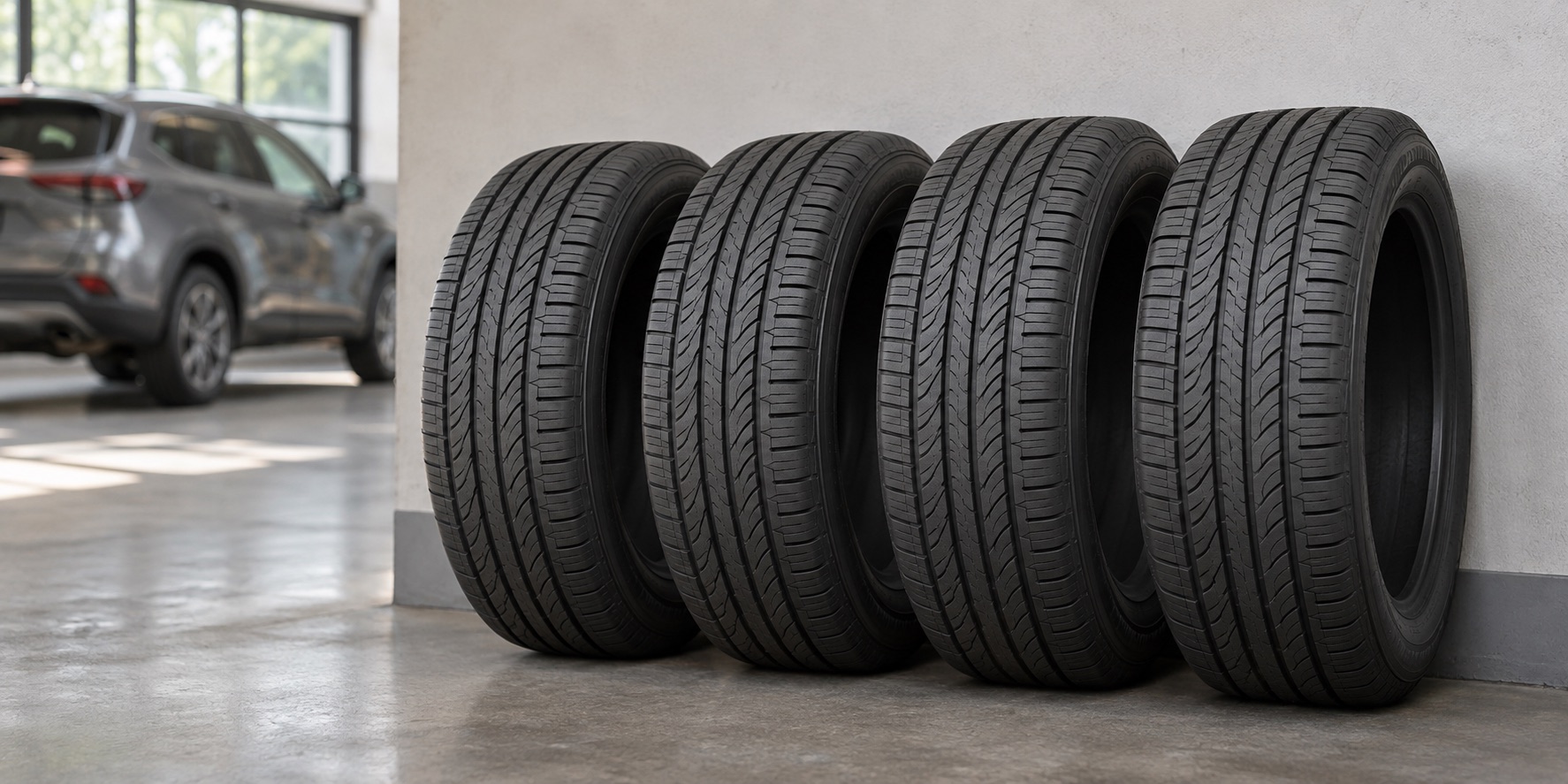
Featured image: AI-generated illustration of four generic tires in a garage. It is not an Albion Auto shop photograph, a product endorsement or evidence that a particular tire is suitable for your vehicle.
Common questions
Does every AWD tire problem require four new tires?
Use the exact vehicle manufacturer instructions and inspection findings. Ask how the proposed quantity satisfies those requirements.
Is matching the sidewall size enough?
No. The tire specification, model, condition and applicable vehicle matching requirements need to be considered together.
What should I request with the estimate?
Ask for the proposed tire model and quantity, measurements of the remaining tires and the manufacturer guidance supporting the recommendation.