Choosing Engine Oil? Match the Specification, Not Just the Viscosity
Viscosity is one part of the oil requirement. Confirm the complete specification, identify the product and investigate symptoms separately from routine maintenance.
Choosing engine oil involves more than remembering the large numbers on the front of a bottle. The viscosity grade matters, but so do the performance requirements specified for the particular engine. Before buying oil or discussing a service, establish the complete requirement rather than choosing a familiar brand or the most prominent claim on the shelf.
For drivers in Bolton and Caledon, this is especially useful when taking over a used vehicle, comparing oil-change estimates or buying a container to keep available for an approved top-up. The right starting point is the vehicle's information, followed by a clear match to the product being supplied.
Identify the exact engine first
Start with the correct owner's manual and the vehicle details. Model name alone may not identify the engine fitted. Record the year, engine and any relevant information needed by the service provider to look up the specification. If the vehicle has been modified or its engine replaced, explain that history before relying on a standard lookup.
Find the section covering engine-oil requirements and read its conditions, not just an isolated number. If you have an old service invoice, keep it as background rather than assuming it overrides the manufacturer's instructions. An unclear or incomplete invoice is a reason to ask a question, not proof that the previous service used the wrong oil.
Save the requirement in a form you can compare accurately: a photograph of the relevant manual entry or a note containing the complete wording. If two sources appear to disagree, ask the vehicle manufacturer or service provider to resolve the difference before purchasing a substitute.
Separate viscosity from performance requirements
API's Motor Oil Guide describes viscosity grade as a measure of how an oil flows at specified temperatures and directs owners to the vehicle manufacturer's viscosity recommendation. The guide also identifies performance categories separately. Those two pieces of information answer different questions, even when they appear together on the same label.
The Petroleum Quality Institute of America explains that some manufacturers specify their own oil performance requirements in addition to industry classifications. It advises checking the owner's manual for those requirements. Matching the viscosity alone therefore does not establish that every other requirement has been met.
You do not need to memorize a catalogue of specifications. Ask the supplier to show how the proposed product matches the complete requirement for your engine. Keep each letter, number and suffix intact when recording a specification; a shortened description can remove the detail needed to check the match.
Read the whole product description
Look beyond the front label and compare the product's technical information with the requirement you recorded. A broad phrase such as “premium” or “high performance” does not identify the exact approval or specification you are trying to verify. Ask for the full product name so that similar-looking products are not confused.
PQIA's label guide explains that the API Service Symbol, often called the Donut, includes both viscosity and service-category information. API also publishes a consumer guide to its certification marks. Use those resources to understand the label, while keeping the vehicle manufacturer's requirements as the reference for your purchase.
Avoid relying on a cropped online photograph that hides the relevant information. If the product page, packaging and supplier's description do not agree, ask for clarification. A product that cannot be identified confidently is a poor basis for a confident compatibility decision.
Ask useful questions when booking service
When comparing estimates, ask which oil product and specification are included for your vehicle. “Oil change” describes the job broadly; it does not tell you all of the materials or checks included. Request a clear explanation of the proposed service rather than assuming that different prices describe identical work.
After service, retain an invoice with the date, odometer reading and enough product information to identify what was used. If the description is too general, ask for clarification while the visit is recent. Good records help the next service provider understand the maintenance history without guessing from a sticker alone.
Keep oil selection separate from the service interval. Choosing a product does not, by itself, establish when your vehicle should next be serviced. Follow the applicable vehicle guidance and discuss your use pattern. Our article on short trips and oil-change intervals explains why distance is only part of that conversation.
Treat symptoms as a separate concern
If you are buying oil because the level keeps falling, record the circumstances and arrange an assessment. Note the dates and amounts added, the product used and any visible leak or warning. Do not turn a repeated need for oil into an automatic decision to switch viscosity or buy a treatment.
Likewise, tell the shop about a new noise, unusual running or a warning message before presenting the visit as routine maintenance. A different oil is not a diagnosis. Ask what checks are needed to establish the cause and which findings support any proposed repair.
If an oil-pressure warning appears, follow the vehicle's immediate warning instructions rather than assuming an oil change will resolve it. Our oil-pressure warning guide explains why identifying the exact warning matters. Do not keep driving to test whether a warning goes away.
Resolve uncertainty before adding anything
For a top-up, follow the vehicle's level-checking and filling procedure, including the specified product and quantity guidance. Do not pour in an estimated amount simply because a container is available. If you cannot identify the correct fill point or procedure, get assistance before proceeding.
If an uncertain product has already been added, keep the packaging or receipt and record the approximate amount and timing. Contact a qualified service provider for advice specific to the vehicle and situation. Avoid adding more products in an attempt to correct an unknown mixture yourself.
Review our service information or contact Albion Auto Service with the vehicle details and your question. A complete specification and a clear history make it easier to choose the appropriate service and investigate any underlying concern before replacing parts.
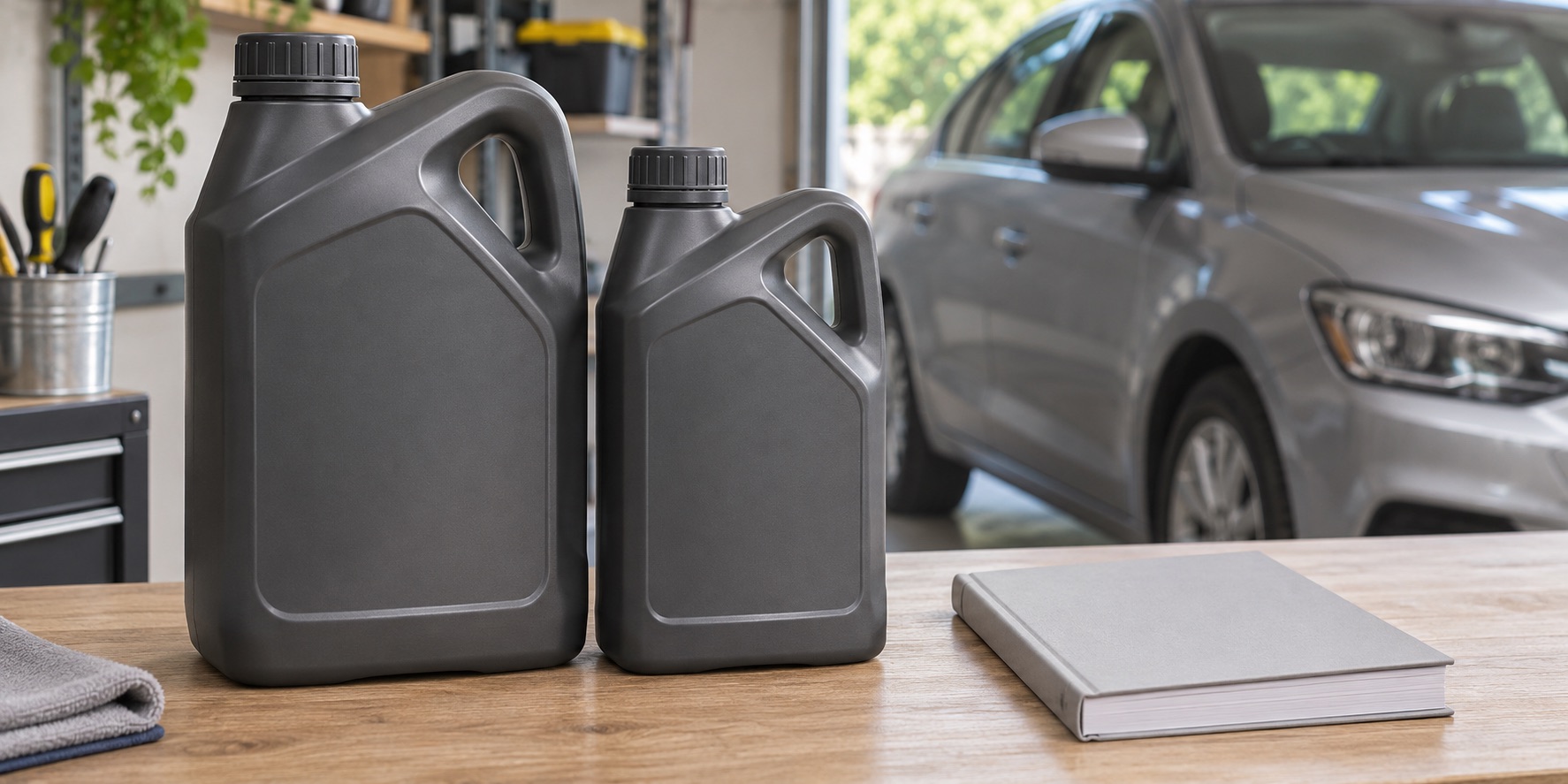
Featured image: AI-generated illustration of generic sealed oil containers and a plain handbook. The blank containers are illustrative props, not recommended products or examples of compliant labels. This is not an Albion Auto shop photograph.
Common questions
Is matching viscosity enough to choose engine oil?
No. Check the complete manufacturer requirement, including applicable performance specifications, against the proposed product.
What should I keep from an oil service?
Retain the date, odometer reading and an invoice identifying the oil used clearly enough to check its specification.
Should I change oil type to fix a noise or repeated low level?
Report the symptom and arrange appropriate assessment. A different oil product does not establish the cause of the concern.