Timing-Belt Service: What If the Maintenance History Is Missing?
Confirm the engine, maintenance requirements and previous work before deciding what timing-belt service is due.
If you have bought a used vehicle or found a gap in its service records, timing-belt maintenance deserves a specific question: what does this engine require, and what work can actually be confirmed? “The belts were done” is not always enough information to answer it.
For drivers in Bolton and Caledon, the useful starting point is the vehicle's identity, the applicable maintenance instructions and a dated repair record. Those three pieces help distinguish service that is due from work that has already been completed. They also keep a maintenance recommendation separate from diagnosing a running problem.
Identify the engine before choosing a schedule
Give the shop the model year, vehicle identification number and current odometer reading. If you know the engine has been replaced, mention that too. Ask the repairer to confirm which timing system is fitted and what manufacturer instructions apply to that engine.
Do not book a timing-belt replacement solely because another owner with a similar-looking vehicle needed one. Equally, do not assume that a general discussion of timing chains describes your vehicle. Confirming the application is a small step that prevents the rest of the conversation from resting on a guess.
Use the correct market's maintenance information. A mileage figure quoted in a forum may use miles rather than kilometres or refer to a different engine. Ask for the actual requirement, including any applicable time limit or operating-condition note, instead of converting a number without checking where it came from.
Understand why this is preventive maintenance
Gates' timing-system overview explains that the timing belt coordinates engine-component movement so valves open and close at the proper times. Loss of that coordination can stop the engine, and a broken belt can cause serious internal damage. The consequences depend on the engine design.
That makes the service schedule important even when the vehicle appears to run normally. “It still drives well” does not establish when the last replacement occurred or whether scheduled work is due. Preventive maintenance is intended to happen before a failure, so a recommendation need not wait for a noticeable symptom.
At the same time, a rough-running engine or unfamiliar noise is not proof that a timing belt needs replacing. Tell the shop about the symptom and ask for a diagnosis. A scheduled service and an investigation may both be appropriate, but they answer different questions and should be explained separately.
Read the invoice, not just the reminder sticker
Look for a record that identifies the vehicle, date, odometer reading and work performed. A useful invoice names the timing-belt work and the components supplied. Keep a photograph or digital copy with the rest of your service history so the next decision does not depend on memory.
If a note only says “belt replaced,” ask the original repairer what it means. Do not assume an accessory-belt replacement was also a timing-belt service. Our article on accessory-belt inspection covers that separate concern.
A sticker can help locate the history, but treat it as a lead rather than a complete account of the job. If the previous owner mentioned work, request the invoice when possible. An absent invoice does not prove the work was never done; it means the history remains unconfirmed and should be described honestly.
If the history is unknown, make a clear decision
Bring the records you have and identify the gaps. Ask the shop to compare the known history with the applicable maintenance requirements and explain its recommendation. Do not invent a replacement date simply to fill an empty line in a maintenance app.
Useful questions are: “What can we confirm?” and “What uncertainty remains?” Ask whether any inspection can provide useful information, and what it cannot establish. Avoid treating a casual visual impression as documentation of the belt's age or previous replacement mileage.
If service is recommended because the history cannot be verified, have that reason recorded. This is different from claiming a specific defect was found. You can make an informed maintenance decision while keeping the evidence and the uncertainty clear.
Ask what is included in the proposed work
A timing-belt estimate should identify the intended scope. Gates' system guidance highlights the role of tensioners and idler bearings as well as the belt. Ask which related components apply to your engine and why they are included, inspected or left in service.
Manufacturer wording also matters. For example, Honda's published 2020 Ridgeline Maintenance Minder information lists timing-belt replacement and water-pump inspection together. That example is not a schedule for every Honda or every other vehicle; it illustrates why the actual instructions should be read carefully.
Ask whether an additional recommendation is based on the service procedure, an observed condition or preventive work being proposed while access is available. Those can be different reasons for an estimate item. Understanding them is more useful than assuming every kit contains exactly what every engine needs.
Keep maintenance and symptom diagnosis separate
If the visit also involves a warning light, leak or noise, describe when it occurs and ask how it will be assessed. Do not expect a scheduled timing-belt service to resolve an unrelated complaint automatically. Likewise, finding the cause of a symptom does not erase maintenance that is independently due.
Before authorizing work, confirm the agreed scope and ask how unexpected findings will be communicated. Afterward, retain the itemized invoice and ask what maintenance reference should guide the next review. Record the completed date and odometer reading rather than just marking the vehicle “serviced.”
For help organizing the next maintenance visit, see our maintenance service information or contact Albion Auto Service. Bring the vehicle details and existing records. The aim is a recommendation based on the correct application and documented history, with diagnosis for any actual symptoms before parts are selected to address them.
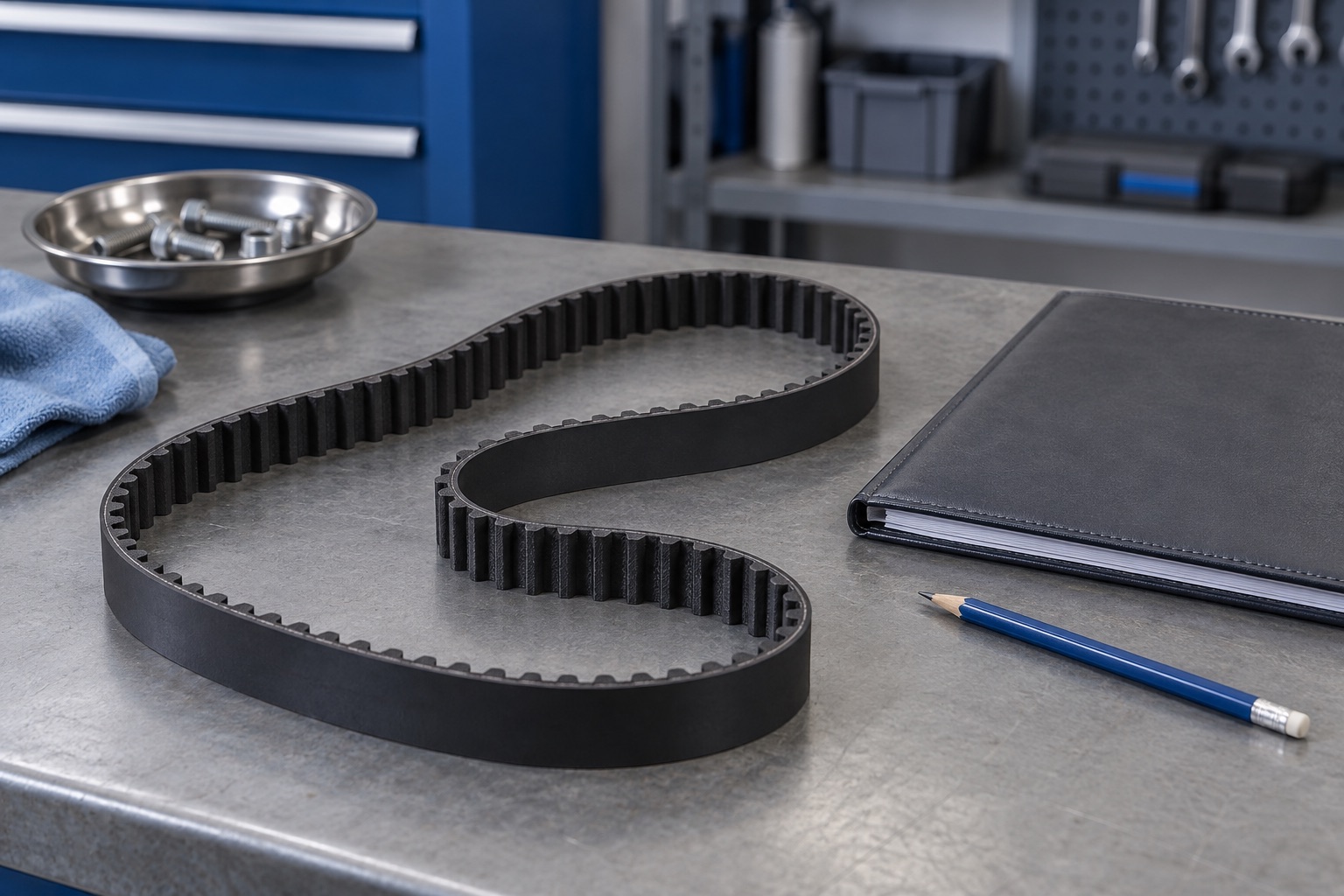
Featured image: AI-generated illustration of a generic toothed belt and service folder, not an Albion Auto shop photograph or a vehicle-specific installation guide.
Common questions
Does normal engine operation mean timing-belt service can wait?
Normal operation does not confirm that scheduled maintenance is current. Check the requirements for the exact engine and its documented service history.
Does an invoice saying belt replacement prove the timing belt was changed?
Not necessarily. Ask which belt was replaced and request the itemized record.
What should I bring if the history is incomplete?
Bring the vehicle details, current odometer reading and available invoices. Identify what remains unknown so the recommendation reflects the evidence.